The Black Hand (which was also known as ‘Unification or Death’) was a Serbian nationalist organization that existed in the early part of the 20th century. In fact, the Black Hand is most associated with the outbreak of World War I in 1914. This is due to the assassination of Austrian Archduke Franz Ferdinand on June 28th, 1914 by Gavrilo Princip. Princip was a member of the Black Hand and carried out the assassination as part of a plot by the organization to fight for Serbian nationalism. The assassination of Ferdinand was the event that sparked the events of World War I and is a main cause of the war.
WHAT WAS THE BLACK HAND?
The Black Hand was first created in August of 1901, by members of the Royal Serbian Army. It was a secret society that worked to promote Serbian nationalism. For example, one of its first acts was the assassination of King Alexander I of Serbia. The members of the Black Hand disagreed with Alexander I and his marriage to Draga Mašin. As such, they assassinated the King and Queen in order to maintain what they viewed as important for Serbia.
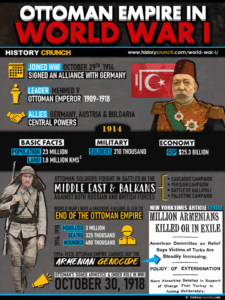
Serbian nationalism grew stronger in the years leading up to 1914 and the outbreak of World War I. For instance, the Bosnian Crisis of 1908 was an important event in the Balkans that increased tensions. In general, the Bosnian Crisis involved the annexation of Bosnia and Herzegovina by Austria-Hungary. This means that Austria took control over the two territories. Previously they had been controlled by the Ottoman Empire but by this time the Ottoman Empire was in decline and losing its authority in the region.
Austria’s annexation of Bosnia and Herzegovina created a crisis not only with the leadership of the Ottoman Empire, but also with other surrounding European nations including Italy, Russia, and Serbia. In fact, Serbian nationalists (like those in the Black Hand) resented the Austro-Hungarian takeover of Bosnia and Herzegovina. This created lingering anger among the members of the Black Hand, who wanted to unify and liberate Slavic people in the Balkans.

BLACK HAND AND WORLD WAR I
The next major incident involving the Black Hand was the assassination of Franz Ferdinand. Ferdinand was the Archduke of Austria-Hungary and next in line to rule over the empire. Ferdinand and his wife Sophie were assassinated on June 28th, 1914 in Sarajevo, the capital of the Austro-Hungarian province of Bosnia and Herzegovina while there on a visit to inspect the military forces. The assassin was a Serbian nationalist named Gavrilo Princip. Just nineteen years old at the time, Princip was a member of the Black Hand.

Upon first arriving in Sarajevo Franz and Sophie made their way through the city in a motorcade. Members of the Black Hand had pre-planned their assassination of the archduke in anticipation of his visit to Sarajevo. As the archduke’s motorcade made its trip a member of the Black Hand attempted to assassinate the couple with a bomb that was thrown at the couple’s car. The bomb missed Franz and Sophie and injured members of the car behind them when it exploded. After a short rest at the Governor’s house in Sarajevo, Franz decided to visit the people injured by the earlier bombing by going to the hospital. The drivers of the motorcade were not made aware of the change in plans and as a result the drivers took the wrong route. By the time the error had been discovered the drivers had to turn around and began to slowly back up down a street in the center of Sarajevo. By coincidence, Gavrilo Princip was on the street at that time and noticing his opportunity he approached the cars and fatally shot both Franz and Sophie with his pistol. Franz and Sophie were dead and the members of the Black Hand that carried out the attack were rounded up and arrested.

The assassination of Franz Ferdinand and his wife Sophie caused the nationalistic tensions of the Balkans to spill over and the event is considered to have directly led to the outbreak of World War I. Europe divided along the two major series of alliances (Triple Entente and Triple Alliance) and within a month of the assassination, World War I had begun.