The Harlem Hellfighters is the commonly used name for the 369th Infantry regiment of the United States Army, which participated in both World War I and World War II. The Harlem Hellfighters were made up of African American soldiers, although there were also some Puerto Rican troops that also served in the regiment during World War II. Regardless, the Harlem Hellfighters are important to the history of the United States and the role of African Americans.
FORMATION OF THE HARLEM HELLFIGHTERS
The Harlem Hellfighters (369th Regiment) formed on June 2nd, 1913 in the New York Army National Guard as the 15th New York Infantry Regiment. Many African American men wanted to participate in World War I, but were generally turned away from the armed forces due to racist beliefs of the time. Regardless, the passage of the Selective Service Act of 1917 made military service mandatory for all American men between the ages of 21 and 30. As such, African American men were conscripted into the Great War, and the government established an all-African American regiment as a way of segregating the troops. In fact, the African American soldiers trained in different locations from the white soldiers. With that said, white officers in the United States Army always led the African American soldiers.
Racism towards African Americans was common at the time of World War I, however many African Americans hoped that their participation in the war effort would help ease it. This did not necessarily prove true, since racism remained a common problem in the United States well into the mid-20th century and is arguably still a significant issue today. Regardless, African Americans were proud to fight for their country in World War I, and did so with hope of a better future for themselves.

HARLEM HELLFIGHTERS IN WORLD WAR I
The 369th Infantry Regiment (Harlem Hellfighters) was officially called into federal service in July of 1917, after the United States declared war and joined the war effort of World War I. For instance, they began training and readying themselves for military action. The Hellfighters first trained at Camp Whitman in New York and then at Camp Wadsworth in South Carolina. Throughout this period, the soldiers experienced considerable racism from towns people in South Carolina. The racist beliefs of the time also led to the Harlem Hellfighters not fighting alongside white American soldiers during the war. In April of 1918, the 369th Infantry Regiment was assigned to the French Army. This was done due to the belief among the American Army, that the African American soldiers were inferior and should not be allowed to fight alongside white American regiments. As such, during the course of World War I, the Harlem Hellfighters were attached to French Army Divisions. In fact, while they wore American uniforms, the Harlem Hellfighters were supplied with French rifles, helmets and other related gear.
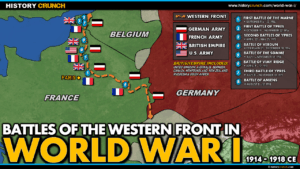
Throughout 1918, the Harlem Hellfighters participated in several significant aspects of World War I. In fact, during World War I, they spent 191 days in the front-line trenches on the Western Front. This was more than any other American unit of the time. As well, the Harlem Hellfighters suffered the most losses of any American regiment with 1,500 casualties. For example, the regiment famously fought in the Battle of Belleau Wood and the Battle of Chateau-Thierry. Furthermore, the regiment also gained its famous nickname during this time. In fact, the name ‘Hellfighters’ was given to them by the Germans.
The Harlem Hellfighters received numerous honors for their actions in World War I. For example, Private Henry Johnson famously fought off a German raid in the Argonne Forest on May 14th, 1918. His actions led to the rescue of numerous other soldiers and prevented a German advance. While he died in 1929, he was awarded the Medal of Honor posthumously on June 2nd, 2015, by President Barack Obama. Johnson was also the first American soldier to receive the Croix de Guerre, which was a French military honor for service in World War I. In all, 170 soldiers from the Harlem Hellfighters were given the Croix de Guerre, in recognition of their bravery and valor on the battlefield.
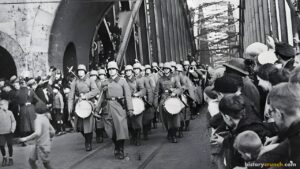
At the end of World War I, the 369th Regiment ‘Hellfighters Band’ continued performing throughout Europe and the United States. In fact, they even became one of the most famous military bands in all of Europe.

HARLEM HELLFIGHTERS IN WORLD WAR II
The Harlem Hellfighters were re-established on May 15th, 1942 in the midst of World War II. The United States joined the fighting of World War II, due to the Japanese attack on Pearl Harbor on December 7th, 1941. As a result, the United States joined the fighting of World War II alongside the Allied nations. In fact, in World War II the Harlem Hellfighters (369th Infantry Regiment) was attached to the 93rd Infantry Division, which was the ‘colored’ unit of the United States Army. During World War II, the Harlem Hellfighters were generally used in construction and security projects throughout the Pacific Theater. This included operations in New Guinea and the Philippines. The Harlem Hellfighters returned to the United States on February 1st, 1946 following the August 1945 defeat of Imperial Japan.