Battle of the Frontiers in World War I: A Detailed Summary

Battle of the Frontiers
Belgian soldiers during the Battle of the Frontiers in World War I. Note the dogs, which are pulling machine guns. (Colorized by historycrunch.com)
The Battle of the Frontiers in World War I was one of the first main conflicts of the First World War. It occurred from August 7th to September 6th in 1914.

Table of Contents

The Battle of the Frontiers was one of the main early battles of World War I along the Western Front, which was the line of trenches that stretched through Belgium and France.  It was fought between the Allied Powers of France, Belgium and Britain against the Central Power of Germany. The Battle of the Frontiers was actually a series of battles that took place along the eastern region of France (Lorraine) and the Ardennes Forest of Belgium from August 7th until September 6th in 1914.​

WHAT LED TO THE BATTLE OF THE FRONTIERS IN WORLD WAR I?

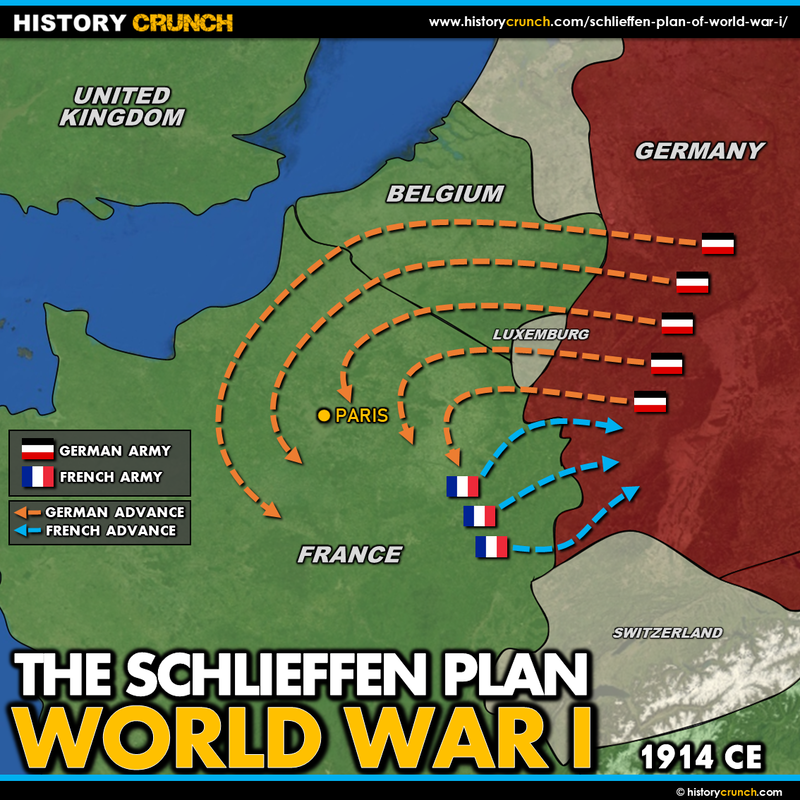
At the outbreak of World War I in the summer of 1914, France and Germany launched competing plans of attack.  For instance, Germany launched the Schlieffen Plan, while France launched Plan XVII.  The French battle plan (Plan XVII) was created in the two years before the start of World War I, in the event that a war between France and Germany might occur.  In general, the plan focused on mobilizing French forces as quickly as possible to defend specific strongholds, while simultaneously invading German territory.  The plan was enacted on August 7th in 1914 by French General Joseph Joffre and directly led to the events of the Battle of the Frontiers.​

Schlieffen Plan Map
Schlieffen Plan – Map (Created by historycrunch.com)

WHAT HAPPENED DURING THE BATTLE OF THE FRONTIERS IN WORLD WAR I?

The main battles of the Battle of the Frontiers included: the Battle of Mulhouse (August 7th to the 10th), Battle of Haelen (August 12th), Battle of Lorraine (August 14th to the 25th), Battle of Ardennes (August 21st to the 23rd), Battle of Charleroi (August 21st to the 23rd) and the Battle of Mons (August 23rd).  The Battles of Mulhouse, Lorraine, Ardennes and Charleroi were French offensives, while the Battles of Haelen and Mons were German offensives.  The French commander-in-chief General Joseph Joffre oversaw the French offensives, and the German actions were directed by Helmuth von Moltke.  In all, the battles involved 68 different German divisions, who faced off against 62 French divisions, 6 Belgium divisions and 6 British divisions.

Germany in World War I
German infantry charging across an open battlefield in World War I. (Colorized by historycrunch.com)

WHAT WAS THE OUTCOME OF THE BATTLE OF THE FRONTIERS IN WORLD WAR I?

In the end, the Battle of the Frontiers was a massive failure for the French Army and the British Expeditionary Force (BEF).  In fact, the German Army was able to push back the main French and British forces as part of the German plan of attack – Schlieffen Plan.  This allowed Germany to advance its forces forward into French territory during its push towards Paris, the French capital.  With that said, the German advance was eventually stopped in the First Battle of the Marne.  As such, the Battle of the Frontiers was important because it led to Germany gaining a significant foothold in France, which eventually led to trench warfare of the Western Front.  It is estimated that the French Army suffered as many as 260,000 casualties and 75,000 deaths in the Battle of the Frontiers.  For its part, the British are estimated to have experienced over 29,000 casualties.  Whereas, it is believed that Germany endured over 300,000.

First Battle of the Marne
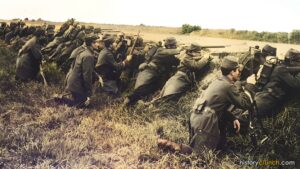
French soldiers in 1914. (Colorized by historycrunch.com)
Facebook
X
Reddit
Pinterest
LinkedIn

We strive to produce educational content that is accurate, engaging and appropriate for all learners. If you notice any issues with our content, please contact us and let us know!

AUTHOR INFORMATION
Picture of Elias Beck

Elias Beck

I'm a passionate history and geography teacher with over 15 years of experience working with students in the middle and high school years. I have an Education Degree with a focus in World History. I have been writing articles for History Crunch since 2015 and love the challenge of creating historical content for young learners!
World War I Western Front Map
Maps

World War I Western Front Map

This World War I Western Front map was created by History Crunch to help students and teachers understand the geographic location and significance of the Western Front during the First World War. It shows the trench line running through Belgium and northeastern France, key battle locations and the stalemate that defined the western theater of the war from 1914 to 1918. Designed for students in grades 5 to 12.

Balkan Crisis World War I
World War I

Balkan Crisis Before World War I: A Detailed Summary

The Balkan Crisis before World War I was primarily driven by growing nationalistic tensions in the nations that make up the Balkans of southeastern Europe. Historians consider the crisis in the Balkans as an important cause of World War I.

United States in World War I Infographic
Infographics

United States in World War I: Infographic

This United States in World War I infographic was created by History Crunch to help students and teachers quickly understand America’s role in the First World War. It covers why the United States entered the war after nearly three years of neutrality, the American Expeditionary Force and its major battles including the Meuse-Argonne Offensive, and the significance of American involvement to the Allied victory. Designed for students in grades 5 to 12.

World War I Alliances Map
Maps

World War I Alliances Map

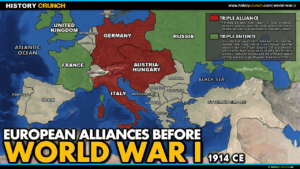
This World War I alliances map was created by History Crunch to help students and teachers understand the two main alliance systems that divided Europe before and during the First World War. It shows the member nations of the Triple Alliance and the Triple Entente and how these alliances shaped the outbreak and course of the war. Designed for students in grades 5 to 12.

Causes of World War I Infographic
Infographics

Causes of World War I: Infographic

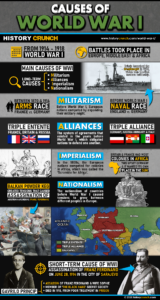
This Causes of World War I infographic was created by History Crunch to help students and teachers quickly understand the main long-term and short-term causes of the First World War. It covers the four M.A.I.N. causes of militarism, alliance systems, imperialism and nationalism, as well as the assassination of Franz Ferdinand as the immediate spark. Designed for students in grades 5 to 12.