The Battle of Caporetto was one of the most significant battles of World War I along the Italian Front, which is also known as the Alpine Front. The Italian Front was along the border between Italy and Austria-Hungary. The terrain of the region was very mountainous. As such, many of the battles that Italy participated in occurred on mountain ranges and in valleys. This includes the Battle of Caporetto, which took place near the town of Kobarid in modern-day Slovenia.
WHAT LED TO THE BATTLE OF CAPORETTO IN WORLD WAR I?
The Battle of Caporetto is also known as the Twelfth Battle of Isonzo, and is considered to be part of the larger Battles of Isonzo between Italy and Austria-Hungary. Luigi Cadorna, who was the Chief of Staff of the Italian Army, devised a plan of attack that included a series of offensives against the Austro-Hungarians. His hope was to push through the Austro-Hungarian defenses and siege the Austrian capital of Vienna. In reality, the attack was doomed and led to a stalemate, similar to the other fronts of World War I.

The first of these offensives involved the Battles of the Isonzo. In all, there were 12 different Battles of the Isonzo, which were fought in modern Slovenia and along the Isonzo River. These 12 battles were fought between the Italian and Austro-Hungarian armies and lasted from 1915 until 1917. The fighting in the Battles of the Isonzo were brutal and difficult for both sides. The Austro-Hungarians were primarily the defenders and took up defensive positions in the mountains, while the Italian Army were the attackers. In general, the Italian army struggled to attack in the Battles of the Isonzo due to the mountainous terrain and the rivers. For instance, crossing the Isonzo River proved difficult for the Italians due to flooding and the inability to build a bridge (or other engineering solution) while simultaneously fighting the Austrian forces. As such, throughout the 12 Battles of the Isonzo, the two sides went back and forth and both suffered terrible losses. For instance, historians estimate that the Italian Army suffered over 950,000 casualties in the Battles of the Isonzo, while the Austro-Hungarians suffered approximately 520,000. In the end, the Austro-Hungarians achieved a decisive victory at the Twelfth Battle of the Isonzo (also known as the Battle of Caporetto), which ended in November of 1917. As well, it is estimated that around 300,000 Italians died during the battles. Therefore, historians view the Battles of the Isonzo as a characteristic example of the ‘waste of war’ that World War I has become known for.
WHAT HAPPENED DURING THE BATTLE OF CAPORETTO IN WORLD WAR I?
As stated above, the Twelfth Battle of the Isonzo was also referred to as the Battle of Caporetto. The battle occurred from October 24th to November 19th in 1917 and was the last and most significant of the Battles of the Isonzo. The Battle of Caporetto took place on the Italian Front of World War, on the northeastern border of Italy. During the battle, Italian forces faced off against Austro-Hungarian forces that were also supported by elements of the German Army.
The arrival of German forces for the Battle of Caporetto was important, because by the fall of 1917, both the Italian and Austro-Hungarian forces were worn down from the previous 11 Battles of the Isonzo. In fact, Austria-Hungary hoped that the German support would allow them to advance through the Italian defenses and force the Italian Army back from the border.
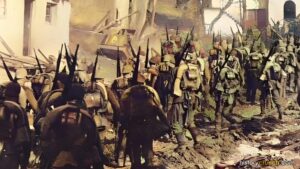
The Battle of Caporetto began on the early morning of October 24th when the Austrians and Germans carried out a series of poisonous gas attacks against the Italian trenches, which causes the Italian forces to retreat. The gas attack was followed by a heavy ‘stormtrooper’ assault by the Austrians and Germans, which included use of flamethrowers, grenades, machine guns and mortars. This specialized assault allowed the two Central Power armies to advance quickly through the Italian-held area. In fact, the Austrian and German assault was so successful that they struggled to maintain supply lines with the advancing armies. This proved to be important as it limited the distance that the Central Powers could advance into Italy. The Battle of Caporetto ended on November 19th, 1917.

WHAT WAS THE OUTCOME OF THE BATTLE OF CAPORETTO IN WORLD WAR I?
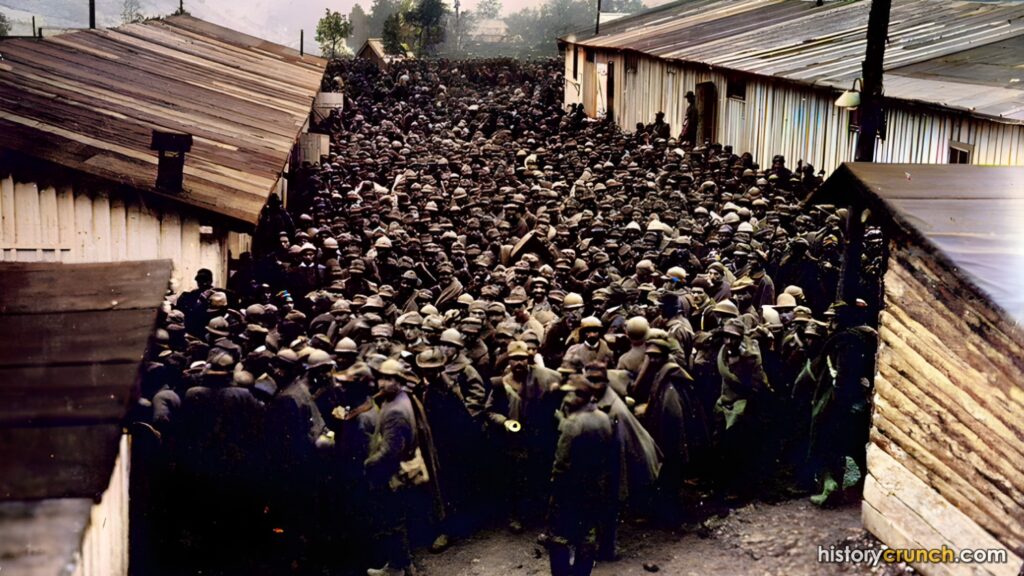
As a result of the battle, Italy retreated 93 miles (150 kms) and suffered thousands of losses. More specifically, historians estimate that in the Battle of Caporetto, 13,000 Italian soldiers died, another 30,000 were wounded and nearly 275,000 were captured as prisoners of war. In all, the Battle of Caporetto was a terrible loss for Italy and led to massive decrease in morale among Italian soldiers. In fact, the losses in the Battle of Caporetto (and the other Battles of the Isonzo) led to Chief of Staff of the Italian Army, Luigi Cadorna, being replaced by Armando Diaz in November of 1917. For its part, historians estimate that Austria-Hungary suffered between 20,000 to 70,000 casualties in the Battle of Caporetto.