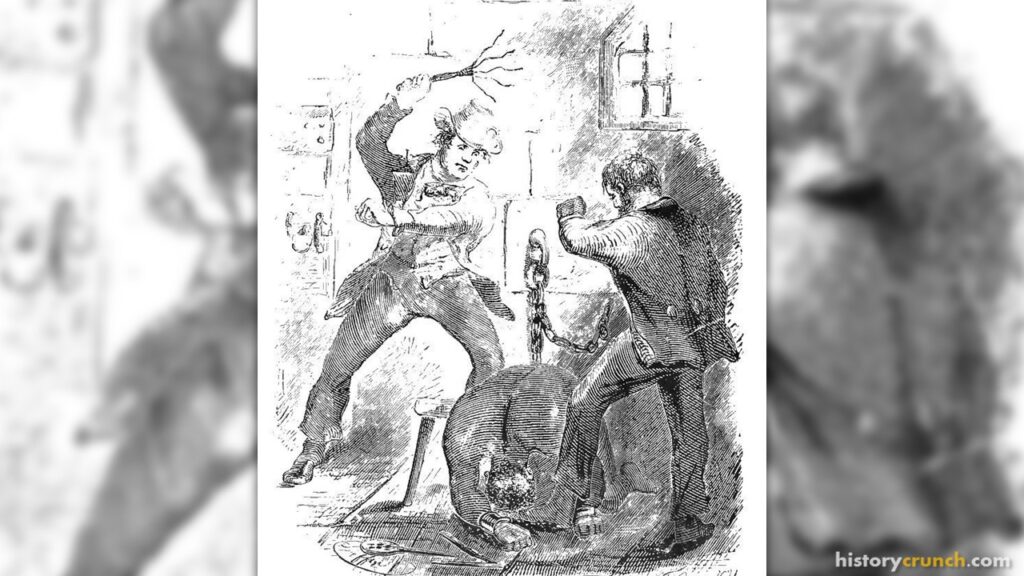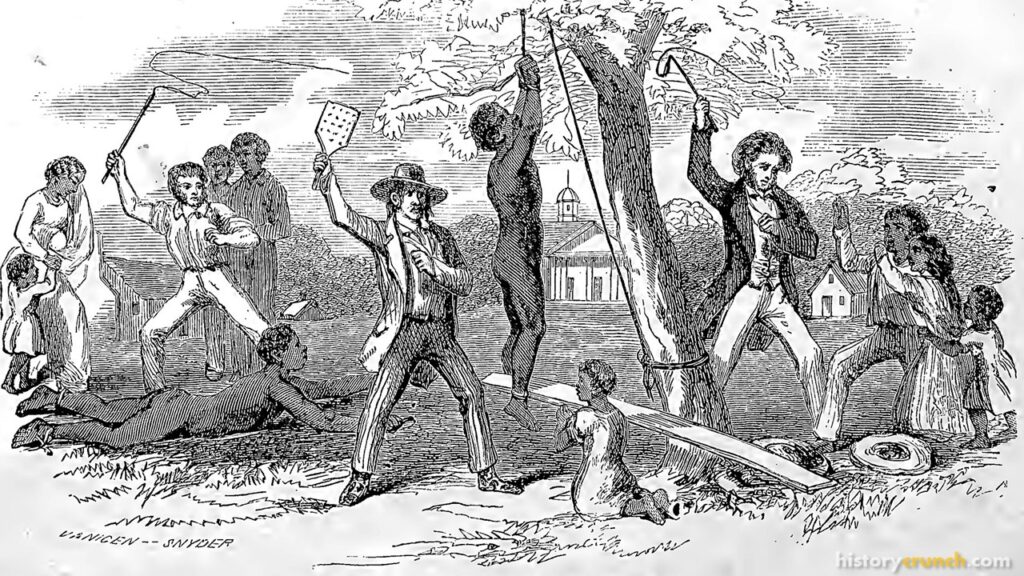
The abuse that African slaves experienced in the United States is well documented. For instance, slaves were regularly subjected to beatings, whippings and other forms of torture. Furthermore, slavery in the United States remained an important issue from the time of Colonial America to the events of the American Civil War.
ABUSE OF SLAVES IN THE UNITED STATES
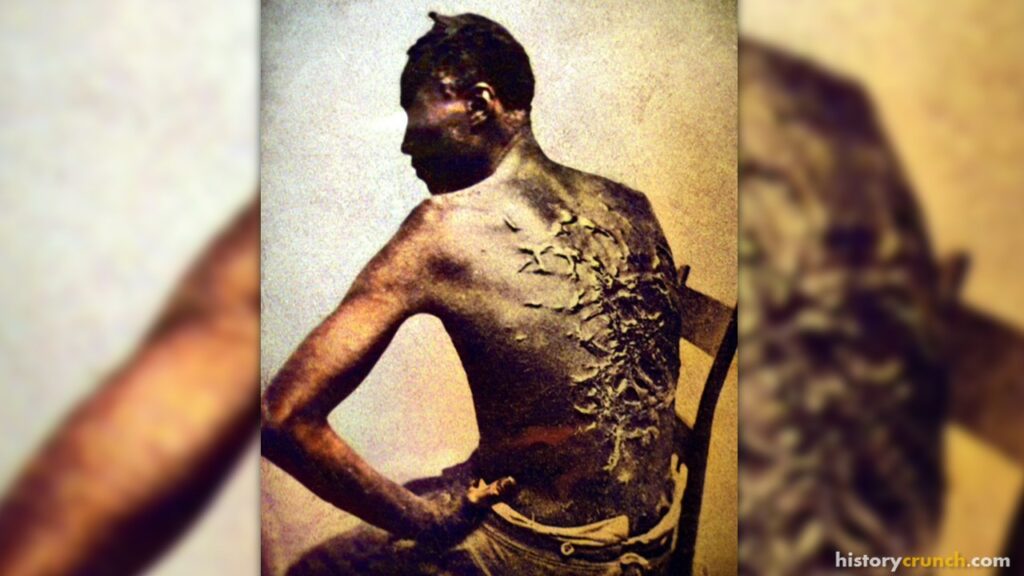
Much of this abuse was carried out by the overseers on plantations. In short, an overseer was a type of supervisor on the plantation and carried out the work of maintaining the work of the slaves as they completed their agricultural work. In fact, abuse towards slave was a regular occurrence and was used by slave owners and overseers as a way of maintaining order on the plantation. For example, abuses against slaves were often used as a form of punishment or to promote the authority of the slave owner. More specifically, a slave could be beaten or whipped for working too slowly, stealing or trying to escape. Furthermore, slaves were also branded by their slave owners, which displayed the idea that slaves were physical property that could be owned. One of the images below shows a former American slave by the name of ‘Gordon’ or ‘Whipped Peter’. He escaped from a Louisiana plantation in 1863, and the image of his scarred back became a symbol for the American Abolitionist Movement, which sought to end slavery in the United States. He had be given the horrible scars by the plantation owners and overseers that owned and controlled him.
While slaves usually suffered from poor medical attention, some historians have argued that slaves in the United States were treated better than slaves in other parts of the New World. For instance, owning slaves was a major financial investment, and most slave owners likely wanted to protect their investment by medically treating any hurt or injured slaves. For example, some evidence suggests that slaves in the United States lived an average lifespan of about 36 years old in 1850. This is significant because slaves in other parts of the New World lived substantially shorter lives. For instance, slaves in Brazil typically only lived to be about 23 years old, on average, due to even worse abuse. Ultimately, the improved health and medical treatment of slaves in the United States caused the slaves population to grow substantially throughout the 19th century, and by the time of 1860 there were as many as 4 million slaves in the country. With all of this said, slaves in the United States still experienced terrible abuses.
FIRSTHAND ACCOUNTS OF SLAVERY IN THE UNITED STATES
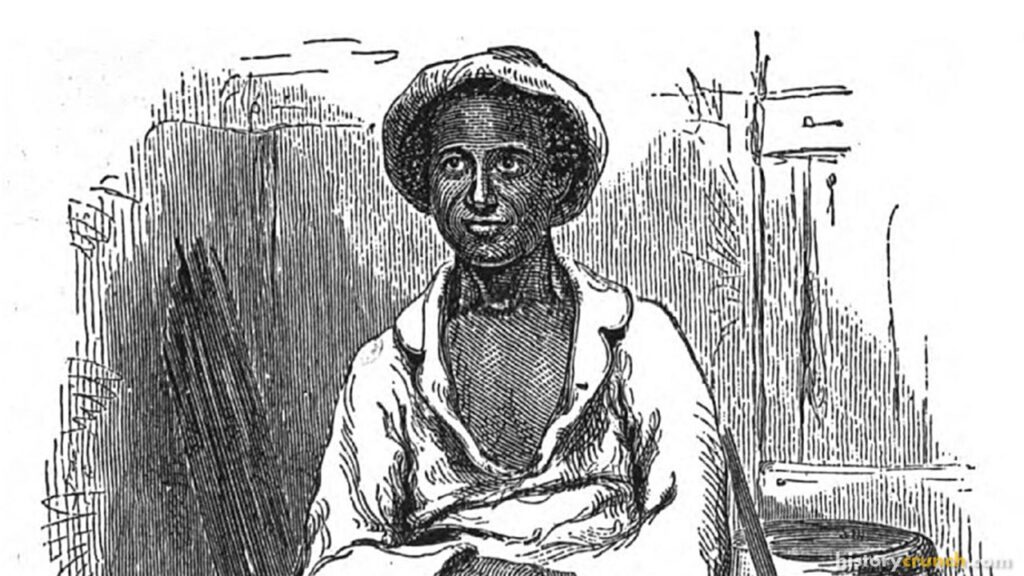
The abuses suffered by slaves can be seen in several different firsthand accounts including the slave narrative ‘Twelve Years a Slave’ that was written by Solomon Northup in 1853. Solomon Northup was an African American that was born free. However, he was famously kidnapped and sold into slavery. After his escape from slavery he wrote about his experiences in ‘Twelve Years A Slave’. In the slave narrative, Northup commented the following, which highlights some of the abuses that slave suffered from:
“…it was in 1841, of Williams’ slave pen in Washington, in one of the cellars of which I found myself so unaccountably confined.
‘Well, my boy, how do you feel now?’ said Burch, as he entered through the open door. I replied that I was sick, and inquired the cause of my imprisonment. He answered that I was his slave— that he had bought me, and that he was about to send me to New-Orleans. I asserted, aloud and boldly, that I was a freeman—a resident of Saratoga, where I had a wife and children, who were also free, and that my name was Northup. I complained bitterly of the strange treatment I had received, and threatened, upon my liberation, to have satisfaction for the wrong. He denied that I was free…
Burch ordered the paddle and cat-o’-ninetails to be brought in. He disappeared, and in a few moments returned with these instruments of torture. The paddle, as it is termed in slave-beating parlance, or at least the one with which I first became acquainted, and of which I now speak, was a piece of hard-wood board, eighteen or twenty inches long, moulded to the shape of an old-fashioned pudding stick, or ordinary oar The flattened portion, which was about the size in circumference of two open hands, was bored with a small auger in numerous places. The cat was a large rope of many strands— the strands unraveled, and a knot tied at the extremity of each.
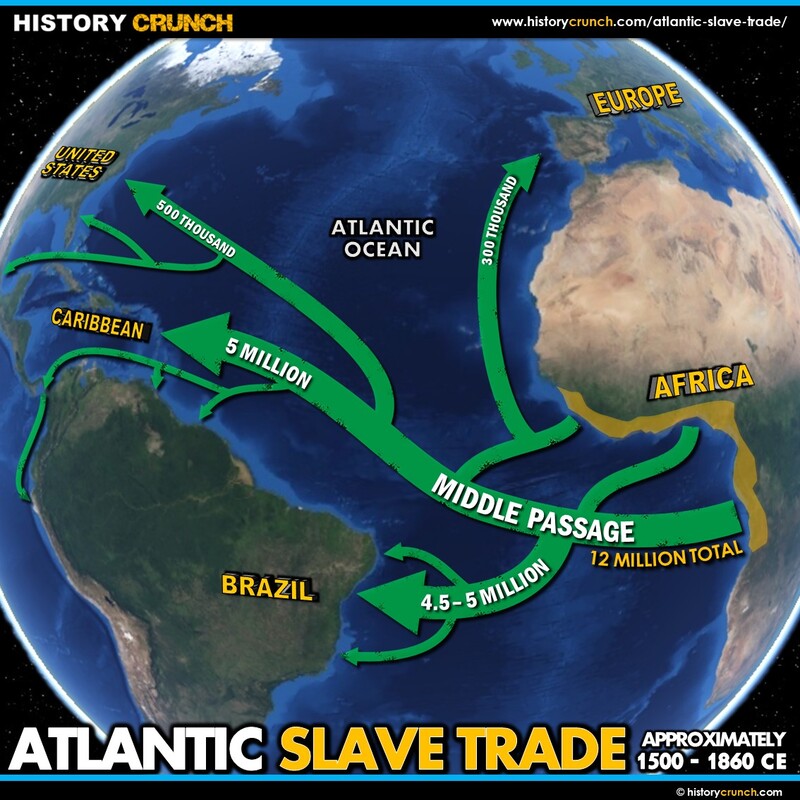
ATLANTIC SLAVE TRADE
While North America has a well-documented history of its role in the Atlantic Slave Trade, it was not necessarily the destination of most African slaves. For example, the Caribbean received approximately 48% of slaves, while Brazil received approximately 40%. In contrast, the United States received about 5% of the total population of African slaves. Of 12 million African slaves that were transported during the Atlantic Slave Trade, approximately 600,000 were transported to the United States, which means that about 5% of all African slaves from the Atlantic Slave Trade were brought to America. This process first began in the early colonies of America but continued well into the 19th century. In fact, African slavery in the United States became an important feature of early America.
SLAVERY IN COLONIAL AMERICA
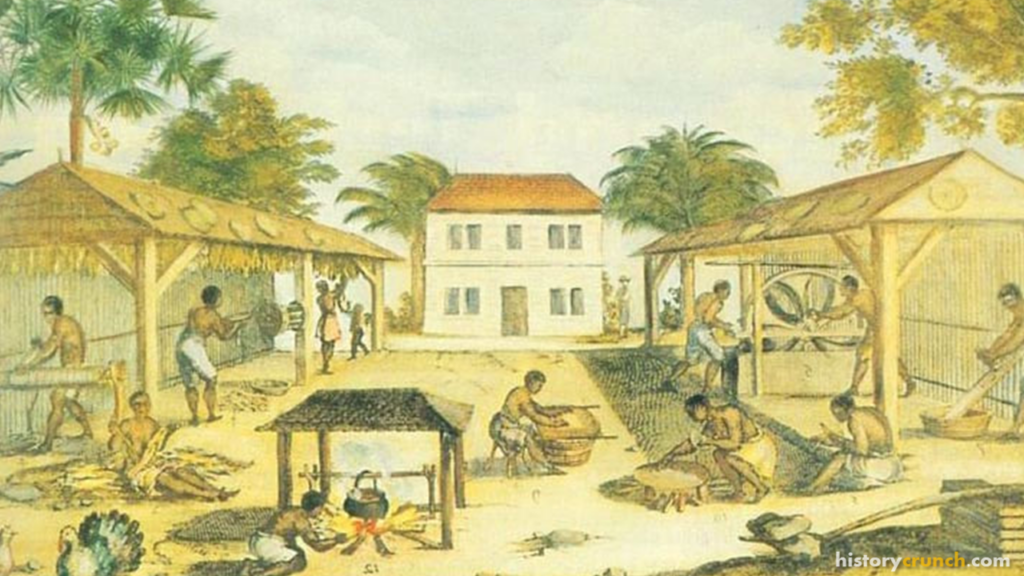
Slavery in Colonial America was a major economic factor at the time. For example, slaves often carried out work that was financially beneficial to the slave and property owners. This was especially true in the South where large agricultural plantations were established that operated mostly with slave labor. More specifically, throughout the 18th century, slaves worked on these plantations by carrying out basic farming duties and assisting in the agricultural operation of the plantation. In fact, slaves were popular in the United States because the early agricultural products that the plantations produced usually required lots of labor-intensive work. As such, paying workers for these jobs hurt the financial profitability of the plantations, which made slavery a much more appealing option.
With that said, the early years of the Atlantic Slave Trade were dominated by the Portuguese. However, Britain would go on to play the largest role in the transport and sale of African slaves. In all, Portugal, Spain, Britain and France were the European nations that participated in the Atlantic Slave Trade the most. Regardless, the Atlantic Slave Trade was incredibly beneficial to European and other western nations, especially economically. The inexpensive labor meant that plantation owners were able to keep more of their profits and were able to amass large fortunes. As well, the harvested raw materials greatly benefitted European industries as they were able to use the raw materials to created manufactured goods.
ABOLITIONIST MOVEMENTS
The conditions on the slave ships of the Middle Passage eventually led to the growth of the British Abolitionist Movement and later the American Abolitionist Movement. This ultimately led to the end of the Atlantic Slave Trade. For example, the term ‘abolition’ means to stop or end something. As such, an abolitionist is someone who was working to ban slavery. The American Abolitionist Movement is considered to have occurred from the late 1700s until 1865 when the American government abolished slavery following the end of the American Civil War. Also, it should be noted that the American Abolitionist Movement occurred alongside the efforts of British abolitionists and the British Abolitionist Movement. The British Abolitionist Movement is considered to have occurred from the late 1700s until 1833 when the British government abolished slavery throughout the British Empire. Although, it should be noted that British citizens continued to fight against slavery throughout the world in the time after 1833. For instance, the Slave Trade Act of 1807 was a significant piece of British legislation in the history of the Abolitionist Movement in Britain. While the act did not ban slavery outright, it banned the slave trade in the British Empire. As such, this had a profound impact on the events of the Atlantic Slave Trade.