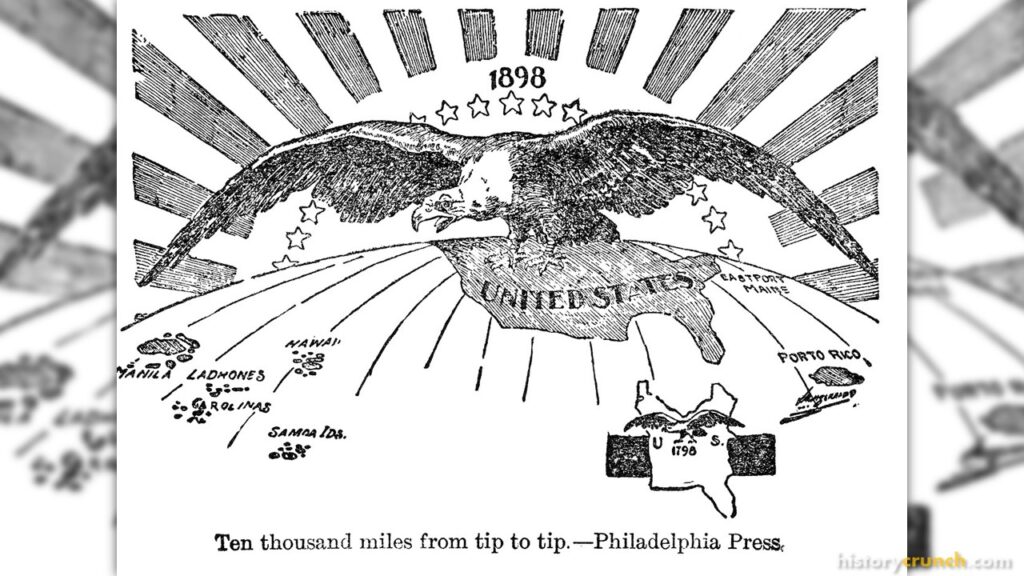
American Imperialism refers to the United States’ policy and practice of extending its power and influence through diplomacy, economic control, and military force. This period, primarily spanning the late 19th and early 20th centuries, saw the United States expand its territory and grow its influence globally. This article explores the importance of American Imperialism as a historical event and is especially important to the Gilded Age and Progressive Era in American history.
AMERICAN IMPERIALISM – CAUSES
As stated above, the term ‘American Imperialism’ refers to the era in which the United States carried out imperialistic campaigns. The imperialistic nature of the United States was carried out for several key reasons, including economics, strategy, ideological beliefs and patriotism.
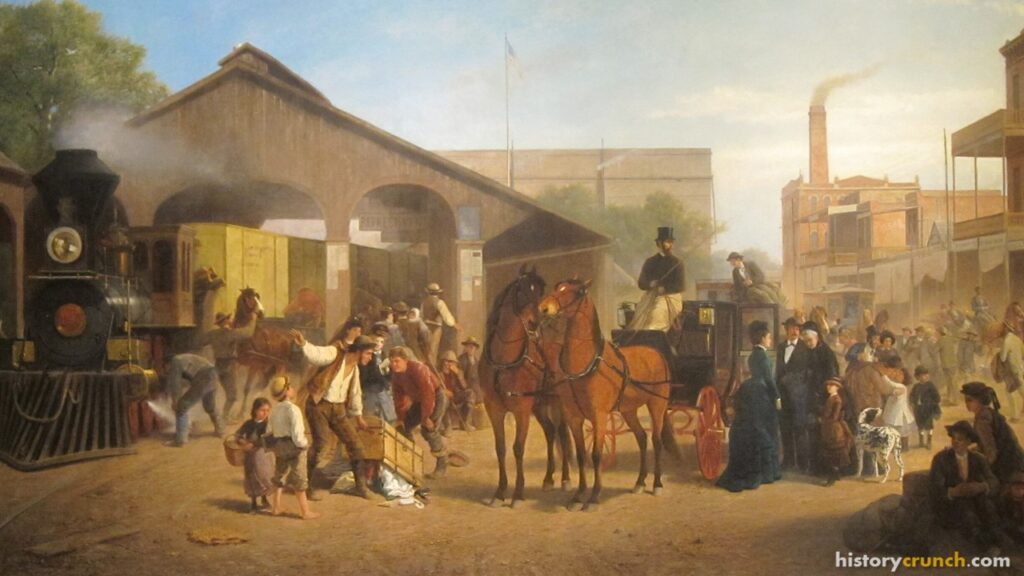
The period of American Imperialism occurred in the late 19th century and early 20the century, during an important time in American history. More specifically, this was the time of the Gilded Age and Progressive Era. As such, industrialization was a key aspect of this timeframe. In fact, as the Industrial Revolution transformed the American economy, there was a growing need for new markets to sell manufactured goods and acquire raw materials. Expansion was seen as a way to secure these economic interests. As such, imperialism was viewed as a necessary measure to achieve these economic interests.
Strategy was also a key reason for the emergence of American Imperialism. For example, military and political leaders believed that controlling strategic locations, such as naval bases, was essential for national security and global power projection. This is why islands in the Caribbean and Pacific were so important to the growth of American imperialism, because they allowed the United States to expand its sphere of influence in the surrounding regions.
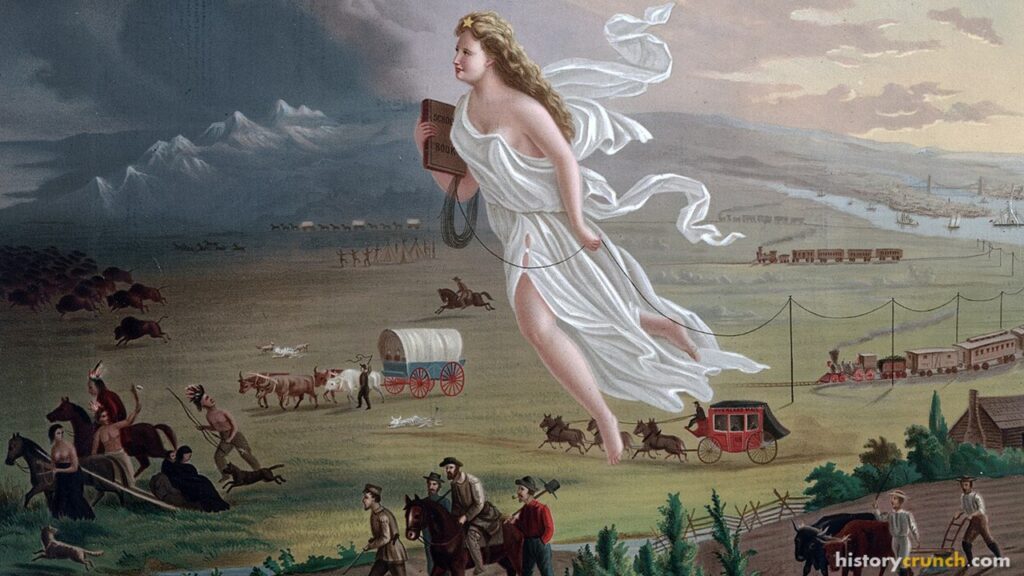
Many Americans believed in the idea of Manifest Destiny, which is the belief that the United States was destined to expand across North America. This belief evolved into a sense of duty to spread democracy and civilization to other parts of the world, often referred to as the concept of the ‘White Man’s Burden’. This concept was common throughout the timeframe of the Age of Imperialism and was based on misinformed beliefs about cultures and societies.
Finally, patriotism and the idea of national pride was a key factor that led to the growth of American Imperialism. As European powers engaged in colonial expansion, the United States felt pressure to compete on the global stage and demonstrate its strength and capabilities. As such, it was motivated to carry out its own campaigns of imperialism, alongside the others from the time of the Age of Imperialism.
AMERICAN IMPERIALISM – MAJOR EVENTS
The period of American Imperialism unfolded as a series of important conflicts, events and agreements. Historians have identified several of these key events, including: the annexation of Hawaii, the Spanish-American War, the Philippine-American War, the construction of the Panama Canal, and the Monroe Doctrine.
The first main event of American Imperialism was the Annexation of Hawaii in 1898. The strategic importance of Hawaii, both as a naval base and a gateway to Asian markets, led to its annexation by the United States. American businessmen and sugar planters played a crucial role in the overthrow of the Hawaiian monarchy.
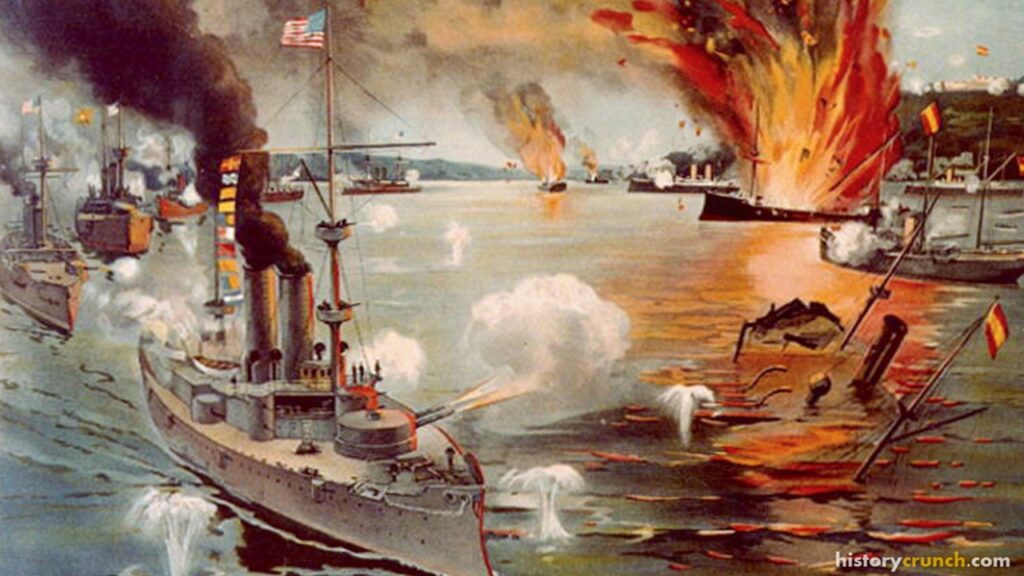
The Spanish-American War was a major turning point in American Imperialism. The United States faced off against Spain in 1898 for territorial control in Cuba and Puerto Rico. The American victory resulted in the acquisition of former Spanish territories, including Puerto Rico, Guam, and the Philippines. This war marked the American emergence as a global power.
Following the Spanish-American War, the United States faced resistance from Filipino nationalists who sought independence for their own nation-state. This was the basis for the Philippine-American War, which occurred from 1899 to 1902. This brutal conflict highlighted the challenges and moral dilemmas of American imperialism.
Next, the construction of the Panama Canal, which took place between 1904 and 1914, was a significant engineering feat that demonstrated American technological strength and strategic interests. More specifically, the United States supported Panama’s independence from Colombia in order to secure the rights to build and control the canal. The Panama Canal was an important project because it linked the Atlantic Ocean to the Pacific Ocean, which was important for trade routes. As such, The United States wanted to control the canal as a means of furthering its own influence in the region.
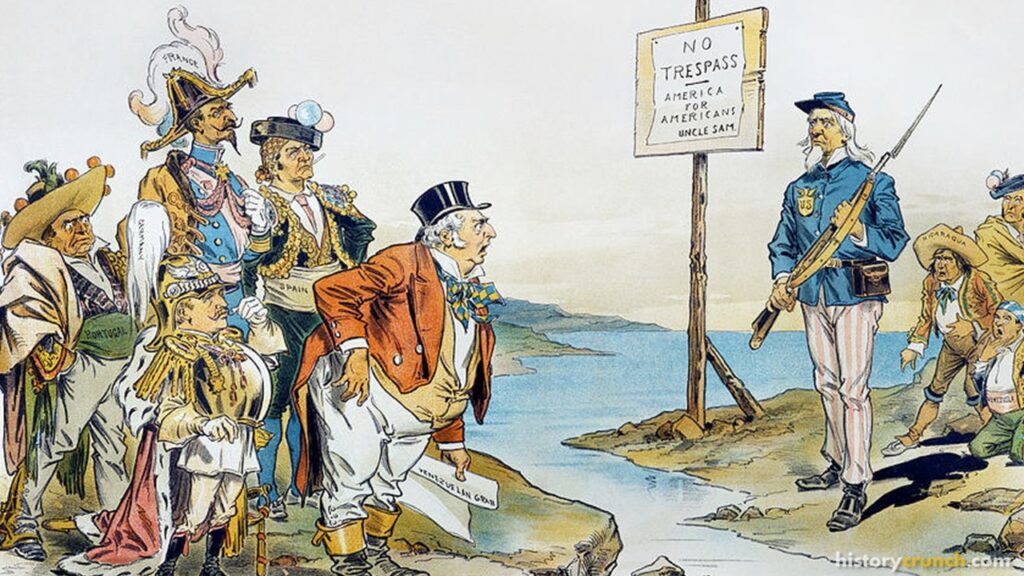
Finally, the Monroe Doctrine was another important aspect of the history of American Imperialism. Announced by American President James Monroe in 1823, this doctrine asserted that any European intervention in the political affairs of the Americas would be viewed as an act of aggression. As such, it established the Western Hemisphere as a sphere of influence for the United States and supported an ‘anti-colonization’ viewpoint. Further to this was the Roosevelt Corollary, which was an addition to the Monroe Doctrine presented by President Theodore Roosevelt in his State of the Union address in 1904. It asserted the United States right to intervene in Latin American countries in order to maintain stability and order in the region. This further solidified American influence in the Western Hemisphere.
AMERICAN IMPERIALISM – IMPACTS
American Imperialism had important impacts, both within the United States and internationally. For instance, the United States emerged as a global power with significant influence in international affairs. Its involvement in global conflicts and diplomacy increased, setting the stage for its eventual role in World War I and World War II.
Also, access to new markets and resources fueled economic growth and industrialization for the United States economy. American businesses expanded their reach, and the economy benefited from increased trade and investment opportunities in the newly established territories.
American Imperialism also led to considerable cultural exchange. While this could be viewed as a positive, it also led to conflict and resistance. For instance, indigenous cultures and societies in the acquired territories often faced significant disruption and oppression.
Finally, the era sparked intense debates within the United States about the morality and implications of imperialism. Critics, including members of the Anti-Imperialist League, argued that imperialism went against American democratic values and the principles of self-determination. While some Americans supported expansion, others, including prominent figures like Mark Twain and Andrew Carnegie, formed the Anti-Imperialist League to oppose colonialism. As such, the issue of imperialism and colonialism was a controversial topic in the early part of the 20th century.