American propaganda in World War II was one of the most important aspects of the war in the United States. Following the Japanese attack on Pearl Harbor on December 7th, 1941, the United States government launched a propaganda campaign aimed at unifying the American public behind the war effort, and encouraging civilians to contribute to industrial production and rationing. In general, historians consider American propaganda in World War II to have been significant for several reasons, including: the way it impacted the American home front, the role it played in shaping public attitudes toward the Axis Powers, and the large-scale entry of women into the workforce.
WHAT WAS PROPAGANDA?
Propaganda is information used to influence how people think and feel, especially for political purposes. In general, propaganda does not simply provide neutral facts. Instead, it selects information, repeats certain messages, appeals to emotions, and presents events in ways that support a particular goal. This is significant because propaganda can shape public opinion even when the information being presented is incomplete, exaggerated, or one-sided. During World War II, the governments of both the Allied Powers and the Axis Powers used propaganda extensively to improve their war efforts and communicate messages to their citizens. For instance, countries issued propaganda posters, films, radio broadcasts, and newspaper campaigns to convince men to join the armed forces, encourage people to save resources for the war effort, and persuade citizens that the enemy was a threat that had to be defeated. As such, propaganda played an important role in all countries.
AMERICAN PROPAGANDA IN WORLD WAR II – BACKGROUND
To fully understand American propaganda in World War II, it is first important to understand the situation the United States found itself in following the attack on Pearl Harbor. Before December of 1941, the United States had practiced a policy of isolationism, with a large portion of the American public opposed to direct involvement in the war in Europe. The attack on Pearl Harbor changed this dramatically, unifying the American public and creating widespread support for entering the war. Regardless, the United States government understood that sustaining that public support through years of costly fighting, industrial sacrifice, and rationing would require a sustained and organized effort to communicate with the American people.
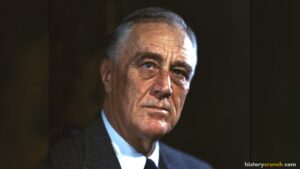
As a result, President Franklin D. Roosevelt established the Office of War Information, known as the OWI, in June of 1942. The OWI was the central government agency responsible for coordinating American propaganda during World War II. It worked across a range of media including: posters, radio, film, newspapers, and magazines, to deliver consistent messages about the war effort to the American public. The OWI worked closely with Hollywood studios, advertising agencies, and other private organizations to ensure that pro-war messages reached as wide an audience as possible.
AMERICAN PROPAGANDA IN WORLD WAR II – POSTERS
One of the most visible and famous types of American propaganda in World War II was the poster. The United States government and various private organizations produced thousands of posters during the war, covering a wide range of messages and themes. In general, American propaganda posters during World War II can be grouped into several main categories, including: recruitment and military service, home front production and conservation, demonization of the enemy, and the promotion of national unity.
Recruitment posters encouraged young American men to enlist in the armed forces and portrayed military service as patriotic, honorable, and necessary for the defense of the country. Conservation posters urged American civilians to save resources such as: rubber, metal, cooking fats, and fuel that were needed for the war effort. For instance, one widely distributed poster series encouraged Americans to save waste cooking fats for use in the production of explosives, reflecting the degree to which the war effort touched the daily lives of ordinary civilians.
The most famous of all American propaganda images from World War II was ‘Rosie the Riveter’, which appeared on a poster produced for the Westinghouse Electric Corporation in 1943. The image depicted a female factory worker flexing her arm under the slogan ‘We Can Do It!’ and became one of the most recognized images of the entire war era. In fact, the ‘Rosie the Riveter’ campaign was part of a government effort to encourage women to enter the industrial workforce and fill the positions left vacant by men who had enlisted. The campaign contributed directly to a dramatic increase in the number of women working in factories, shipyards, and other industrial facilities across the United States.
AMERICAN PROPAGANDA IN WORLD WAR II – FILM AND RADIO
Film and radio were also central tools of American propaganda during World War II. The United States government worked closely with the Hollywood film industry to ensure that American cinema supported the war effort. For instance, Hollywood studios produced a large number of war films during this period that portrayed American soldiers heroically and presented the Axis Powers as a clear and dangerous enemy. As well, the government produced a series of documentary films known as the ‘Why We Fight’ series, directed by Frank Capra, which were shown to American soldiers and civilians alike to explain the origins and goals of the war. These films were widely seen and helped communicate a consistent narrative about the nature of the conflict to the American public.
Radio was another important propaganda tool, as it allowed the government to reach millions of Americans in their homes on a daily basis. For instance, President Franklin D. Roosevelt used his regular radio addresses, known as his ‘fireside chats‘, to communicate directly with the American public about the progress of the war and the importance of the home front effort. As well, radio programs, news bulletins, and entertainment shows were all used to reinforce pro-war messages and maintain public morale throughout the conflict.
AMERICAN PROPAGANDA IN WORLD WAR II – ENEMY IMAGERY
American propaganda in World War II also included a significant effort to portray the enemy in negative and threatening terms in order to motivate the public and justify the sacrifices required by the war. In general, American propaganda portrayed Nazi Germany and its leadership as fascist aggressors who threatened freedom and democracy. For instance, posters depicting Adolf Hitler and the Nazi regime emphasized themes of tyranny, brutality, and the danger they posed to the values of the democratic world.
It should also be noted that a significant portion of American propaganda directed against Imperial Japan contained deeply racist imagery and messaging. For instance, American posters, cartoons, and films frequently depicted Japanese people using dehumanizing racial caricatures that drew on longstanding anti-Asian prejudices. This racist propaganda reflected and reinforced the broader climate of anti-Japanese sentiment that contributed to the forced internment of over 120,000 Japanese-Americans following the attack on Pearl Harbor. Historians generally regard the racist anti-Japanese propaganda of this period as one of the most troubling aspects of the American wartime propaganda effort, and it stands today as an example of how propaganda can amplify prejudice and contribute to serious violations of civil rights.
AMERICAN PROPAGANDA IN WORLD WAR II – WAR BONDS AND RATIONING
American propaganda in World War II also played an important role in encouraging civilians to purchase war bonds and participate in rationing programs. War bond drives were heavily promoted through advertising campaigns, celebrity endorsements, and public events. For instance, famous actors, musicians, and athletes participated in war bond drives across the country to encourage the public to contribute financially to the war effort. The government produced a wide range of posters and other materials that framed the purchase of war bonds as a direct and personal contribution to the fight against the enemy.
Rationing propaganda encouraged Americans to accept restrictions on the consumption of goods such as: meat, butter, sugar, gasoline, and rubber, which were needed for the war effort. For instance, Victory Garden campaigns encouraged American families to grow their own vegetables in order to reduce pressure on commercial food supplies. Propaganda posters and radio messages framed these sacrifices not as burdens but as patriotic contributions that connected ordinary civilians directly to the soldiers fighting overseas.
AMERICAN PROPAGANDA IN WORLD WAR II – SIGNIFICANCE
American propaganda in World War II was significant for several reasons. First, it played an important role in mobilizing the American home front and sustaining public support for the war effort through years of sacrifice and loss. The combination of posters, films, radio, and advertising campaigns helped maintain morale, encourage industrial production, and ensure that the civilian population remained engaged with and committed to the overall war effort.
Second, American propaganda in World War II had important long-term social consequences. The ‘Rosie the Riveter’ campaign and related efforts to recruit women into the industrial workforce contributed to a lasting shift in attitudes about the role of women in the workplace that helped lay the groundwork for the women’s rights movement in the decades that followed.
Third, American propaganda in World War II also produced troubling examples of racist messaging, particularly in relation to Imperial Japan, that contributed to discrimination and the violation of civil rights on the home front. As such, American propaganda in World War II demonstrates both the power of government communication campaigns to mobilize a society in support of a shared goal, and the serious harm that can result when that power is used to promote prejudice and fear.