Battle of Galicia in World War I: A Detailed Summary

Battle of Galicia in World War I
Austro-Hungarian trenches at the Battle of Galicia in World War I.
The Battle of Galicia in World War I was an important conflict on the Eastern Front. The Battle of Galicia, which is also known as the Battle of Lemberg, took place during the early weeks and months of World War I, from August 23rd until September 11th, 1914.

Table of Contents

The Battle of Galicia was a major conflict in World War I between Austria-Hungary and Russia.  It occurred along the Eastern Front, which was a line of fighting that took place along the eastern border of Austria Hungary and the western border of Russia.  This was an important front and saw several significant battles.​

WHAT LED TO THE BATTLE OF GALICIA IN WORLD WAR I?

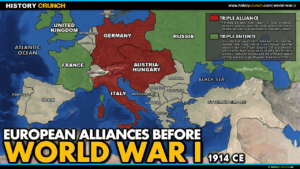
From the outset of World War I, conflict between Austria-Hungary and Russia was guaranteed.  This was due to several factors, but mostly because of the relationship between Russia and Serbia.  For example, after Austria-Hungary threatened Serbia with an ultimatum, Russia was the European nation that came to Serbia’s defense.  As a result, several significant battles took place between the two nations, including the Battle of Galicia.​

Austria-Hungary Delivers Ultimatum
Franz Joseph I was the Emperor of Austria and King of Hungary at the outbreak of World War I. (Colorized by historycrunch.com)

WHAT HAPPENED DURING THE BATTLE OF GALICIA IN WORLD WAR I?

The Battle of Galicia, which is also known as the Battle of Lemberg, took place during the early weeks and months of World War I, from August 23rd until September 11th, 1914.  Historians consider the Battle of Galicia to be one of the most significant battles of World War I along the Eastern Front.  During the battle, the Austro-Hungarian First, Second and Fourth Armies faced off against the Russian Third, Fourth and Eighth Armies. During the overall Battle of Galicia, these armies assaulted and defended against one another in a series of smaller conflicts, which included: Battle of Kraśnik, Battle of Komarów, Battle of Gnila Lipa, and the Battle of Rawa.  In all, the Battle of Galicia was a failure for the Austro-Hungarians and was an important Russian victory on the Eastern Front.  For example, in the Battle of Rawa, which took place from September 3rd to the 11th in 1914, the Austro-Hungarian forces on the Eastern Front were forced into a retreat and pushed back.  Meanwhile, Russia was able to advance its forces forward and captured significant amounts of territory around the city of Lemberg.

WHAT WAS THE OUTCOME OF THE BATTLE OF GALICIA IN WORLD WAR I?

The Battle of Galicia saw heavy losses for both sides.  For instance, historians estimate that Austria-Hungary suffered as many as 450,000 casualties in the Battle of Galicia.  This includes as many as 100,000 deaths for Austria-Hungary as well.  For their part, it is estimated that Russia suffered upwards of 300,000 casualties in the battle.​

Facebook
X
Reddit
Pinterest
LinkedIn

We strive to produce educational content that is accurate, engaging and appropriate for all learners. If you notice any issues with our content, please contact us and let us know!

AUTHOR INFORMATION
Picture of Elias Beck

Elias Beck

I'm a passionate history and geography teacher with over 15 years of experience working with students in the middle and high school years. I have an Education Degree with a focus in World History. I have been writing articles for History Crunch since 2015 and love the challenge of creating historical content for young learners!
Gallipoli Campaign World War I
World War I

Gallipoli Campaign of World War I: A Detailed Summary

The Gallipoli Campaign of World War I was a major conflict on the Gallipoli Peninsula. Also known as the ‘Dardanelles Campaign’, the Gallipoli Campaign took place from February 17th, 1915 until January 9th, 1916.

Meuse-Argonne Offensive in World War I
World War I

Meuse–Argonne Offensive in World War I: A Detailed Summary

The Meuse-Argonne Offensive in World War I was a major event on the Western Front. In particular, it was especially important to the United States, since it is the second deadliest campaign in United States history, behind only the Normandy Invasion of World War II.

Battle of Tannenberg
World War I

Battle of Tannenberg in World War I: A Detailed Summary

The Battle of Tannenberg in World War I, was one of the most important battles of the Eastern Front. It was fought between Germany and Russia and had a considerable impact on Russia, since it is considered to be a massive defeat for the Russian Army.​

World War I Summary
World War I

World War I: A Detailed Overview

World War I was a devastating global conflict that took place from 1914 to 1918. It was primarily focused on lines of trenches in Europe, which historians refer to as the ‘Western Front’ and ‘Eastern Front’. With that said, there were also other areas of fighting including the Italian Front, the Gallipoli Campaign and the Sinai and Palestine Campaign.