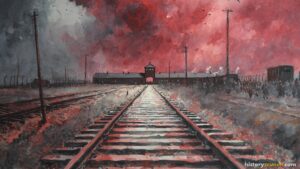
Holocaust

Nazi Germany: A Detailed Overview

Nazi Germany was a totalitarian dictatorship that existed in Germany from 1933 to 1945 under the leadership of Adolf Hitler and the Nazi Party. It was one of the most destructive and brutal regimes in human history, responsible for starting World War II and carrying out the Holocaust.
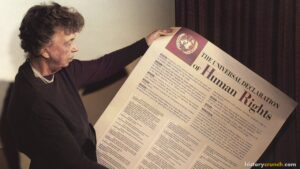

Universal Declaration of Human Rights

Universal Declaration of Human Rights: A Detailed Summary

The Universal Declaration of Human Rights, adopted by the United Nations in 1948, outlines fundamental rights and freedoms that every person is entitled to regardless of race, religion, nationality, or gender. It serves as a global standard for promoting justice, equality, and human dignity.

Genocide

Genocide: A Detailed Overview

Genocide is the intentional and systematic destruction of a national, ethnic, racial, or religious group, often through mass killings, forced displacement, and other acts of violence. This article details the history and significance of genocide, especially in relation to the 20th century.

Crimes Against Humanity

Crimes Against Humanity: A Detailed Overview

Crimes against humanity are serious offenses, such as murder, torture, or persecution, committed as part of a widespread or systematic attack against civilians. This article details the history and significance of crimes against humanity.

Nuremberg Trials

Nuremberg Trials: A Detailed Summary

The Nuremberg Trials were a series of military tribunals held after World War II to prosecute top Nazi leaders for war crimes, crimes against humanity, and genocide. This article details the history and significance of the Nuremberg Trials.

War Crimes

War Crimes: A Detailed Overview

War crimes are serious violations of the laws of war, including acts like targeting civilians, torture, and the use of prohibited weapons during armed conflict. This article details the history and significance of war crimes and various war criminals.

Social Darwinism

Social Darwinism: A Detailed Summary

Social Darwinism is a theory that applies the concept of ‘survival of the fittest’ from Charles Darwin’s theory of natural selection to human societies, often justifying inequality, imperialism, and social hierarchy. It is most commonly seen in history in terms of economic, the Age of Imperialism and Nazi Germany.

Elie Wiesel: A Detailed Biography

Elie Wiesel was an American writer, professor, political activist, Nobel laureate and Holocaust survivor. This article details the life and significance of Elie Wiesel.

Dictatorship: A Detailed Summary

Dictatorships have been a relatively common form of government throughout the course of the 20th century. This article details the history, principles, examples and techniques of dictatorships.

Nazi Party

Nazi Party: A Detailed Summary

The Nazi Party was the dominant force in Germany throughout the 1930s and 1940s, and was responsible for events such as World War II and the Holocaust.