Slavery in the United States

Compromise of 1850

Compromise of 1850: A Detailed Summary

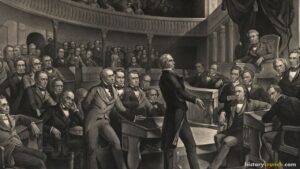
The Compromise of 1850 was a series of laws aimed at easing tensions between free and slave states following the Mexican-American War. It admitted California as a free state, strengthened the Fugitive Slave Act, and allowed new territories to decide on slavery through popular sovereignty. This article details the history and significance of the Compromise of 1850.
Causes of the American Civil War

Causes of the American Civil War: A Detailed Summary

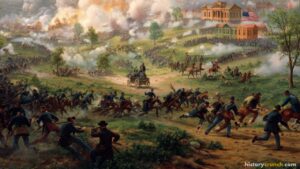
There were several main causes of the American Civil War, including: tensions over slavery, the issue of state rights, the election of Abraham Lincoln in 1860 and the Battle of Fort Sumter. This article details the history and significance of the causes of the American Civil War.

Economics of Slavery in the United States

Economics of Slavery in the United States: A Detailed Summary

The economics of slavery in the United States were centered on forced labor, especially in the South, where enslaved people were vital to the profitability of cotton, tobacco, and sugar plantations. This article details the history of the economics of slavery in the United States.

Dred Scott

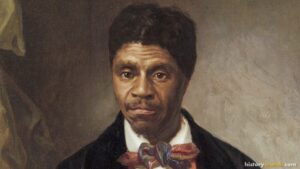
Dred Scott and the Dred Scott Case: A Detailed Summary

Dred Scott was an enslaved African American who sued for his freedom. In 1857, the United States Supreme Court ruled against him in the infamous ‘Dred Scott Decision’, stating that enslaved people were property and not citizens, and therefore had no right to sue. This article details the history and significance of Dred Scott and the Dred Scott Case.

John Brown Harpers Ferry Raid

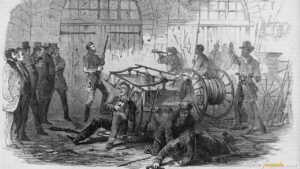
John Brown’s Raid on Harpers Ferry: A Detailed Summary

John Brown’s raid on Harpers Ferry in 1859 was an important event in American history, especially in relation to the outbreak of the American Civil War. This article details the history and significance of John Brown’s raid on Harpers Ferry.

Harriet Tubman

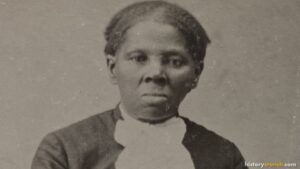
Harriet Tubman: A Detailed Biography

Harriet Tubman was an abolitionist and former enslaved woman who led hundreds of enslaved people to freedom through the Underground Railroad. This article details the life and significance of Harriet Tubman.

Emancipation Proclamation

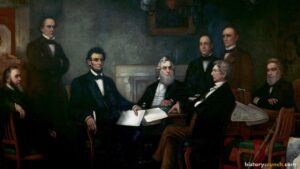
Emancipation Proclamation: A Detailed Summary

The Emancipation Proclamation, issued by President Abraham Lincoln on January 1st, 1863, declared all enslaved people in Confederate-held territory to be free. This article details the history and significance of the Emancipation Proclamation.

Atlantic Slave Trade Map

Atlantic Slave Trade Map

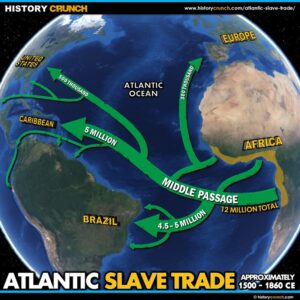
This Atlantic Slave Trade map was created by History Crunch to help students and teachers understand the geographic scope of the Atlantic Slave Trade from the 16th to the 19th century. It shows the regions of Africa from which enslaved people were taken, the routes across the Atlantic Ocean and the destinations across North America, South America and the Caribbean. Designed for students in grades 5 to 12.

Trade Triangle Map

Trade Triangle Map

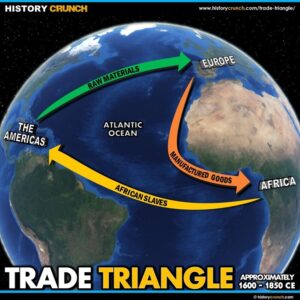
This Trade Triangle map was created by History Crunch to help students and teachers understand the geographic routes of the Trade Triangle across the Atlantic Ocean. It shows the three routes connecting Europe, West Africa and the Americas that formed the basis of the Atlantic Slave Trade from the 16th to the 19th century. Designed for students in grades 5 to 12.