Democratic Socialism is a political and economic ideology that combines the principles of democracy with socialist economic policies. Democratic Socialists believe that the problems created by capitalism, including poverty, inequality, and the concentration of wealth in the hands of a few, can and should be solved through democratic political processes rather than through revolution. Unlike communism, which calls for the abolition of private property and the seizure of power by the state, Democratic Socialism supports a mixed economy in which private businesses can operate alongside publicly owned services and strong government regulation. It also strongly supports the protection of individual rights, free elections, and the institutions of democracy. In fact, the most well-known examples of Democratic Socialism in practice are the Nordic countries of Scandinavia, including Sweden, Norway, and Denmark, which have combined free-market economies with extensive social welfare programs funded through progressive taxation.
WHAT IS SOCIALISM?
Socialism is a political and economic system that focuses on the principles of economic equality, cooperation, and public ownership. As an ideology, socialism is based on collectivism, which is the belief that the goal of any society is to achieve the best common good for all or most citizens. This means that economic and political systems based on socialist principles favor policies that allow for government intervention in the economy in order to promote the greatest good for the most people. Democratic Socialism is one of several different types of socialism that developed over the course of the 19th and 20th centuries. As stated above, it is distinct from communism in that it works within democratic political systems rather than seeking to overthrow them.
DEMOCRATIC SOCIALISM – MAIN PRINCIPLES
The main principles of Democratic Socialism center on the idea that a fair and equal society can be achieved through democratic political participation and government-led economic reform. There are several key features that most Democratic Socialist movements and governments share.
The most fundamental is the combination of democracy and socialism. Democratic Socialists believe strongly that political freedom and economic equality must go hand in hand. They reject the idea that socialism requires an authoritarian government or the abolition of individual rights. In fact, one of the most important things that sets Democratic Socialism apart from communism is its insistence that political power must be accountable to the people through free elections, free speech, and the protection of civil liberties.
A second key principle is the mixed economy. Democratic Socialists do not typically call for the government to own all businesses and industries. Instead, they support an economic system in which private enterprise is allowed to operate but is regulated by the government to prevent exploitation, and in which certain key services, such as healthcare, education, and public transportation, are owned or funded by the government and provided to all citizens equally. For instance, in Sweden the majority of businesses are privately owned, but the government funds universal healthcare, free university education, and a comprehensive system of social welfare programs.
A third key principle is the welfare state. Democratic Socialists believe strongly that the government has a responsibility to ensure that all citizens have access to the basic necessities of life, regardless of their income. This means supporting social programs such as old age pensions, unemployment insurance, publicly funded healthcare, free or affordable education, and affordable housing. The welfare state is the practical expression of the socialist principle of collective interest, meaning the idea that society as a whole benefits when all of its members are able to live in dignity and security.
A fourth key principle is progressive taxation. Democratic Socialists typically support higher taxes on wealthy individuals and corporations in order to fund social programs and reduce the gap between the richest and poorest members of society. This reflects the socialist principle of economic equality, which holds that governments have a role to play in reducing excessive inequality. For instance, the Nordic countries consistently have some of the highest income tax rates in the world, which fund the extensive social programs their citizens rely on.
DEMOCRATIC SOCIALISM – HISTORY
Democratic Socialism developed gradually over the course of the 19th and early 20th centuries, growing out of the broader socialist tradition that had emerged as a response to the problems of industrial capitalism. The earliest roots of Democratic Socialism can be found in the Utopian Socialist thinkers of the early 19th century, who believed that society could be peacefully transformed through cooperation and community ownership without the need for violent revolution.
A major step in the development of Democratic Socialism came with the work of the British Fabian Society, founded in 1884. The Fabians argued that socialism could be achieved gradually and peacefully through democratic reform rather than through revolution. They influenced the development of the British Labour Party, which was founded in 1900 and became one of the most important democratic socialist political parties in the world. The Labour Party played a central role in building the British welfare state after World War II, introducing the National Health Service in 1948 and expanding publicly funded education, housing, and social security.
In Germany, the Social Democratic Party, known as the SPD, became one of the largest political parties in the country in the late 19th century and was an important voice for democratic socialist ideas in Europe. The party supported working within the democratic system to achieve socialist economic goals rather than seeking revolutionary change. Eduard Bernstein, one of the most important thinkers in the history of the SPD, argued in the late 19th century that Marx’s prediction of inevitable violent revolution was wrong and that socialism could and should be achieved through gradual democratic reform.
In the 20th century, Democratic Socialism became increasingly influential across Western Europe. Countries like Sweden, Norway, Denmark, and Finland developed welfare states during the mid-20th century that became the most celebrated examples of Democratic Socialism in practice. These countries combined free market economies with universal social programs, strong labor protections, and progressive taxation to create some of the most equal and prosperous societies in the world. The Swedish Social Democrats, who governed Sweden for much of the 20th century, were particularly influential in demonstrating that a democratic socialist approach could produce both economic growth and social equality.
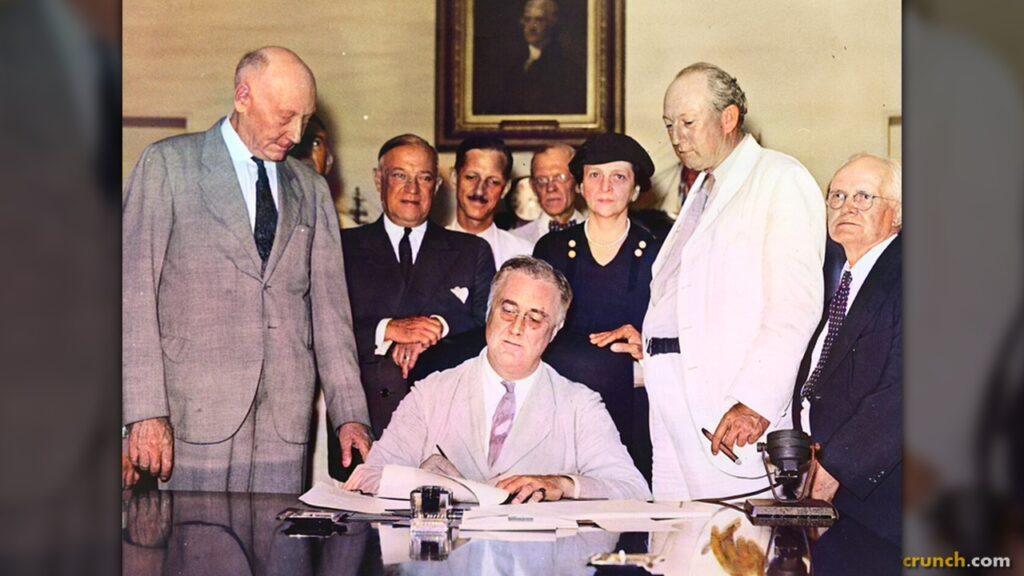
In the United States, Democratic Socialist ideas influenced President Franklin D. Roosevelt’s New Deal response to the Great Depression in the 1930s, which introduced programs such as Social Security, unemployment insurance, and regulation of the financial industry. While the United States never adopted Democratic Socialism as a political system in the way that Scandinavian countries did, many of the social programs that Americans rely on today are rooted in the democratic socialist tradition.
DEMOCRATIC SOCIALISM – DEMOCRATIC SOCIALISM VERSUS COMMUNISM
One of the most important distinctions in the history of socialist thought is the difference between Democratic Socialism and communism. Both ideologies believe that capitalism produces unjust inequality and that economic resources should be more equally shared. However, they differ fundamentally in how they propose to achieve this goal and what kind of society they want to create.
Communism, as developed by Karl Marx and Friedrich Engels and practiced in the Soviet Union and other communist states, calls for the violent overthrow of capitalism, the abolition of private property, and the creation of a state that controls all economic activity in the name of the working class. In practice, communist states have typically been governed by single-party dictatorships that suppressed political opposition and individual freedoms.
Democratic Socialism, by contrast, rejects violent revolution and authoritarianism entirely. Democratic Socialists want to achieve economic equality through peaceful democratic means, working within existing political institutions rather than destroying them. They support a pluralist democracy with multiple political parties, free elections, freedom of speech, and the protection of individual rights. For instance, while the Soviet Union under Stalin suppressed political opposition and used forced labor camps, the democratic socialist governments of Scandinavia maintained free elections, independent courts, and strong protections for individual liberties while simultaneously building some of the most comprehensive welfare states in the world.
DEMOCRATIC SOCIALISM – POSITIVES
Just like any other ideology, Democratic Socialism has both positive and negative qualities associated with it. On the positive side, supporters argue that it promotes justice, equality, and social security while preserving the democratic freedoms and individual rights that people value. For instance, the Nordic countries consistently rank among the highest in the world for quality of life, happiness, healthcare outcomes, and educational achievement. Supporters argue that this is direct evidence of the benefits of combining free markets with strong social programs and progressive taxation.
Democratic Socialism also ensures that all citizens have access to basic services such as healthcare and education regardless of their income. This reduces poverty, improves social mobility, and limits the concentration of extreme wealth in the hands of a small number of people. In fact, many of the social programs that citizens in modern democracies count on most heavily, such as old age pensions, public schools, and public healthcare systems, are the product of democratic socialist movements and policies.
DEMOCRATIC SOCIALISM – NEGATIVES
While there are several positives to Democratic Socialism, there are also critics who argue it has negative qualities as well. On the negative side, critics argue that the high taxes required to fund extensive social programs can reduce incentives for individuals and businesses to work hard and invest. They argue that heavy government regulation and high taxes can slow economic growth and reduce innovation. Some also argue that large government bureaucracies created to manage social programs can become inefficient and wasteful.
Furthermore, some critics draw a distinction between Democratic Socialism and social democracy, arguing that the Nordic countries are more accurately described as social democracies than true democratic socialist states. A social democracy maintains a largely capitalist economy with a strong welfare system, while Democratic Socialism in its purer form would involve more extensive public ownership of key industries and resources. This distinction is debated among economists and political scientists, and the terminology is often used loosely in public debate.
DEMOCRATIC SOCIALISM – SIGNIFICANCE
The significance of Democratic Socialism in the history of the modern world is considerable. It demonstrated that socialist economic goals, including greater equality, universal access to healthcare and education, and protection of workers’ rights, could be pursued within democratic political systems without sacrificing individual freedoms or resorting to authoritarian methods.
The welfare states that Democratic Socialism helped build across Western Europe after World War II represented one of the most important social achievements of the 20th century, dramatically reducing poverty, improving public health, and expanding educational opportunity for millions of people. In fact, the social programs that people in many modern democracies rely on most heavily are the direct product of democratic socialist political movements.
As stated above, Democratic Socialism also served as an important alternative to communism during the Cold War, demonstrating that socialist economic values did not require authoritarian government. As such, Democratic Socialism remains one of the most important and widely debated political ideologies of the modern world, with its ideas continuing to shape political debates about inequality, taxation, and the role of government in societies around the world today.