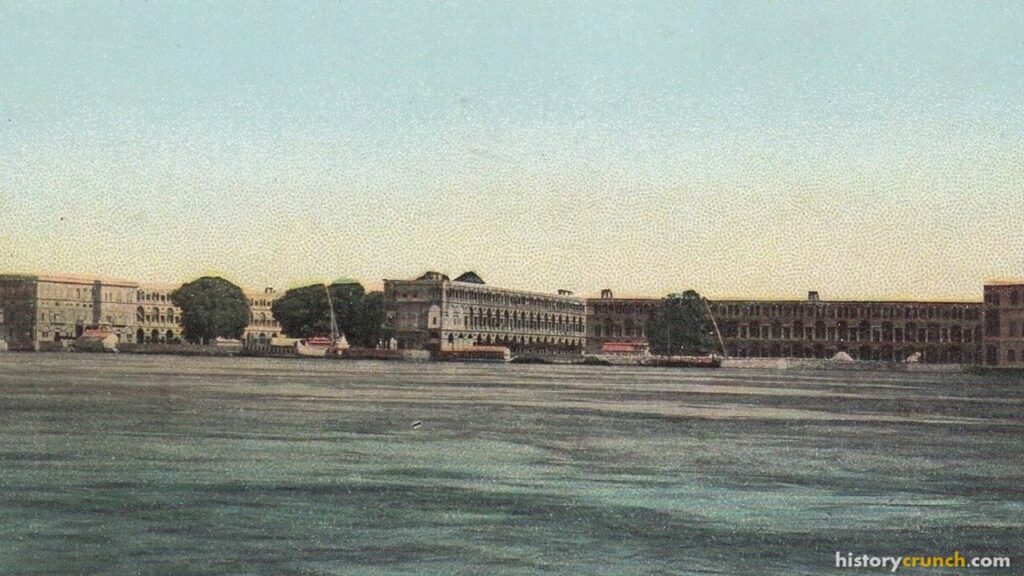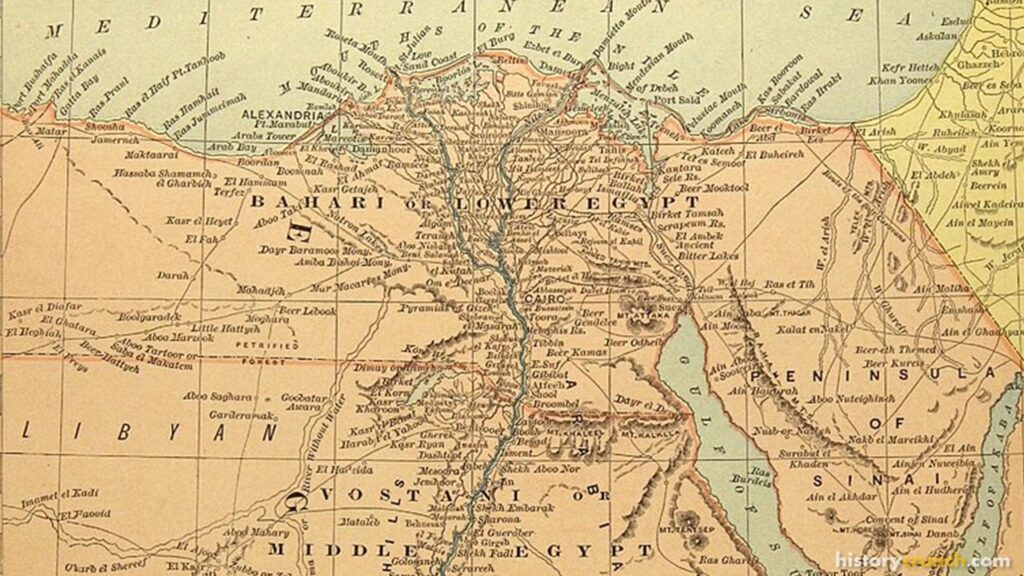
The Suez Canal was an important waterway in Egypt and a significant site in the Age of Imperialism. More specifically, European nations such as Britain and France fought over control of the Suez Canal, as it proved to be a strategic waterway for imperialistic campaigns. As such, historians consider the history of the Suez Canal to be significant to the European imperialism in Africa (Scramble for Africa) and British Imperialism in India.
EARLY EUROPEAN INTEREST IN EGYPT
Northern Africa had a long history of contact with European nations, even dating back to ancient times. However, true European imperialism began when Napoleon Bonaparte invaded Egypt with his French forces in 1798. Napoleon invaded the region with thousands of troops and hundreds of war ships. As well, he brought along a group of scientists in order to study the culture and ancient artifacts of Egypt. Napoleon’s goal was to invade Egypt in order to limit British influence in the region and promote French political and economic interests. Despite many victories, Napoleon and his troops were eventually forced to withdraw by the British army. More specifically, the British defeated Napoleon and his forces in the Battle of the Nile in August of 1798. Napoleon famously returned to France and overthrew the French government to begin his own reign.
CONSTRUCTION OF THE SUEZ CANAL
Other than Napoleon’s early campaign, Europeans generally had little interest in Egypt until 1859 when the construction of the Suez Canal began, which connected the Mediterranean Sea with the Red Sea. This was an important moment in the Egyptian 19th century history, as it saw the European nations take an increased interest in the northern African nation. This is because the Suez Canal allowed for much shorter trips to Asia from Europe. Previously, ships would have to travel the entire way around Africa in order to make the journey to the Far East. This was especially significant at the time, due to the Age of Imperialism and European interest in both India and China. More specifically, the British had a keen interest in the Suez Canal due to their colonization in India, while the French were interested due to their control over regions in the South Pacific.
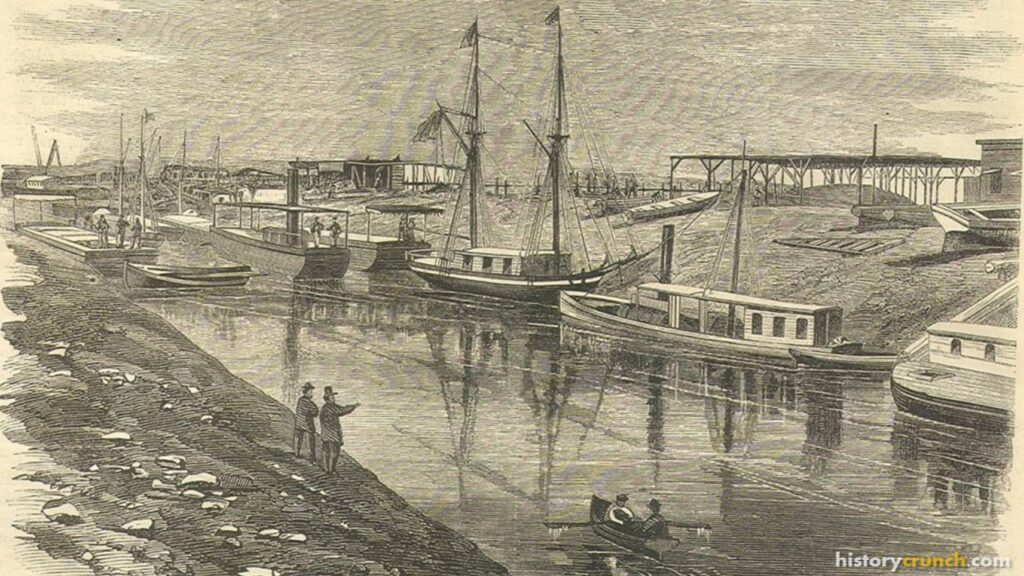
The Suez Canal Company (also called the ‘Universal Company of the Maritime Canal of Suez’) carried out the construction of the Suez Canal from 1859 until 1869. At first, the company was funded and controlled by French investors, which gave France an early imperialistic advantage in Egypt. In fact, Ferdinand de Lesseps, who was a French diplomat and developer, headed the Suez Canal Company. As stated above, it took the Suez Canal Company approximately a decade to complete the Suez Canal, and it was finally opened on November 17th in 1869. The canal remained under the control of the French via the Suez Canal Company for the first number of years. However, it changed to Britain when it took over Egypt in 1882.
BRITISH IMPERIALISM IN EGYPT
As stated above, British control over Egypt began in 1882. In reality, the British had begun to increase their influence in Egypt in the decade before by taking on a large financial interest in the Suez Canal. Due to the vast British Empire, and its overwhelming naval power, Britain had a keen interest in controlling the Suez Canal. In fact, British imperialism in India was a key reason for British interest in Egypt, since the Suez Canal gave Britain a quicker and more direct route to its colonies in the Far East. For instance, the British began to refer to the Suez Canal as the ‘lifeline of the British Empire’.
In 1881, the Egypt underwent major upheavals in terms of its government and society. More specifically, the government of Egypt, headed by Tewfik Pasha, experienced an uprising of protest by Islamic nationalism. The outpouring of nationalism eventually led to the European nations and Tewfik Pasha losing control over large sections of the country. The nationalist movement in Egypt aimed at removing Tewfik Pasha from power, and removing European influence from the country. This caused the British to respond militarily in Egypt in order to help reinstate Tewfik Pasha. The British did this out of fear of the nationalists gaining full control over the country and the Suez Canal.
As such, the British organized its forces and carried out the Anglo-Egyptian War from July to September in 1882. The British easily defeated the Egyptian nationalists and restored Tewfik Pasha to power. However, the victory also led to British control over the Suez Canal. Britain continued its influence in Egypt by carrying out several major projects to boost Egyptian economic activity, such as its cotton production. Egypt became a protectorate of the British Empire, which meant that while Egypt had its own government it was still heavily influenced and controlled by the British. As such, the British considered Egypt to be under its ‘protection’ and guided the African nation in ways that best suited the British. British rule over Egypt continued throughout the remainder of the 19th century and well into the 20th century. For instance, Britain took even more control over Egypt in 1914, with the outbreak of World War I. In the end, Britain did not formally leave Egypt until June of 1956.