The end of the Vietnam War first took shape in 1973 when the United States ended its direct combat role through the Paris Peace Accords. With that said and it reached its final military conclusion on April 30th, 1975, when Saigon fell to communist forces from the north. Regardless, the end of the Vietnam War was a significant period in the history of the Vietnam War, American history and the overall events of the Cold War.
END OF THE VIETNAM WAR – BACKGROUND
By the late 1960s, the Vietnam War had become a long and costly conflict for the United States, North Vietnam, South Vietnam and the wider region. American leaders had entered the war to prevent communist victory in South Vietnam, under the policy of American containment. With that said, the fighting of the conflict dragged on year after year and public support in the United States weakened dramatically over time. At the same time, North Vietnam showed that it was willing to keep fighting despite bombing raids and heavy casualty loses.
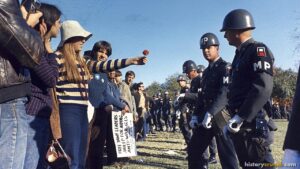
As a result, when Richard Nixon became president in 1969, he tried to reduce direct American involvement while still preserving South Vietnam. This policy became known as ‘Vietnamization’. Under Vietnamization, the United States gradually withdrew troops and shifted more of the ground war to the South Vietnamese army. However, this did not bring real peace. The war continued, and political leaders in the United States were still searching for a settlement that would allow the United States to leave without appearing to accept defeat.
END OF THE VIETNAM WAR – PARIS PEACE ACCORDS
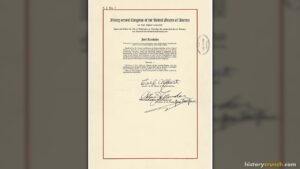
A major turning point in the Vietnam War came on January 27th, 1973, when the Paris Peace Accords were signed. The agreement called for a cease-fire, the withdrawal of American forces and the return of prisoners of war. In general, this looked like a diplomatic end to the conflict. With that said, the agreement solved only part of the problem because it ended direct American military involvement without truly settling the struggle between North Vietnam and South Vietnam.
This was important because many people at the time spoke of 1973 as the end of the war, but the fighting inside Vietnam did not really stop. American combat troops left Vietnam in March of 1973, and the United States Military Assistance Command, Vietnam, closed soon after. Yet communist forces continued to operate in the south, and the government in Saigon still faced a determined enemy. As such, the agreement of the Paris Peace Accords created a pause and a new stage of the conflict rather than a lasting peace.
Also, the Paris Peace Accords rested on a weak foundation. For example, while American leaders gave assurances to South Vietnam of ongoing assistance, later events made those promises harder to keep. For instance, the U.S. Congress became less willing to support renewed military action, and the broader political crisis in the United States, including the Watergate Scandal, weakened the authority and trust of the executive branch in American politics. In general, historians agree that this left South Vietnam in a far more dangerous position after 1973.
END OF THE VIETNAM WAR – COLLAPSE OF SOUTH VIETNAM
After the Paris Peace Accords, the war entered a new phase. The United States still provided aid to South Vietnam, but it no longer sent combat forces back into the conflict. As such, North Vietnam used the time after 1973 to rebuild, improve its fighting abilities and prepare for a larger final offensive. South Vietnam, by contrast, faced military strain, political weakness and growing uncertainty about whether the United States would return in force if the situation became desperate.
Finally, in March of 1975, North Vietnamese forces launched a major offensive against South Vietnam. The speed of their advance shocked many. As cities and provinces fell, the South Vietnamese military and government began to unravel, and the loss of territory became harder and harder to stop. This was important because the final collapse did not come after one single dramatic battle alone. It came through a rapid chain of military defeats and political breakdown.
As the communist advance continued, panic spread in South Vietnam. Refugees crowded roads and cities, and officials struggled to maintain control. President Nguyen Van Thieu resigned in April of 1975, which showed how serious the crisis had become. By late April, Saigon itself was under immediate threat and the final end of South Vietnam was close.
END OF THE VIETNAM WAR – THE FALL OF SAIGON
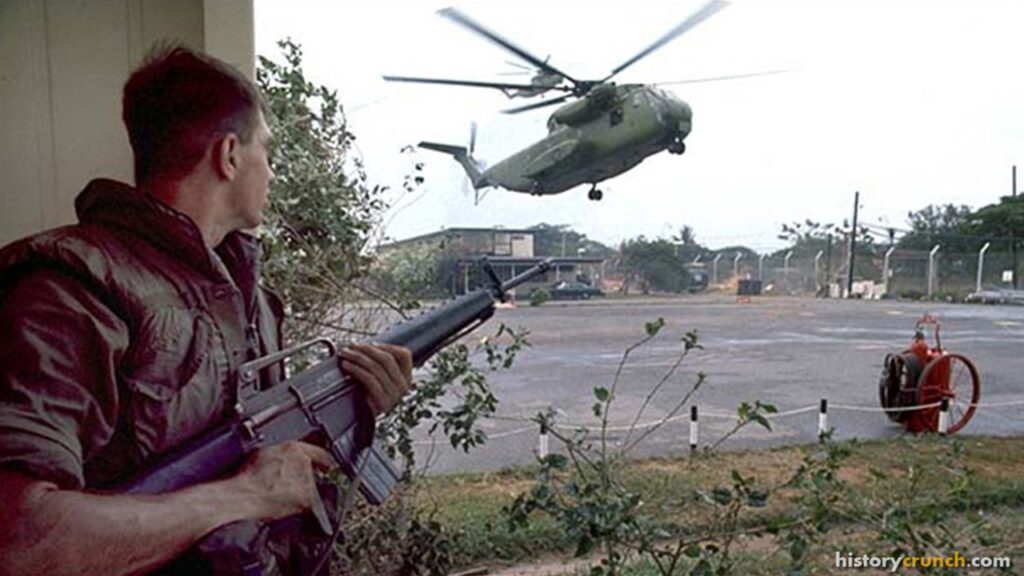
The final stage of the end of the Vietnam War came in the last days of April of 1975. As North Vietnamese forces closed in on Saigon, the United States carried out ‘Operation Frequent Wind’. This was the codename for the emergency evacuation of American personnel and many South Vietnamese from the South Vietnam capital. Helicopters lifted evacuees from the American embassy and other key points in one of the most famous scenes of the war’s ending.
On April 30th, 1975, North Vietnamese tanks entered Saigon and the South Vietnamese government surrendered. As a result, historians often cite this date as the final military end of the Vietnam War. The fall of Saigon marked the destruction of South Vietnam as a separate state and the victory of communist forces after decades of anti-colonial struggle, civil war and Cold War conflict.
In the years that followed, Vietnam was unified under communist rule. Saigon was later renamed Ho Chi Minh City, after the communist leader of North Vietnam from the early years of the Vietnam War. Large numbers of refugees fled Vietnam, families were divided and the political and human effects of the conflict continued for many years.
END OF THE VIETNAM WAR – SIGNIFICANCE
The end of the Vietnam War was important because it marked a major turning point in Cold War history. It showed that the United States could commit enormous military power and still fail to secure the political result it wanted. It also damaged American confidence, deepened public distrust of government and became one of the clearest examples of the limits of American power in the Cold War era. This is because, the Vietnam War was considered to be an example of a ‘proxy war‘ between the United States and the Soviet Union. As a result, the Vietnam War and its overall history was highly significant to the history of the overall Cold War.
The end of the Vietnam War was also important because it transformed Vietnam and Southeast Asia. It ended the long struggle that had grown out of colonialism, revolution and Cold War rivalry, but it left behind deep destruction and lasting political consequences. Historians generally agree that the end of the Vietnam War cannot be understood only as a battlefield result. It was also the end of a major era in American foreign policy in the 20th century.