The Great Depression was a significant event in world history and was of particular importance to American history. It was a worldwide economic recession that occurred primarily during the 1930s. A recession is a term that refers to a general economic downturn resulting in high levels of unemployment and a loss in consumer spending. As a result, during the Great Depression, working-class people struggled to find work while businesses struggled to survive with an overall reduction in the sales of goods and services. Historians have identified several different causes of the events of the Great Depression, including: the stock market crash of 1929, the purchasing of stocks on margin, the wide income gap between the wealthy and the poor, the loss of consumer spending, the failure of banks to deal with the crisis, protectionism and the weather conditions of the American Midwest (Dust Bowl).
WHAT CAUSED THE GREAT DEPRESSION?
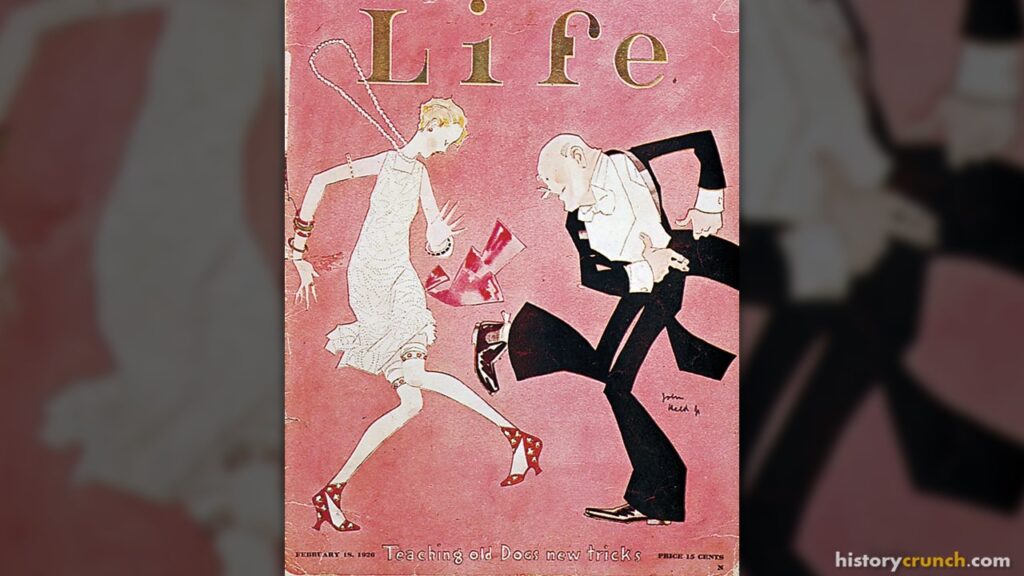
The decade before the start of the Great Depression is often referred to as the ‘Roaring Twenties’ symbolizing the economic prosperity of the time. In general, people were making large sums of money in the stock market by purchasing shares in companies. When you own a stock you own a part of that particular company, although usually a very small percentage. If the company is successful and grows its wealth then the value of the stock will increase, while if the company struggles, the value of the stock will fall. In the 1920s many people were buying stocks with the hope of them increasing forever, so they could sell their shares and make a profit. All of the economic optimism of the 1920s ended in 1929 with the collapse of the stock market.
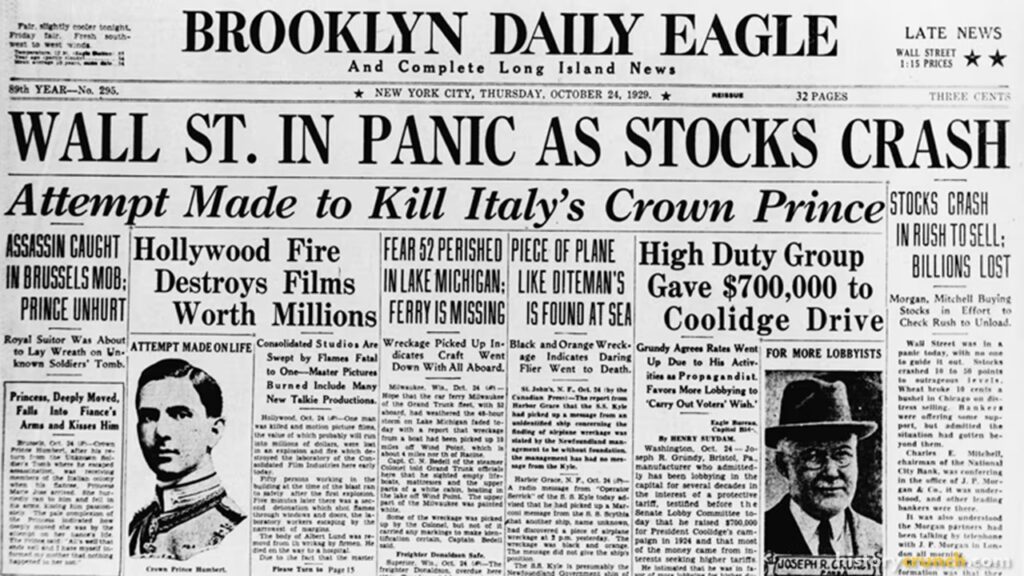
In general, most historians identify the stock market crash in October of 1929 as the start of the Great Depression in the United States; however the market began to experience difficulty at an earlier stage. For example, the stock markets in the United States and Europe experienced volatility throughout the spring and summer of 1929, until finally the New York Stock Exchange crashed in October of that year.
Beginning on October 24th, also known as ‘Black Thursday’, the New York Stock Exchange began to experience volatility and heavy trading which resulted in a large drop of the overall value of the market. Over the next several days, prominent American bankers attempted to slow the drop in the market, but all of their attempts only supplied temporary relief. Finally, on October 29th, also known as ‘Black Tuesday’, the market took another significant drop and the panic of the stock market crash reached its peak. In total, the market had lost over $30 billion with nearly $14 billion being lost on October 29th, alone. The crash saw the market lose over one third of its total value and led to several other major economic issues that furthered the recession, including: loss of consumer spending, increase in overall unemployment, and bank runs and closures. The Great Depression in the United States had begun and would have many different impacts on both the United States and the rest of the world.
WHAT WERE THE MAIN IMPACTS OF THE GREAT DEPRESSION?
The Great Depression unfolded as a series of major events which had profound impacts on the lives of people. For instance, historians have identified several significant impacts of the Great Depression, including: the election of Franklin D. Roosevelt, the introduction of the ‘New Deal’, and the rise of extremist ideologies.
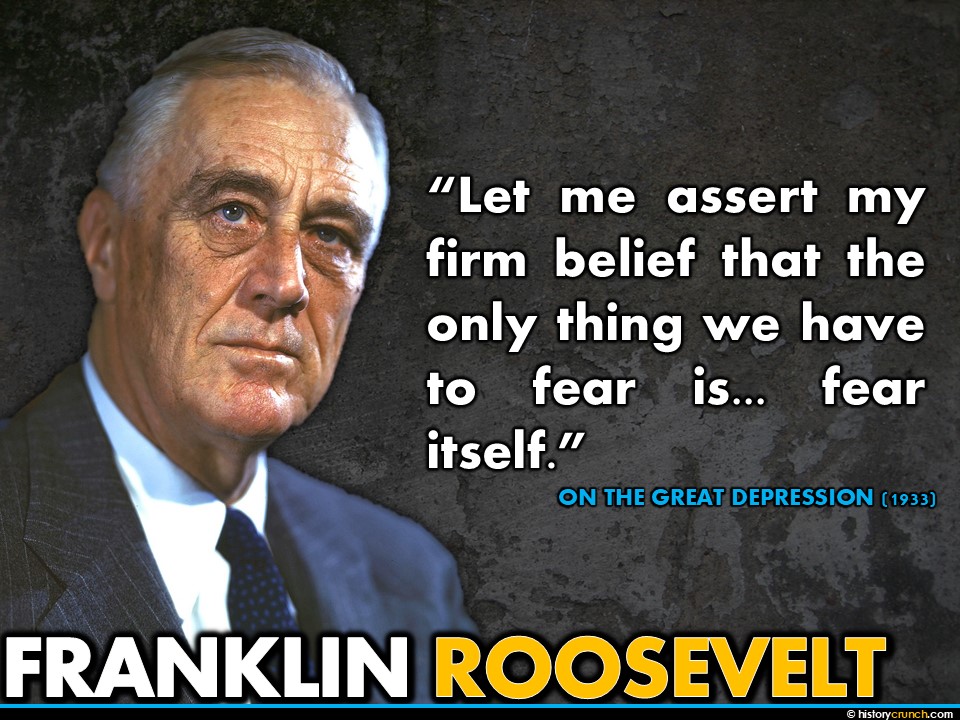
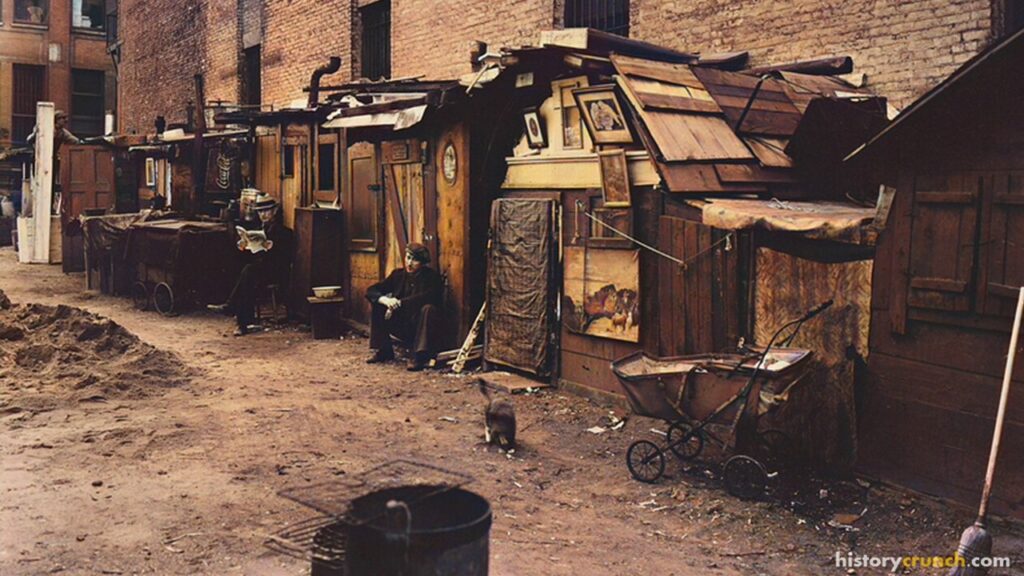
The first major impact of the Great Depression was the election of Franklin D. Roosevelt in 1932. Herbert Hoover was the President of the United States at the start of the Great Depression and held a general view based on self-reliance. This means that he believed it was the responsibility of individuals to take care of themselves and not rely on assistance from the government. As such, he did not agree that the government should intervene in the economy and referred to the economic hardship of the Great Depression as ‘a passing incident’. As a result of his presidency, many working-class people began to name aspects of their poverty after Hoover. For example, shanty-towns that were constructed on the edge of cities in the 1930s were often referred to as ‘Hoovervilles’. In the 1932 presidential election, Hoover faced off against Democratic candidate Franklin D. Roosevelt. Roosevelt offered a completely different view of the recession and ran on the platform of a ‘New Deal’ for the American people. With unemployment over 20% in 1932, Roosevelt blamed the worsening economic conditions on Hoover’s mishandling of the crisis. As a result, Roosevelt won the election in a landslide.
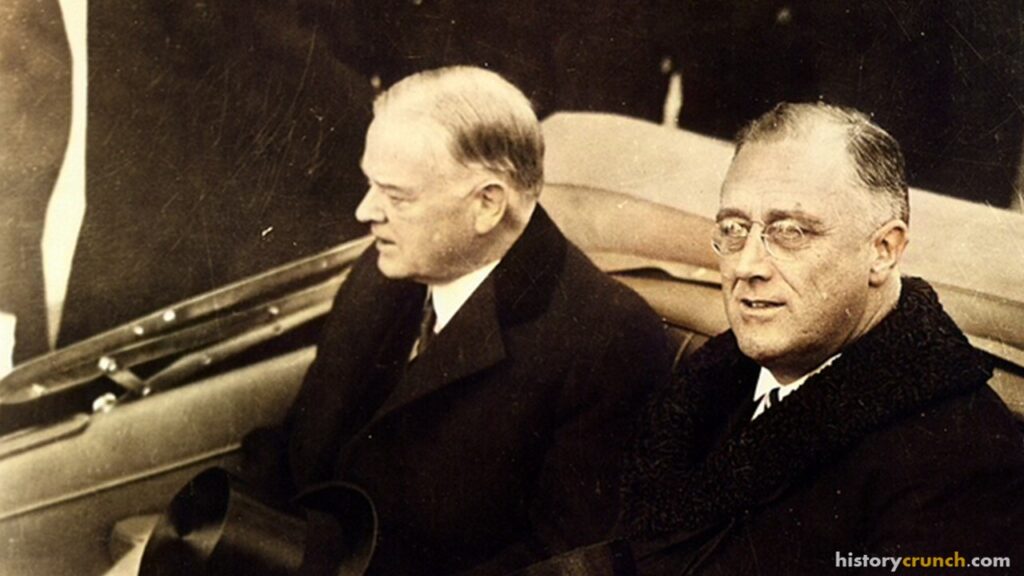
When he took office on March 4th, 1933, the economy was in a downward spiral. Unemployment had increased and industrial production had dropped drastically. As a result, he set out right away to begin implementing many of the measures of his New Deal.
The New Deal was a series of government initiatives and programs aimed at ending the economic devastation of the Great Depression. Many historians agree that the New Deal included two distinct stages. The First New Deal occurred from 1933, when Roosevelt took office until 1934, and focused on issues related to banking. The Second New Deal occurred from 1935 until 1938 and focused on several important programs including the Social Security Act. In general, Roosevelt’s plan was for the federal government to spend money in an attempt to achieve three goals: economic recovery, job creation, and investment in public works projects.
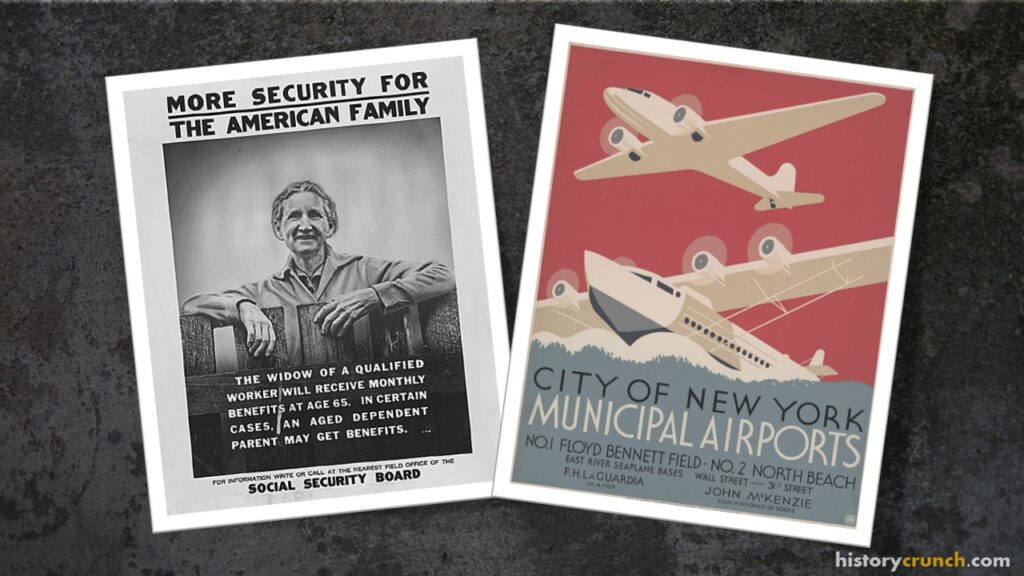
Due to the economic crisis facing the United States at the time, the federal government undertook a high level of intervention in the economy in hopes of helping working-class people. In general, this had a profound effect on the United States and resulted in a dramatic shift in American politics. The implementation of the New Deal saw the United States combine aspects of socialism with its more capitalist history. In general, socialism is a left-wing economic system that favors government intervention in the economy in order to try to solve economic issues. At the time, socialist policies were popular around the world and were causing many countries to change their policies. American politics and economics had been much more right-wing in the decades before the Great Depression.
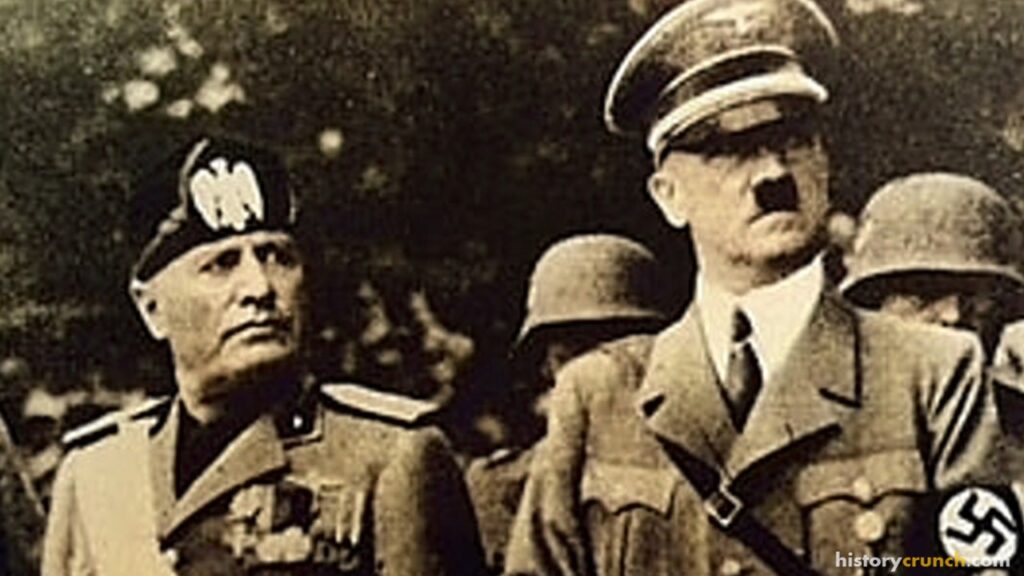
Many historians also acknowledge the impact that the Great Depression had on the rise to power of extremist ideologies in Europe and the events of World War II. For example, fascist dictators such as Benito Mussolini and Adolf Hitler rose to prominence in Europe during the 1920s and 1930s. Fascism is an ideology that is led by a dictator who controls all aspects of the society. For example, Adolf Hitler became the leader of Germany in March of 1933 amid the worldwide effects of the Great Depression.
WHAT WAS LIFE LIKE IN THE GREAT DEPRESSION?
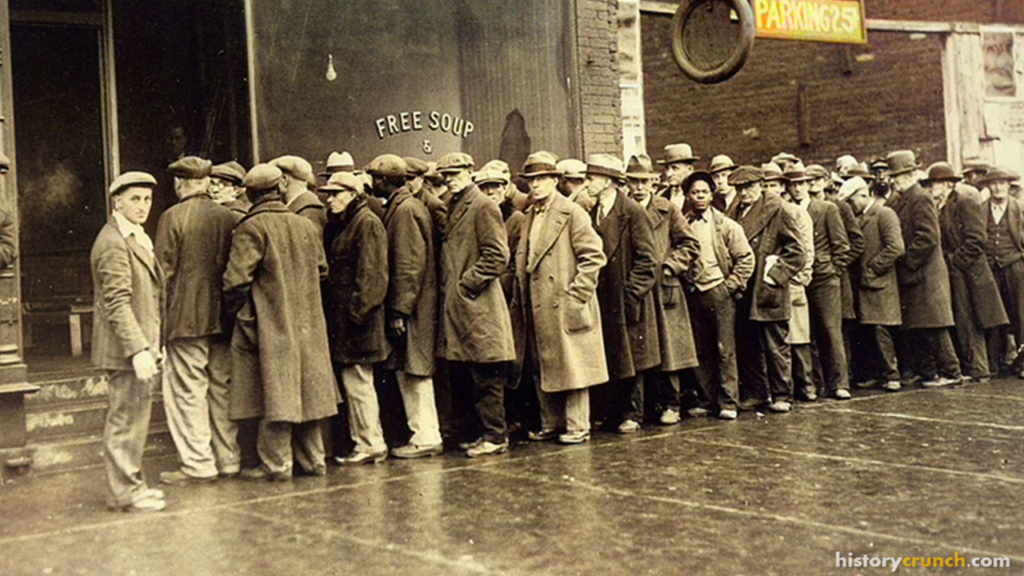
Life in the Great Depression was difficult for millions of working-class people. In short, the Great Depression led to widespread unemployment as the economy struggled following the Stock Market Crash of 1929. In particular, poverty among the working-class was widespread during the Great Depression and it impacted their lives in several ways including: housing, travel, and quality of life.
For example, the lack of income meant that people could not afford basic housing. Many people had their homes or farms foreclosed on by the banks. This means that because the people could not make payments the bank forced them out of their property. As such, the Great Depression caused many people to search for other ways of life and led to high levels of homelessness.
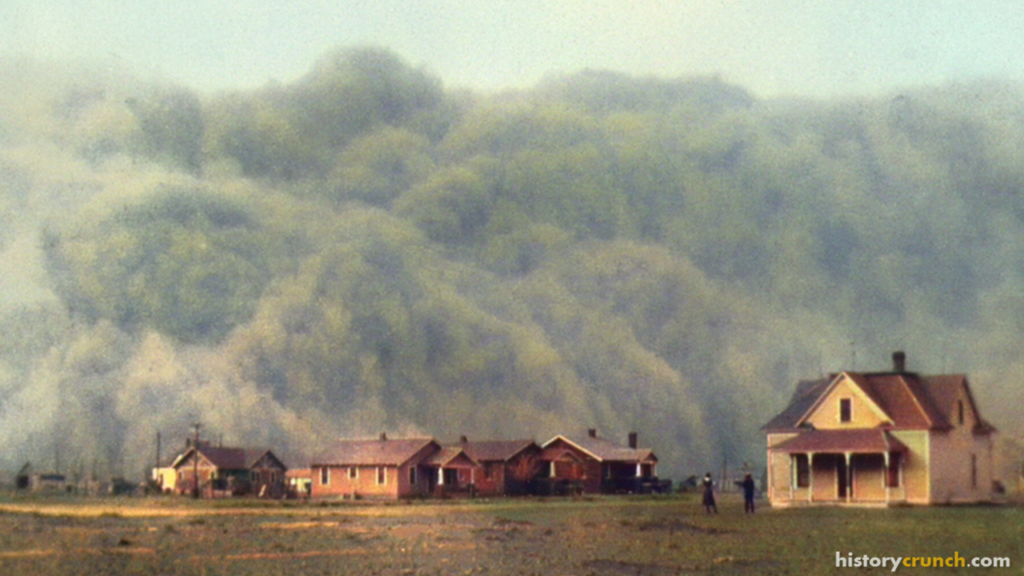
Also, migration was a central component of life for many struggling working-class people in the United States during the Great Depression. This was likely best seen in the events of the Dust Bowl from the American Midwest. The Dust Bowl is the term used to refer to the drought conditions that occurred across North America during the 1930s and the time period of the Great Depression. Also referred to as the Dirty Thirties, the Dust Bowl affected over 100,000,000 acres of agricultural land across Canada and the United States. In the United States, it was generally centered on farms in Colorado, Kansas, Oklahoma and Texas.
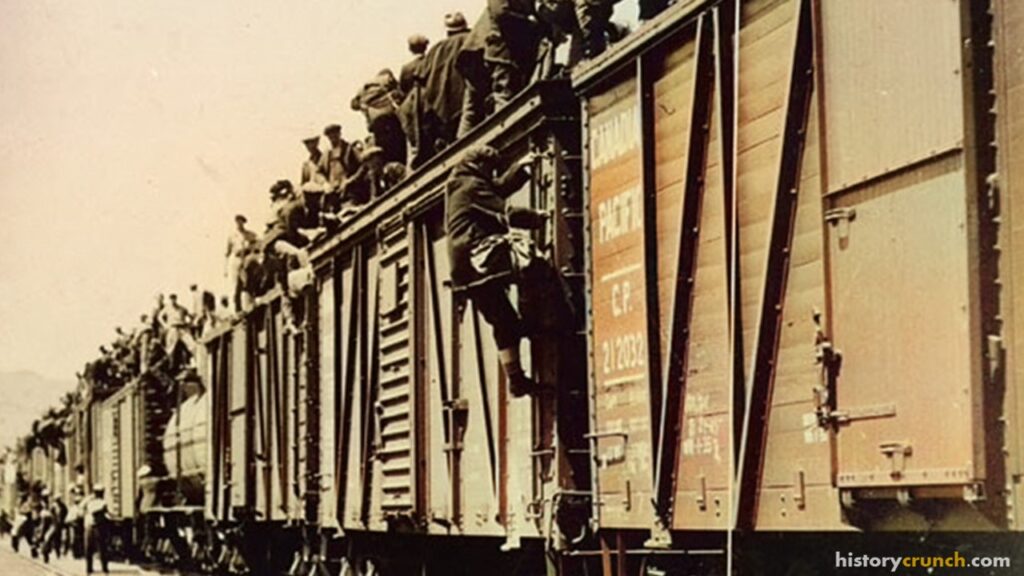
Another example of migration in the Great Depression was the movement of mostly homeless young men who traveled across the United States and Canada in search of work. They made these journeys on trains. However, since they were unemployed and homeless, the men did not have the money to afford a ticket and instead boarded trains (freight and passenger) illegally by riding in freight cars or on the top of freight cars. This practice was referred to as ‘riding the rails’ and while present before the onset of the Great Depression, it became much more common during the height of the recession. Some estimates put the total number of migrants who rode the rails at over two million. The men traveled along busy rail lines in search of work and better conditions in other parts of the country.
The poverty among the working-class also impacted their day-to-day quality of life. Quality of life is defined as a measurement of happiness based upon aspects such as a person’s health, comfort and standard of living. The poverty experienced by the working-class people in the Great Depression meant that they lacked access to basic healthcare and education, and had a low standard of living.
WHEN AND HOW DID THE GREAT DEPRESSION END?
While unemployment slowly improved after Roosevelt took office in 1933, it was still relatively high throughout the remainder of the decade. For example, the unemployment rate in the United States peaked in 1933 at 25% and lowered to about 15% by 1937. As such, while most historians agree that Roosevelt’s New Deal policies likely led to the American economic recovery after 1933, some critics argue otherwise. Specifically, supporters of Keynesian Economics argued that the New Deal did not go far enough in terms of providing social assistance to the working-class, while conservatives argued that the New Deal went too far. For example, following his electoral loss to Roosevelt, former President Herbert Hoover spent the remaining years of the Great Depression as an active critic of Roosevelt’s ‘New Deal’ programs. In his writings, Hoover argued against increased government involvement in the economy and warned against increased government debt to fund social-assistance programs.
Nevertheless, the effects of the Great Depression ultimately ended in 1941 with the United States’ entry into World War II. The United States entered World War II on the side of the Allies following the surprise attack by Japan at Pearl Harbor on December 7th, 1941. The war effort created millions of jobs for men in the armed forces and millions for American women in the factories that produced war supplies. For example, in 1941 the unemployment rate was approximately 10% but between 1943 and 1945 it was lower than 3%. The Great Depression was over.