Guillotine and the French Revolution: A Detailed Summary

Guillotine and the French Revolution
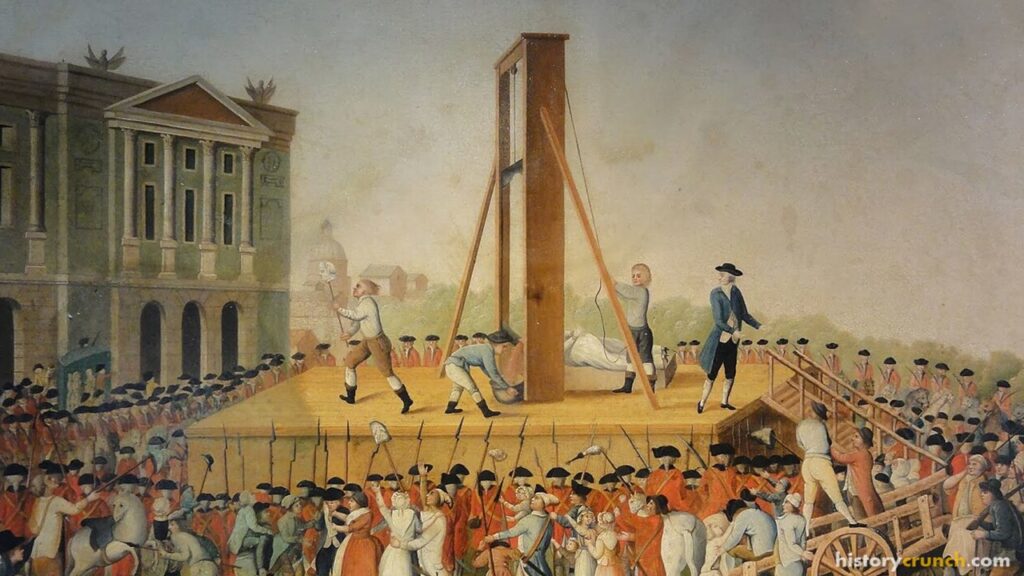
The execution of Marie Antoinette during the French Revolution.
The guillotine was introduced to France at the beginning of the French Revolution.  French physician Joseph-Ignace Guillotine introduced the idea of the guillotine to the National Assembly in October of 1789 as a simple, yet effective means of execution.

Table of Contents

The guillotine and the French Revolution are symbolically tied together through history. In fact, the guillotine became the most infamous symbol of the French Revolution since it was used as the primary method of execution during the Reign of Terror. Designed for quick and supposedly humane death, it was seen as a tool of justice and equality. Thousands, including King Louis XVI and Queen Marie Antoinette, were executed by guillotine during the events of the French Revolution.

WHAT WAS THE GUILLOTINE?

Europe had a long history of using execution devices before the French Revolution, but the guillotine came into widespread use during the years of the revolution.  In general, the guillotine was a device that beheaded an individual with the use of a large blade.  The blade would be pulled to the top of a large frame, under which the individual’s head, neck and shoulders would be placed.  The person would be held into place by stocks and the blade would be released to fall on their neck, decapitating the person.  A basket was usually placed below the device to catch the head as it was removed from the body.
Causes of the French Revolution
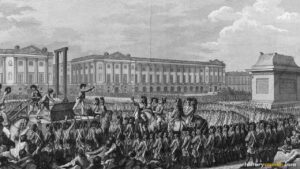
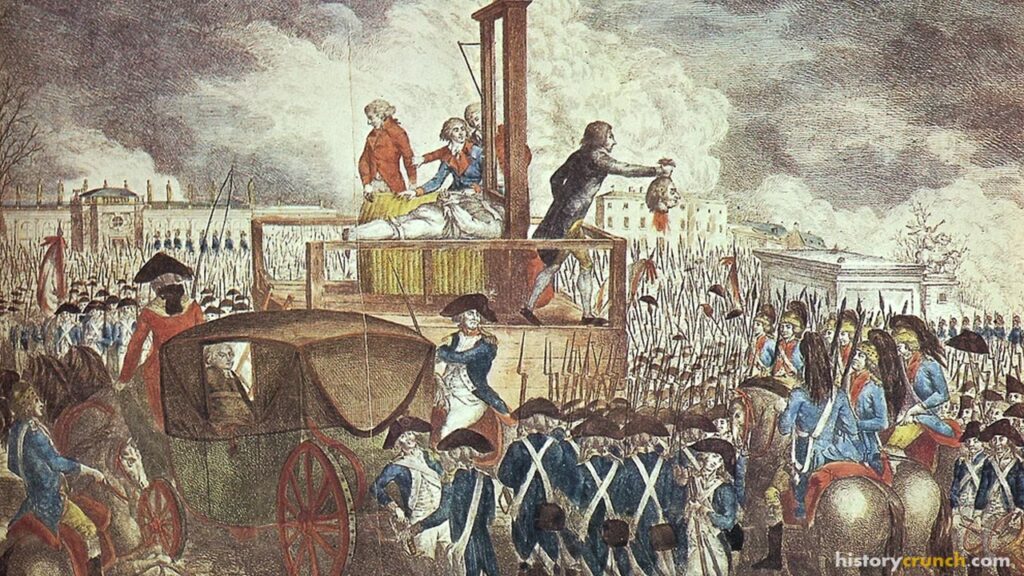
Execution of King Louis XVI during the French Revolution.

GUILLOTINE AND THE FRENCH REVOLUTION – SUMMARY

The guillotine was introduced to France at the beginning of the French Revolution.  French physician Joseph-Ignace Guillotine introduced the idea of the guillotine to the National Assembly in October of 1789 as a simple, yet effective means of execution.  The National Assembly established a committee to investigate a new execution method that would apply to all people regardless of their class in society.  Traditionally, the French monarchy had used all sorts of forms of capital punishment, with beheading being reserved for the nobility. The goal was to end the tortuous of forms of capital punishment and instead, introduce a new method that executed the person with as little pain as possible while treating all in society as equals.  This is why the guillotine earned the name of the “National Razor”.

Eventually, the National Assembly adopted the guillotine as the only method of execution in France and a platform was constructed in Paris in order to carry out all public executions.  Throughout the French Revolution, the guillotine would see widespread use, but was most notable during the Reign of Terror.  The Reign of Terror occurred from September of 1793 until July of 1794, and was a time period of extreme violence and paranoia during the French Revolution that resulted in the executions of tens of thousands of people.  This time period caused the guillotine to be associated with the excesses of the revolution and some called for an end to all of the executions.

Regardless, the guillotine would continue to be used throughout the revolution and was still used in France until 1977 when the last French citizen was executed by the device.

Reign of Terror in the French Revolution
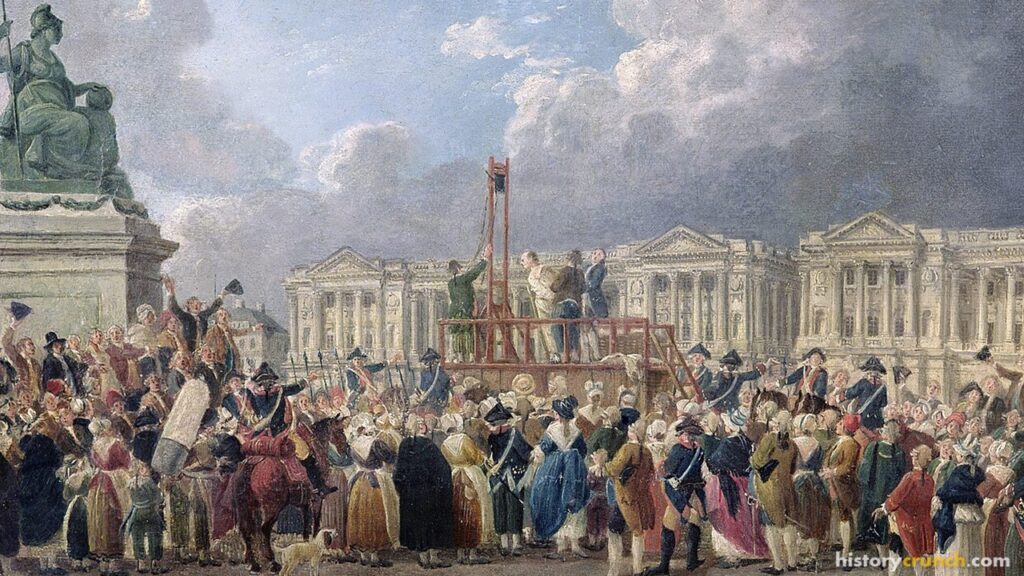
‘Execution on the future Place de la Concorde’ by Pierre-Antoine Demachy. (1793) The Reign of Terror in the French Revolution saw the execution of thousands.
Facebook
X
Reddit
Pinterest
LinkedIn

We strive to produce educational content that is accurate, engaging and appropriate for all learners. If you notice any issues with our content, please contact us and let us know!

AUTHOR INFORMATION
Picture of Elias Beck

Elias Beck

I'm a passionate history and geography teacher with over 15 years of experience working with students in the middle and high school years. I have an Education Degree with a focus in World History. I have been writing articles for History Crunch since 2015 and love the challenge of creating historical content for young learners!

Absolutism in France: A Detailed Summary

Absolutism in France was the system of government in which French monarchs held total political power, reaching its height under Louis XIV. This article details the history and significance of absolutism in France.

Napoleon Bonaparte’s Rise to Power: A Detailed Summary

Napoleon Bonaparte’s rise to power was one of the most remarkable developments to come out of the French Revolution. Beginning as a young military officer from Corsica, Napoleon built his reputation through a series of stunning military victories and used the instability of the revolution to eventually seize control of France. This article details the main events of Napoleon Bonaparte’s rise to power.

Storming of the Bastille
French Revolution

Storming of the Bastille: A Detailed Summary

The Storming of the Bastille was one of the most important events in the history of the French Revolution. This article details the history and significance of the Storming of the Bastille.

National Assembly
French Revolution

National Assembly (French Revolution): A Detailed Summary

The National Assembly was the first revolutionary government of the French Revolution and existed from June 14th to July 9th in 1789. This article details the history and significance of the National Assembly in relation to the French Revolution.

Jacques Necker
French Revolution

Jacques Necker: A Detailed Biography

Jacques Necker was significant because he was one of the most important financial ministers in the years just before the French Revolution and became closely tied to its early outbreak. This article details the life and significance of Jacques Necker.

French Revolution
French Revolution

French Revolution: A Detailed Overview

The French Revolution was one of the most significant events in history, and contributed to the foundation of modern democratic values. This article details the history and significance of the French Revolution.