The governments of the French Revolution changed repeatedly because the Revolution itself kept becoming more radical, more violent and more unstable. Between 1789 and 1799, France moved through four main revolutionary governments: the National Assembly, the Legislative Assembly, the National Convention, and the Directory. Each one emerged out of crisis, and each one shows how France moved farther away from the old absolute monarchy of Louis XVI.
GOVERNMENTS OF THE FRENCH REVOLUTION – BACKGROUND
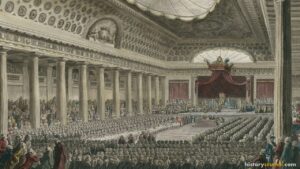
Before the Revolution, France was an absolute monarchy divided into the Three Estates: the clergy, the nobility, and the Third Estate, which included almost everyone else. By the late 1780s, France was in deep financial trouble, and Louis XVI called the Estates-General to meet at Versailles, France, on May 5th, 1789. However, the Estates-General quickly became deadlocked over voting, because the Third Estate wanted voting by head while the privileged orders preferred voting by estate. This dispute helped begin the political breakdown that led to a series of new revolutionary governments.
GOVERNMENTS OF THE FRENCH REVOLUTION – NATIONAL ASSEMBLY
The first revolutionary government was the National Assembly. On June 17th, 1789, deputies of the Third Estate declared themselves the National Assembly, claiming that they represented the French nation. When they were locked out of their usual meeting hall on June 20th, 1789, they gathered in an indoor tennis court and swore the Tennis Court Oath, promising not to separate until France had a constitution. Formally, the body was called the National Assembly from June 17th to July 9th, 1789, and then the National Constituent Assembly until September 30th, 1791, although people often still referred to it simply as the National Assembly.
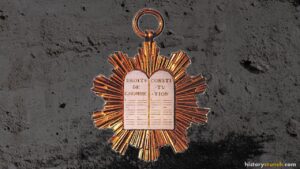
This government was important because it began dismantling the old order. In August of 1789, it abolished many feudal privileges and issued the Declaration of the Rights of Man and of the Citizen. That declaration stated that men were born free and equal in rights and became one of the most famous documents of the Revolution. The National Constituent Assembly also wrote the Constitution of 1791, which turned France into a constitutional monarchy. In other words, Louis XVI remained king, but his powers were now limited by law.
GOVERNMENTS OF THE FRENCH REVOLUTION – LEGISLATIVE ASSEMBLY
The Legislative Assembly replaced the National Constituent Assembly on October 1st, 1791. It ruled until September 20th, 1792, and was meant to operate under the new constitutional monarchy. On paper, this looked like a more stable system. However, the new government faced many of the same problems that had already weakened France, including economic trouble, distrust of the king, and rising political division.
The Legislative Assembly had a difficult position because the Revolution was becoming more extreme. Louis XVI still had veto power and used it, which increased anger toward the monarchy. At the same time, many revolutionaries feared that the king was secretly working against the Revolution. War made everything worse. In April of 1792, France declared war on Austria, and early military failures made many people believe that enemies both inside and outside the country were trying to destroy the Revolution.
The Legislative Assembly collapsed after the uprising of August 10th, 1792, when revolutionaries attacked the Tuileries Palace in Paris, France, and the monarchy was effectively overthrown. This was a major turning point because the Revolution was no longer trying only to limit the king. It was now moving toward a republic.
GOVERNMENTS OF THE FRENCH REVOLUTION – NATIONAL CONVENTION
The National Convention became the next revolutionary government on September 20th, 1792, and lasted until October 26th, 1795. It was the first government of revolutionary France to rule as a republic. On September 21st, 1792, it formally abolished the monarchy, and on September 22nd, 1792, it established the French Republic. This was one of the most important turning points of the entire Revolution because France had now moved from absolute monarchy to constitutional monarchy and then to republic in only a few years.
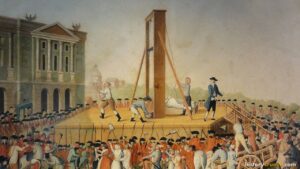
The National Convention ruled during the most violent and dangerous stage of the Revolution. It tried Louis XVI for treason, and he was executed on January 21st, 1793. Soon afterward, France faced war against other European powers, rebellion at home, and intense political division between the Girondins and the Montagnards. In April of 1793, the Convention created the Committee of Public Safety to defend the Revolution. This body later became the center of power during the Reign of Terror.
The Reign of Terror lasted from September of 1793 to July of 1794. During that time, revolutionary leaders used arrests, trials, and executions to remove people they saw as enemies of the Revolution. Tens of thousands died during this period. For high school students, this is one of the clearest examples of how a revolution can become more extreme when leaders feel surrounded by fear, war, and possible betrayal. Even though the National Convention began by creating a republic, it also became tied to dictatorship and political violence.
After Robespierre fell in July of 1794 in the Thermidorian Reaction, the Convention moved away from the Terror. Revolutionary leaders now wanted a new system that would be less radical and less concentrated in one group of hands. This led to the creation of the Directory.
GOVERNMENTS OF THE FRENCH REVOLUTION – DIRECTORY
The Directory was established by the Constitution of the Year III and ruled from November of 1795 until November of 1799. It was designed to prevent another dictatorship like the one associated with the Terror. Executive power was placed in the hands of five directors, while legislative power was divided between two assemblies: the Council of Five Hundred and the Council of Ancients. This structure was supposed to create balance, but in practice it often produced weakness and instability.
The Directory did help end the mass executions of the Terror, but it faced serious problems. The economy remained weak, corruption became a major issue, and the government depended heavily on the army to survive political challenges. It also had to deal with threats from both royalists, who wanted monarchy back, and radicals, who wanted the Revolution pushed further again. Therefore, the Directory was more moderate than the National Convention during the Terror, but it was not truly stable.
In the end, the Directory was overthrown by Napoleon Bonaparte in November of 1799. This happened in the coup of 18 Brumaire, which took place on November 9th and 10th, 1799. Brumaire was the name of a month in the revolutionary calendar. After this coup, Napoleon established the Consulate, and this effectively ended the period of the French Revolution’s main revolutionary governments.
GOVERNMENTS OF THE FRENCH REVOLUTION – SIGNIFICANCE
The governments of the French Revolution are significant because they show how quickly political change can happen during a major crisis. France moved from monarchy to constitutional monarchy, then to republic, then through terror, and finally to a weak republican government that fell to military power. Each government reflected the pressures of its time, including economic collapse, war, political division, and fear of internal enemies.
They are also important because they help explain the larger path of the French Revolution. The National Assembly represented the first break with absolute monarchy. The Legislative Assembly showed how difficult constitutional monarchy had become. The National Convention showed how the Revolution turned more radical and violent. The Directory showed that even after the Terror ended, France still could not find stable government. As such, the changing governments of the French Revolution help students understand why the Revolution transformed France so deeply and why it eventually opened the way for Napoleon Bonaparte.