James Watt: A Detailed Biography

James Watt
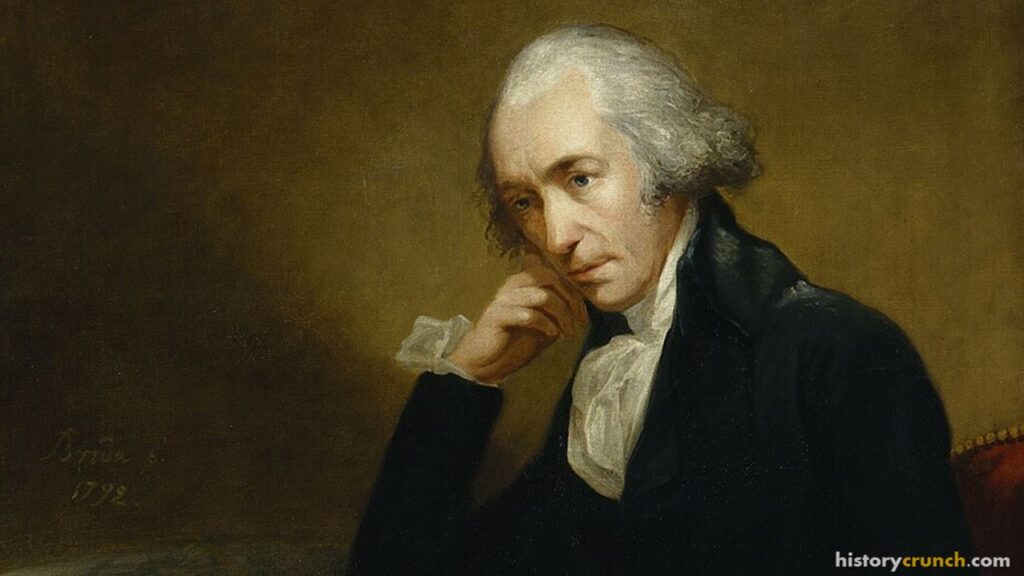
'Portrait of James Watt' by Carl Frederik von Breda (1792)
James Watt was a Scottish inventor and mechanical engineer whose improvements to the steam engine in the late 18th century greatly enhanced its efficiency and versatility, playing a crucial role in advancing the Industrial Revolution.

Table of Contents

James Watt was a significant figure in the timeframe of the Industrial Revolution and is remembered today as a noted inventor.  For example, he improved upon the invention of the steam engine, which had a profound impact on production in England and around the world during the time of the Industrial Revolution.  For example, James Watt’s steam engine transformed the textile industry, mining operation and general production facilities.

JAMES WATT – EARLY LIFE

James Watt was born on January 18th, 1736 in Scotland. His father was a successful ship builder, and so Watt grew up surrounded by builders and engineers. After attending school, Watt started work as a maker of mathematical instruments, but quickly he became much more interested in the new steam engine technology that had started to take off.
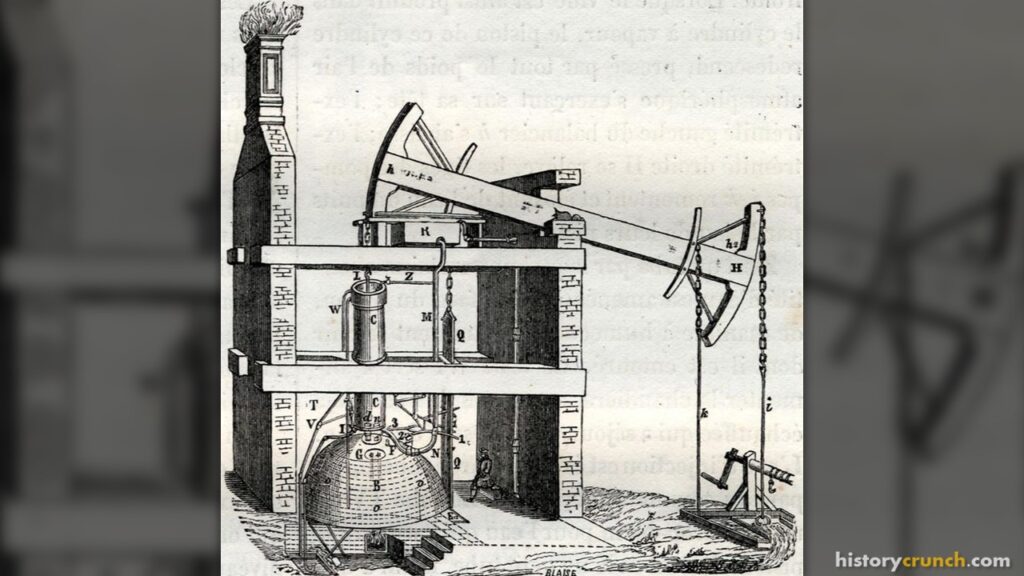
Thomas Newcomen
Steam Engine design by Thomas Newcomen.

JAMES WATT – STEAM ENGINE

In 1764, Watt was given a Newcomen steam engine to repair. He started working on it and soon realized that it was inefficient. As a result, Watt wanted to improve the design. He was successful, and found a way to prevent steam from escaping from the engine by adding a separate condensing chamber. Watt patented his new steam engine design, and it paved the way for other mechanical design work.

Watt continued working on steam engines and in 1775 he partnered with Matthew Boulton, and together they began to manufacture steam engines. Steam engines were bought by mine owners, cotton mills, and waterworks and as a result, the steam engines they produced helped to power the Industrial Revolution, allowing once very manual work to be replaced by engines. Steam engines helped to improve productivity and increase efficiency. The Watt and Boulton partnership was very successful, and become the most important and sought after engineering firm in the country.

Watt and Boulton became wealthy men, and in 1800 Watt retired from the firm. Watt continued to research and he invented a number of important mechanical items including the steam indicator which records pressure inside the engine.
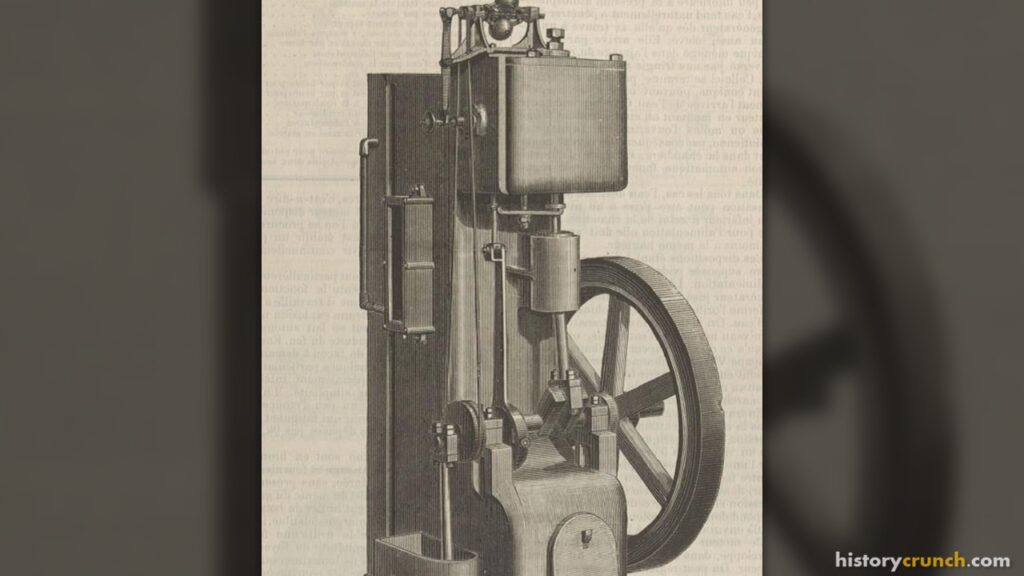
Invention of the Steam Engine
Steam Engine from 1885.

JAMES WATT – DEATH AND LEGACY

Watt died in 1819. The Watt, a unit of measurement of mechanical and electrical power, was named after James Watt in remembrance of his life’s work.  As well, his contribution to the steam engine made him one of the most significant inventors of the Industrial Revolution, as he helped improve mechanization and production.

JAMES WATT – INFOGRAPHIC
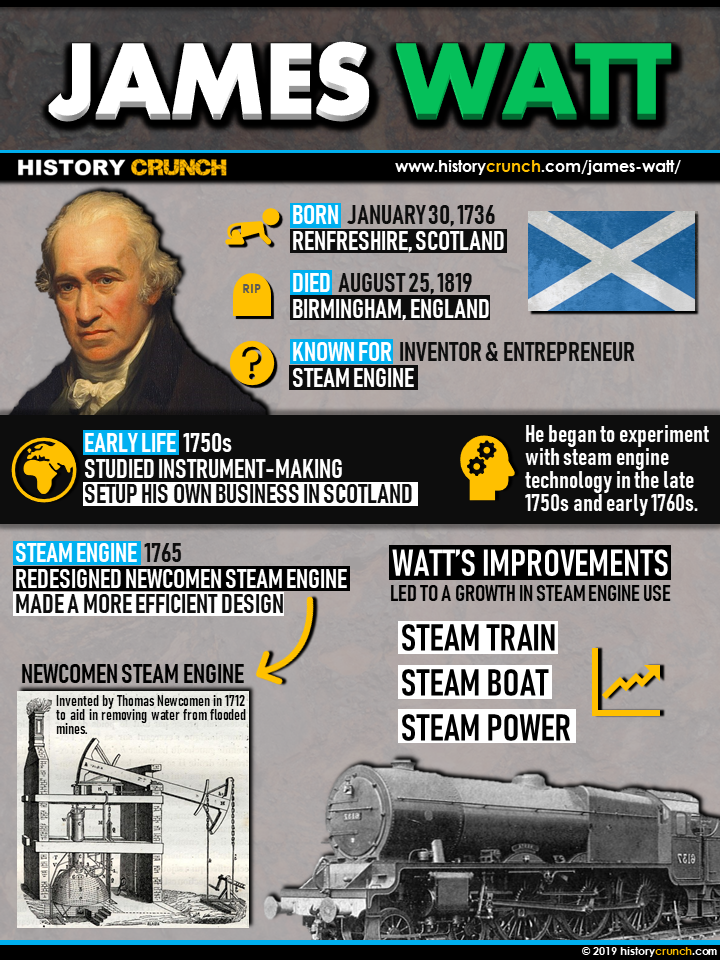
James Watt Infographic
James Watt Infographic by History Crunch
Facebook
X
Reddit
Pinterest
LinkedIn

We strive to produce educational content that is accurate, engaging and appropriate for all learners. If you notice any issues with our content, please contact us and let us know!

AUTHOR INFORMATION
Picture of Elias Beck

Elias Beck

I'm a passionate history and geography teacher with over 15 years of experience working with students in the middle and high school years. I have an Education Degree with a focus in World History. I have been writing articles for History Crunch since 2015 and love the challenge of creating historical content for young learners!

John Adams: A Detailed Biography

John Adams was a lawyer, statesman, and Founding Father who played a central role in the American Revolution and served as the second President of

John Wilkes Booth
American Civil War

John Wilkes Booth: A Detailed Biography

John Wilkes Booth was an actor and Confederate sympathizer who assassinated President Abraham Lincoln on April 14th, 1865, at Ford’s Theatre. This article details the life and significance of John Wilkes Booth.

Galileo Galilei: A Detailed Biography

Galileo Galilei was an Italian astronomer and scientist who played a central role in the Scientific Revolution. This article details the life and significance of Galileo Galilei.

Yuri Andropov: A Detailed Biography

Yuri Andropov was the former head of the KGB who became leader of the Soviet Union in 1982. His brief time in power came during a period of Soviet decline and helped set the stage for later changes under Mikhail Gorbachev. This article details the life and significance of Yuri Andropov.

Robber Barons in the Gilded Age
Industrial Revolution

Robber Barons in the Gilded Age: A Detailed Summary

Robber barons in the Industrial Revolution were powerful business owners who amassed huge fortunes. Some people criticized them for their techniques in business while others celebrated them as ‘captains of industry’.

Henry Hudson
Age of Exploration

Henry Hudson: A Detailed Biography

Henry Hudson was an important English explorer during the events of the Age of Exploration. This article details the life and significance of Henry Hudson.