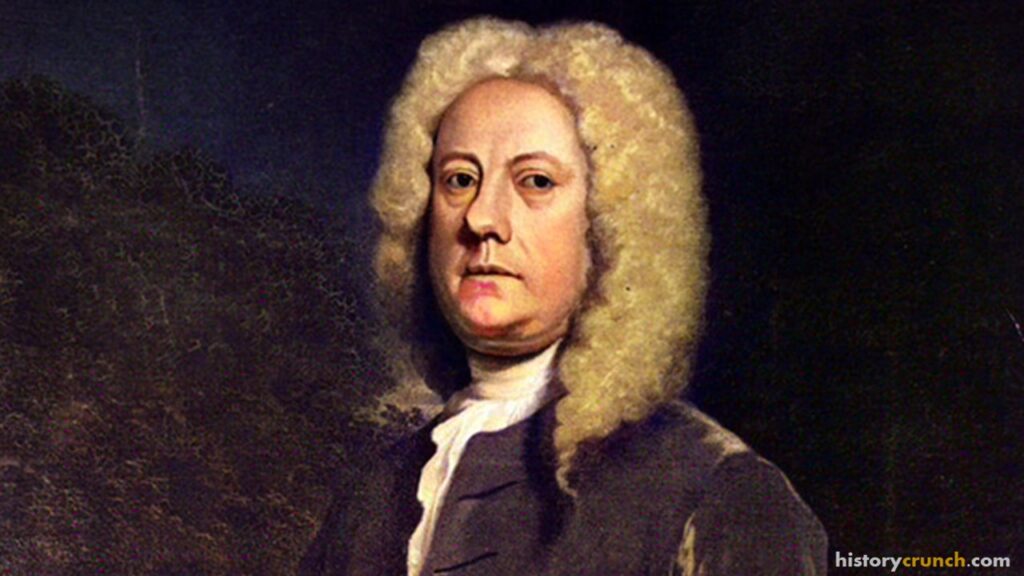
Jethro Tull was an English agricultural pioneer and inventor who lived during the early 18th century, best known for inventing the seed drill in 1701, a revolutionary device that efficiently sowed seeds in neat rows, significantly improving crop yields. He also developed new methods of cultivating soil, which emphasized the importance of soil aeration and weed control, foundational principles in modern farming techniques. Tull’s innovations and writings greatly influenced agricultural practices, helping to modernize and increase the efficiency of farming during and after his time. In fact, he had a profound impact on the British Agricultural Revolution and Industrial Revolution.
JETHRO TULL – EARLY LIFE
Jethro Tull was born in Berkshire, England in 1674. His family was of high social class and education was seen to be very important so he was well educated as a child. He wanted to go into politics and in preparation studied at Oxford University. However, Tull became ill and so his career plans were put on hold. He got married in 1699 and following that he started working on his father’s farm.
JETHRO TULL – INVENTION OF THE SEED DRILL
Tull noticed that some of the traditional farming practices were very inefficient, for example how seeds were drilled into the soil by hand. So, he invented a drill with a rotating cylinder to drill the seeds into the soil. This made the planting process much quicker, and also limited wastage. The crop drilling machine was not well accepted when first manufactured largely because farmers were not keen to change their ways. However, his invention of the seed drill was a major contribution to both the British Agricultural Revolution and the Industrial Revolution. For example, the seed drill allowed the planting of seeds in straight rows and help improve agricultural productivity and efficiency. This, in turn, led to an increase in the British population which was a major cause of the Industrial Revolution in Britain. Along with Charles Townshend, Jethro Tull is seen as a major figure in British history at the time.
Tull travelled to Europe where he sought more knowledge about agriculture. He learned about health and safety and about the European farming practises. When he returned he improved his initial seed drilling machine which allowed crops to be planted efficiently, at the correct depth and spaced well apart so that the seeds could all grow well. Tull also developed a plough that allowed him to grow crops in the same field for successive years. Although farmers were initially suspicious of Tull’s innovations and process improvements, they improved farming practises and so were eventually accepted.
JETHRO TULL – DEATH AND LEGACY
In 1731, Tull published a book about his machines and techniques which helped farmers to improve productivity. Tull and his inventions had a major influence on the agricultural revolution, and many of his processes are still used today. Tull will be remembered for helping to bring about the British Agricultural Revolution. He died on February 21st, 1741.