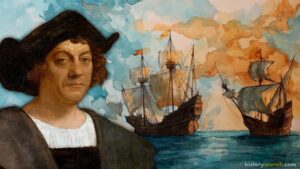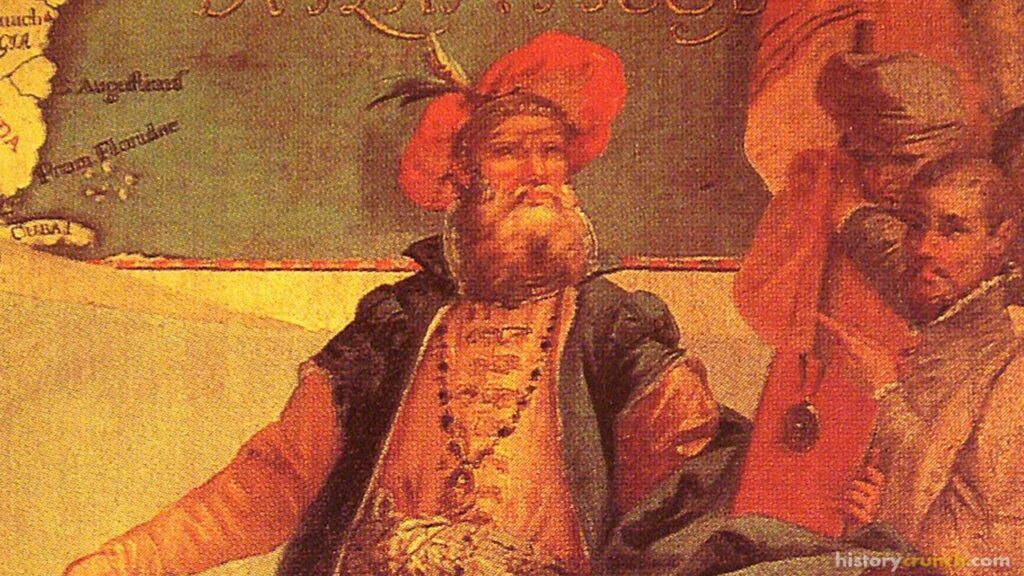
John Cabot, born Giovanni Caboto, was a famous explorer who sailed under the English flag during the time of the Age of Exploration. He became one of the first Europeans to explore the coast of North America since the Norse voyages from centuries earlier. In fact, his 1497 voyage, funded by King Henry VII of England, was England’s first main entry into the Age of Exploration and laid the foundation for British claims in the New World. His voyage helped pave the way for future explorers and was an essential step in connecting Europe with the Americas.
JOHN CABOT – EARLY LIFE
Despite sailing for England in the Age of Exploration, John Cabot was actually born in the city-state of Genoa, which is located in modern-day Italy. The exact date and location of his birth is disputed but it is thought to be around the year 1450. Regardless, he spent much of his early life in Venice, another famous Italian city-state. In fact, after Cabot moved to Venice he gained citizenship in 1476 in order to allow him to trade. As a young man, Cabot was involved in maritime trade and navigation, skills he gained while sailing in the eastern Mediterranean Sea and engaging in commerce with ports across Europe and possibly the Middle East.

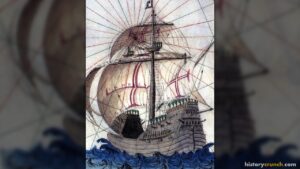
Cabot traded in a number of different commodities, but came into financial problems in 1480. As a result, he left Venice, and by the early 1490s, Cabot had moved to England. He eventually settled in the port city of Bristol, which was becoming a center for exploration. In fact, at the time, England was eager to compete with Spain and Portugal, who were making significant gains in exploration. Cabot soon won the support of King Henry VII of England, who granted him permission to explore the Atlantic Ocean and claim new lands for England. With the king’s backing, Cabot was given a small ship called the Matthew, a crew of around 18 men, and permission to set sail on his quest.
Inspired by Christopher Columbus’s 1492 voyage under the Spanish flag, Cabot sought to find a westward route to Asia as well. However, Cabot chose to sail a northern Atlantic route, which he believed would be shorter and quicker.

JOHN CABOT – VOYAGES IN THE AGE OF EXPLORATION
In 1496, Cabot made his first attempt to cross and explore the Atlantic. He planned to find a northwestern route to Asia, but his journey was unsuccessful due to bad weather and a lack of supplies, forcing him to turn back. However, Cabot was determined, and he convinced King Henry to support a second expedition. As a result, with funding and support from Bristol merchants, Cabot set sail again in May of 1497 aboard a small ship called the Matthew, with a crew of about 18 to 20 men.
He sailed across the North Atlantic, which was a dangerous and unexplored route that no one had previously attempted at such a northern latitude. After several weeks at sea, on June 24th, 1497, Cabot and his crew spotted land. Historians believe Cabot landed somewhere in what is now Canada, possibly on the coast of Newfoundland or Labrador. However, the exact location is uncertain. Cabot claimed the land he had discovered for the English crown, making him one of the first Europeans to set foot in North America since the Vikings had explored parts of the continent centuries earlier.
Cabot and his crew were impressed by the new land. They described it as rich in natural resources, with thick forests and abundant fish. According to some reports, the waters near the coast were so full of cod that the crew could catch them with baskets! This discovery of plentiful fish would later attract European fishermen to the North Atlantic. Regardless, he claimed the land for England and was celebrated upon his return to Bristol in August of 1497. King Henry VII granted him a reward and approved another, larger expedition.
Encouraged by his success, Cabot prepared for another voyage in 1498. This time his fleet was to include five ships and more ambitious plans to explore further and possibly establish trade or settlements. The fleet set sail in May of 1498, but Cabot was never heard from again. There are no clear records of what happened to them. Some historians believe that Cabot’s fleet was lost in a storm at sea, while others think that one of the ships may have reached North America and that Cabot and his men might have explored even further. However, no conclusive evidence has ever been found to confirm what became of Cabot and his final expedition.
JOHN CABOT – SIGNIFICANCE
Despite his disappearance, Cabot’s voyages had already made a lasting impact. They opened the door to England’s future colonial ambitions in North America, which would develop further in the following centuries.
Furthermore, his voyages to North America opened up the possibility of new land for settlement and resources, especially the rich fishing grounds off the coast of Newfoundland. English fishermen soon began to sail to these waters, leading to more contact between Europe and the New World.
John Cabot’s expedition was also important because it gave England a reason to claim land in North America. This would later become significant as European countries competed for colonies and resources in the Americas. In a way, Cabot’s journey laid the groundwork for future English explorers and settlers, including those who would establish the first colonies in what would later become the United States and Canada.