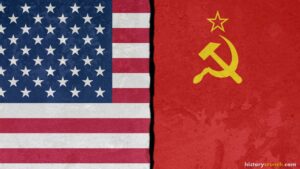
The reforms of Perestroika and Glasnost are some of the most significant events of the history of the Cold War. The Cold War was a major world event that took place from approximately 1945 until 1990. In general, the Cold War was a period of increased tensions and hostility between the superpowers of the United States and the Soviet Union (USSR). Perestroika and Glasnost were reforms first introduced by Soviet leader Mikhail Gorbachev in the 1980s. Together, these policies were intended to strengthen socialism but instead exposed deep flaws in the Soviet system. They led to greater political debate, criticism of the Communist Party, and a rise in nationalist movements, ultimately contributing to the collapse of the Soviet Union in 1991.
GLASNOST
Mikhail Gorbachev became the leader of the Soviet Communist Party in the Soviet Union (USSR) in 1985. He believed in communism but also knew their government system could only survive by ending the Cold War. At the time Russia had been involved in a losing war in Afghanistan and in the Cold War rivalry with the United States. The Soviet Union was spending half of its yearly country’s budget on its own military and could not afford the cost. The government system had survived on secrecy and censorship of information. The people did not know the truth about what their government was doing. Gorbachev knew that change was needed but it was also impossible without more open debate and discussion about its own problems. While Gorbachev wasn’t trying to introduce free speech completely, he did order his government to allow more openness, or what he called “glasnost”.
As glasnost, or openness, developed in the Soviet Union, the controlling government body, the Communist party, lost some control over the news media. This lead to more news being made available to the people’s attention, some of which was not reported before under the more restricted news reporting. This included more information being reported on topics such as poor housing, food shortages, pollution, alcoholism and little rights for women. Glasnost allowed the people to learn about the past and learn that their country was not as great as they were lead to believe. This resulted in people feeling betrayed for many years.
Mikhail Gorbachev’s policy interpretation of “glasnost” is best be summarized in English with one word: “openness.” While “glasnost” is associated with freedom of speech the main goal of this policy was to make the country’s management more transparent and open to the general population.
PERESTROIKA
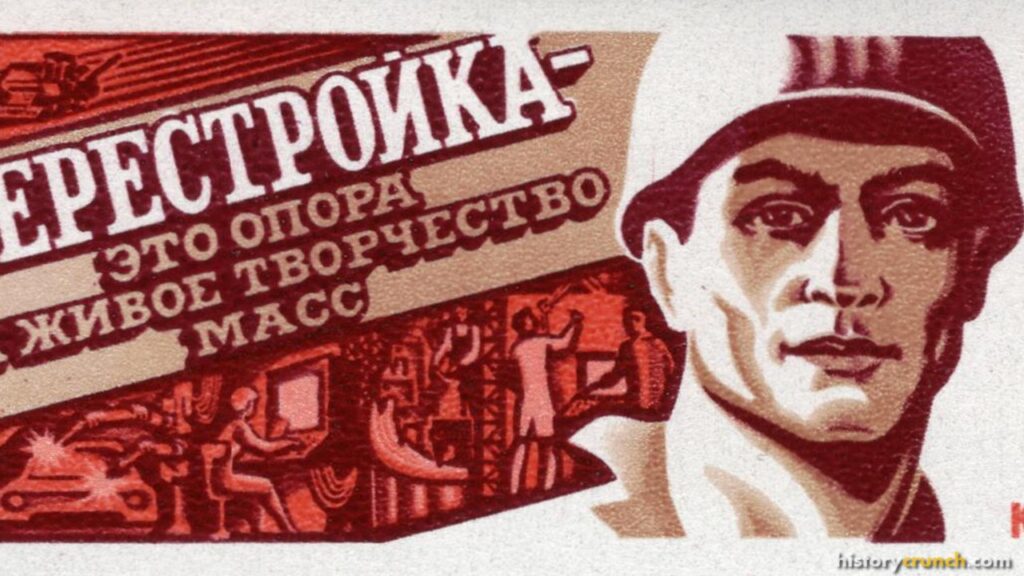
Perestroika means restructuring or rebuilding of Soviet Union’s political and economic systems. Perestroika was viewed as a political movement for the purpose of rebuilding the ruling Communist Party of the Soviet Union in the 1980’s. It followed Gorbachev’s glasnost policies. As more openness happened, everyone realized that the Communist government required change or rebuilding.
Perestroika is also believed to be the cause of the breakup of the Soviet Union in 1989 and the beginning of revolutions in many other countries in Eastern Europe including East Germany, Romania and Czechoslovakia. In December of 1989 the people of Romania revolted against the Romanian Communist President and the President was assassinated. As more people in Eastern Europe realized real change was needed to their basic government structures violence did happen to the point of uprisings against governments.
The goal of perestroika was initially to make socialism work better for the people but it worsened the political, social and economic tensions already present within the Soviet Union. Some historians now believe that this lead to the end of the country known as the Soviet Union.
PERESTROIKA AND GLASNOST – OUTCOMES
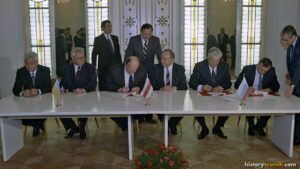
After Gorbachev began the process of glasnost and perestroika events got out of his control. Governments of Romania, Hungary, Czechoslovakia, Bulgaria and East Germany fell due to the people of those countries rising against their own governments after they had become more aware of what had happened in the past. These population uprisings also happened in the Soviet Union itself resulting in its own breakup. The new countries of Estonia, Latvia, Lithuania, Belarus, Georgia, Azerbaijan, Turkmenistan, Uzbekistan, and Kyrgyzstan were all formed. What remained was a new country of Russia. This is now known as the breakup of the USSR. The communist governments of the east European countries disappeared and areas inside the USSR split from the USSR forming their own countries. Many different ethnic groups (based on culture, history and language) inside the USSR formed their own countries. As well, East Germans stormed the Berlin Wall after realizing that the Soviet Union would no longer protect the wall. Eventually the wall was destroyed and the Cold War was over.
Boris Yeltsin then became the first president of the new Russia after the collapse of the Soviet Union. In summary, glasnost and perestroika are often referred to as the cause of the break-up of the Soviet Union, the revolutions of 1989 in Eastern Europe resulting in the end of the Soviet Bloc of nations and the end of the Cold War.