The October Revolution of 1917, also known as the ‘Bolshevik Revolution’, was the second and more radical phase of the Russian Revolution of 1917. It took place in Petrograd (St. Petersburg) and marked the high point of the revolutionary process that had begun with the February Revolution earlier in that same year. Ultimately, the October Revolution resulted in the overthrow of the Provisional Government and the establishment of Bolshevik (Communist) rule in Russia. This article explores the causes, major events, and significance of the October Revolution, underscoring its enduring impact on the overall Russian Revolution.
What Caused the October Revolution?
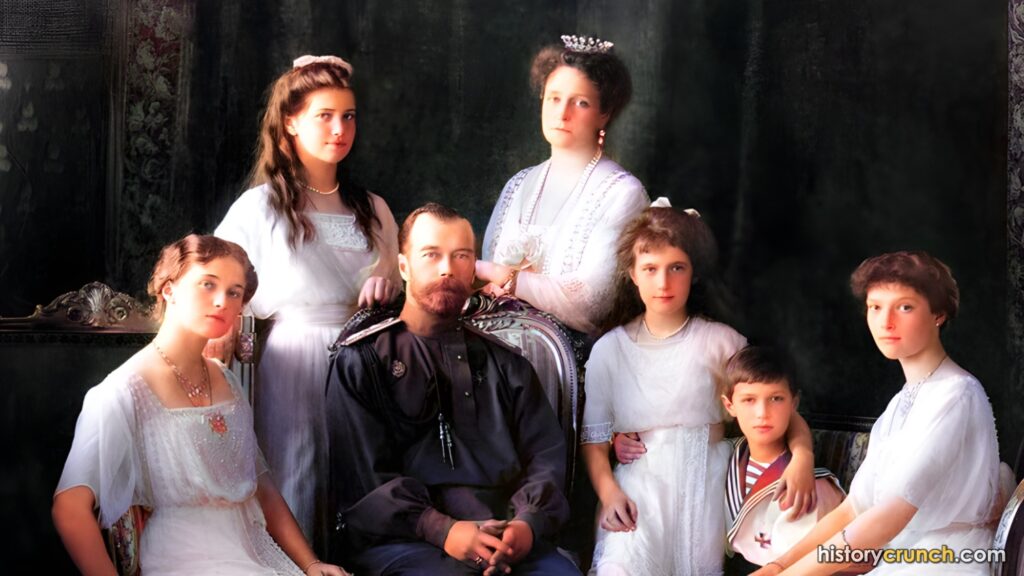
The earlier February Revolution of 1917 had led to the end of the rule of Tsar Nicholas II. In fact, the Roman dynasty was replaced following the February Revolution with the establishment of the Provisional Government, which was a coalition of liberal and moderate socialist forces. However, the Provisional Government faced challenges, including its continuation of Russia’s involvement in World War I, the failure to address land redistribution and social inequality, and inability to meet the pressing needs of the Russian population. As such, this created an opening for the more radical and revolutionary ideas of the Bolsheviks and Vladimir Lenin.
The Bolshevik Party, led by Vladimir Lenin, sought to capitalize on the discontent with the Provisional Government. As such, in October of 1917, the Bolsheviks staged a coup and seized power in what is now known as the October Revolution. Lenin’s famous slogan “Peace, Land, Bread” was incredibly popular with the Russian masses and led to mass appeal for the Bolsheviks among the Russian people. Lenin also promised an end to the war, land redistribution, and food security.

Major Events of the October Revolution
The climax of the October Revolution occurred at the end of October in 1917 in an event referred to as the ‘Storming of the Winter Palace’. Bolshevik forces, with the support of the Red Guard and sailors from the Kronstadt naval base, stormed the Winter Palace in Petrograd, where the Provisional Government was located. The Red Guard arrested the ministers, effectively ending the Provisional Government’s authority.
Following the seizure of the Winter Palace, the All-Russian Congress of Soviets, dominated by the Bolsheviks and Left Socialist-Revolutionaries, announced the formation of the Council of People’s Commissars. Lenin became the head of government, and the Bolsheviks established their rule, marking the beginning of Soviet power in Russia.

Significance of the October Revolution
The October Revolution marked an important shift in Russian history, and brought the Bolsheviks to power, establishing a socialist state with the means of production under state control. The Soviet Union emerged as the first country governed by a Marxist-Leninist ideology. It also triggered the Russian Civil War (1918-1922) as anti-Bolshevik forces, known as the Whites, sought to overthrow the new Soviet government.