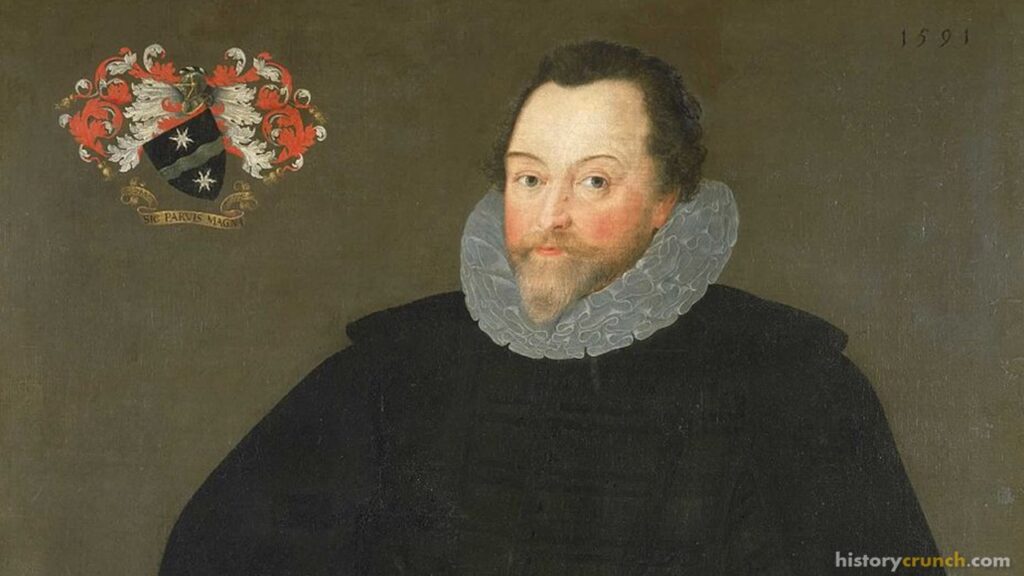
Sir Francis Drake was one of the most significant figures during the Age of Exploration. An English explorer and naval commander, Drake became a national hero in England for his achievements during the Age of Exploration, especially in relation to his circumnavigation of the globe. He was also famous for his clashes with the Spanish Empire during the race between nations to explore the world.
SIR FRANCIS DRAKE – EARLY LIFE
Sir Francis Drake was born in Devon, England in 1540. Although, it should be noted that the exact date in unknown. Drake had 11 brothers, and his father was a protestant farmer. As a result of religious persecution in 1549, Francis and his family had to flee to another county. Drake was sent to be an apprentice with a sailing ship master. During the apprentice Drake learnt many useful trading and shipping skills that were beneficial in his later life. In fact, his skills quickly developed, and by the 1560s, he was participating in voyages to the Caribbean, many of which involved privateering.
SIR FRANCIS DRAKE – PRIVATEERING
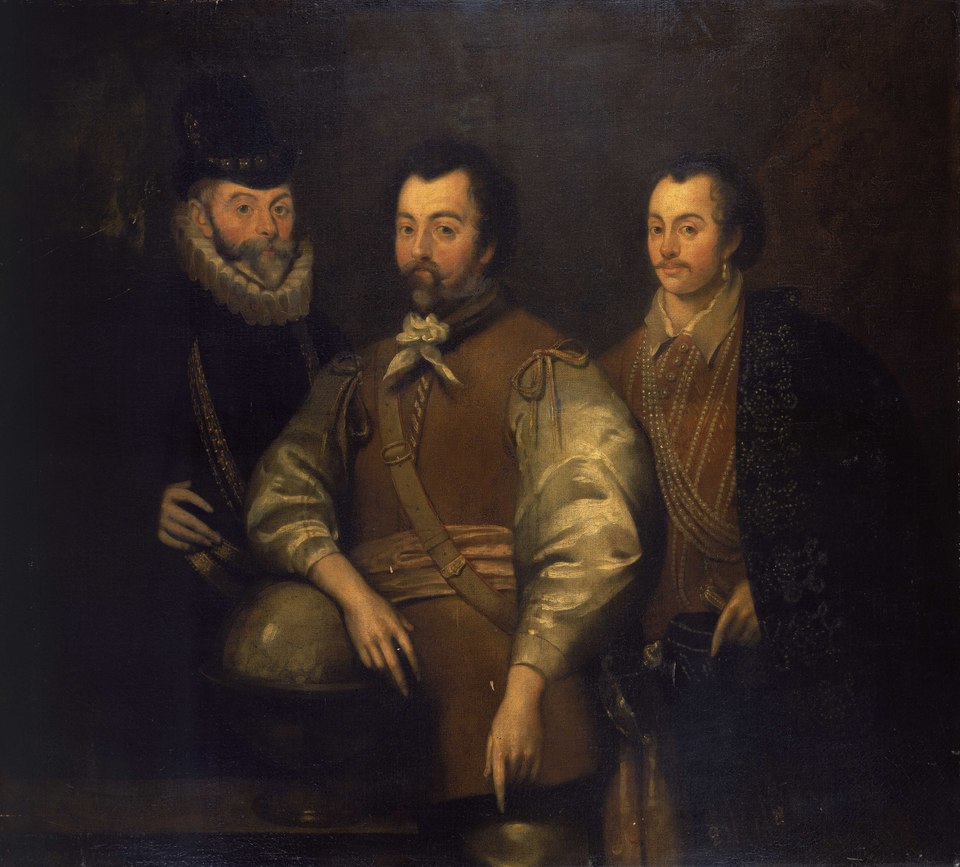
In short, privateering refers to piracy that was endorsed by the British government and that specifically targeted Spanish ships and colonies. Furthermore, Drake’s early career was shaped by England’s growing conflict with Spain, which was the main colonial power of the time. His mentor and cousin, Sir John Hawkins, was deeply involved in privateering, and Drake followed suit, building a reputation.
Following his apprenticeship, Drake sailed to the Americas with his cousin, Sir John Hawkins. During the voyage a number of ships were trapped by the Spaniards, however Drake and his cousin escaped. Drake was keen to seek revenge. Over the next decade, he launched a series of raids on Spanish ports in the Caribbean and along the coasts of Central and South America.
In 1572, Drake set off on his own voyage and raided a number of Spanish towns and captured treasure and people. He was badly wounded in one raid and had to remain in one town for over a year. Once he recovered he and his men set sail again, and amassed a huge hoard of gold and silver. These acts, though illegal by Spanish standards, were tolerated by Queen Elizabeth I, who viewed them as a way to weaken Spanish dominance without open war. To the Spanish, Drake became ‘El Draque’, a feared pirate. To the English, he was a patriotic hero.
SIR FRANCIS DRAKE – CIRCUMNAVIGATION OF THE GLOBE
Sir Francis Drake’s most famous achievement was his circumnavigation of the globe, which made him the first Englishman and only the second person in history to complete such a voyage. The first was Ferdinand Magellan’s famous voyage, which was in 1522. Regardless, Drake set out in December of 1577 with five ships on a secret mission to raid Spanish holdings and explore unknown regions. After navigating the Strait of Magellan at the southern tip of South America, Drake’s fleet was reduced to a single ship, which was the ‘Golden Hind’.
From there, he sailed up the Pacific coast of South America, attacking Spanish settlements and ships. Continuing northward, he possibly reached as far as present-day Oregon or British Columbia, searching for a Northwest Passage before turning west across the Pacific.
Drake crossed the Pacific, Indian, and Atlantic Oceans, finally returning to England in September of 1580 with a vast haul of Spanish treasure. His successful circumnavigation proved the global scale of navigation and challenged Spain’s dominance.
During the circumnavigation he initiated an era of piracy in the previously piracy free western coast of the Americas which did not impress the Spanish. Although Drake was considered a hero to the English and as a result Elizabeth I awarded Drake a knighthood in 1581, he was thought to be a pirate by the Spanish. In fact, he was so disliked by the Spaniards that the Spanish King Philip II offered over 20,000 ducats (about US $6.5million today) for killing Drake.
SIR FRANCIS DRAKE – LATER LIFE AND DEATH
Following a number of acts against the Spanish, including those that involved Drake, King Phillip II ordered an invasion of England, which the Spanish attempted to do in 1588. The English however were prepared, with Drake, the second in command of the English fleet.
When the Spanish Armada finally sailed in 1588, Drake served as vice admiral of the English fleet. His leadership and naval tactics contributed to the decisive English victory, a turning point that marked the decline of Spanish naval supremacy and the rise of England as a major maritime power.
In the final years of his life, Drake returned to the Caribbean on further expeditions against the Spanish, but with less success. For example, in 1595, he launched a campaign alongside Sir John Hawkins to attack Spanish settlements in the West Indies. Drake fell ill during the expedition and died of dysentery on January 28th, 1596, off the coast of Portobelo, Panama. He was buried at sea in a lead coffin, near the waters he had dominated for decades.
SIR FRANCIS DRAKE – SIGNIFICANCE
As stated above, Sir Francis Drake was one of the most significant explorers during the time of the Age of Exploration. For example, Drake’s circumnavigation of the globe expanded English knowledge of the world and challenged Spanish dominance. Furthermore, as a naval commander, Drake revolutionized English naval tactics. His use of fast, maneuverable ships and hit-and-run attacks against Spanish galleons helped challenge Spanish dominance.
As a result, to many in England, Sir Francis Drake was a hero of England, standing against Spain, and became a central figure in the narrative of British naval supremacy. With that said, while celebrated in England, Drake’s involvement in the slave trade and his violent attacks against settlements challenge his image as a hero. Regardless, he remains a complex and controversial figure from the time of the Age of Exploration.