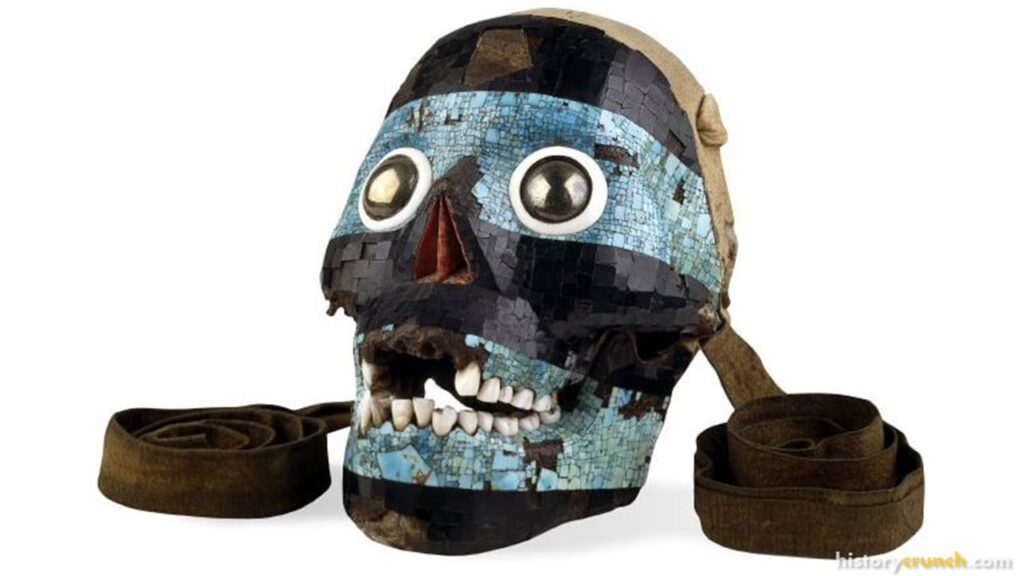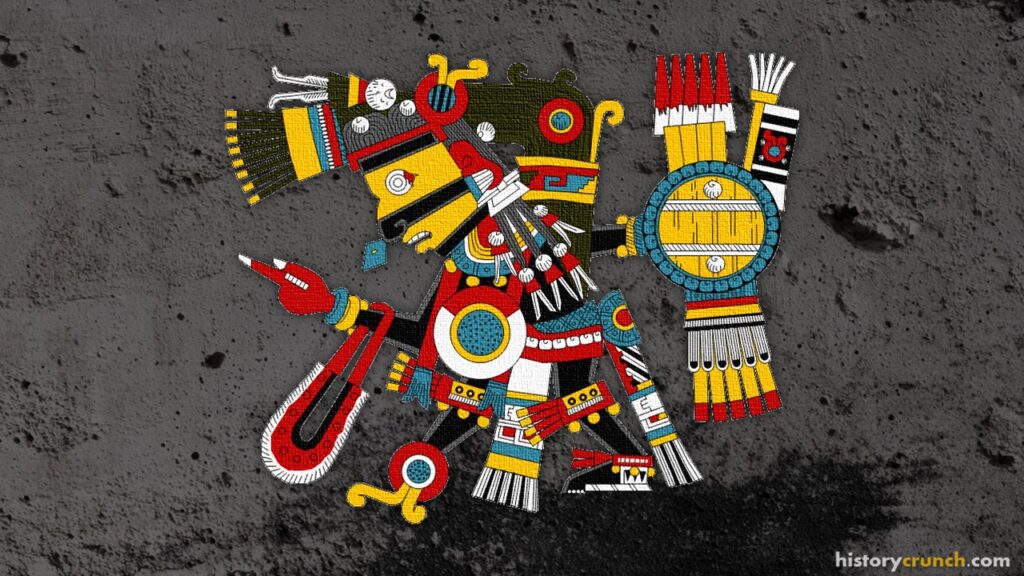
Tezcatlipoca, the Aztec god of night, wind and other traits was one of the most powerful god in Aztec mythology. Often shown with a black stripe across his face and an obsidian mirror, he was both a creator and a destroyer, constantly challenging Quetzalcoatl in cosmic battles.
AZTEC GODS – OVERVIEW
The concept of ‘god’ in Aztec society is referred to as ‘Teotl’ in Nahuatl, the language of the Aztec. The Aztecs, like other Mesoamerican societies, had a wide pantheon of gods. The gods in the Aztec religion represented different aspects of life and the world for the Aztec people. The aspects that the gods represented included: culture of Aztec society and Mesoamerica, nature and the natural world, creation stories, fertility, food, death and the underworld, trade and excess or entertainment. Each god had different attributes and personality traits and were usually represented in distinct ways by the Aztec. Some could take human or animal form and were celebrated in festivals and rituals. There were many gods in the Aztec religion but some of the most prominent included: Huitzilopochtli, Quetzalcoatl, Tezcatlipoca, Mictlāntēcuhtli, Tlaloc, and Chicomecōātl.
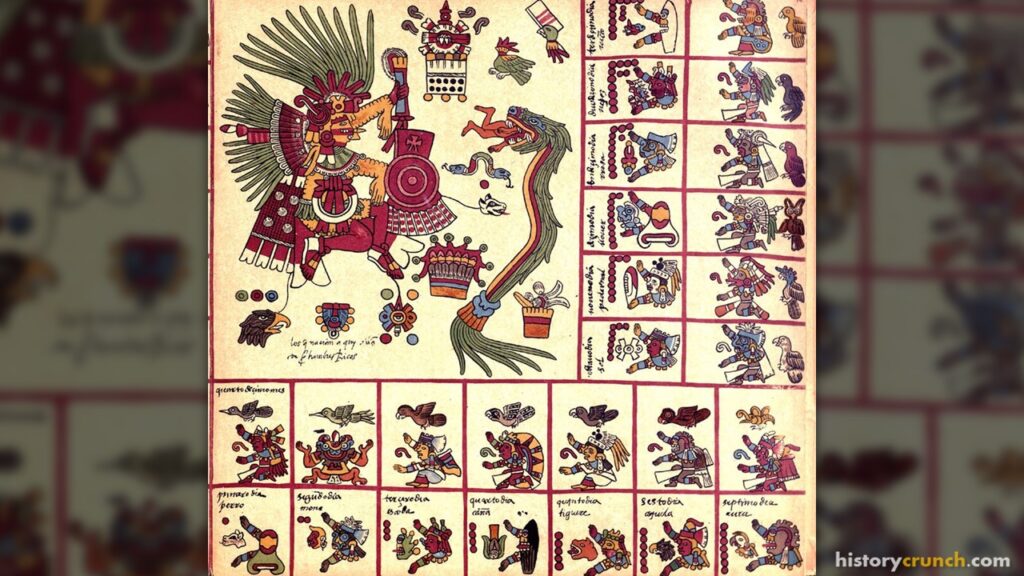
TEZCATLIPOCA – SUMMARY
Tezcatlipoca was a significant god in Aztec religion. His name is translated as ‘smoking mirror’ in the Nahuatl language of the Aztec and he is often associated with several different concepts, including: the night sky, night winds, hurricanes, the north, jaguars, obsidian, and war. In Aztec tradition Tezcatlipoca was considered to be an opposite and rival to Quetzalcoatl. While Quetzalcoatl was considered to be more gentle in nature, Tezcatlipoca was supposedly more war-like. There were several different myths and stories about Tezcatlipoca and Quetzalcoatl in Aztec tradition in relation to their rivalry. Most notably, both were considered to be two of four Aztec gods (along with Huitzilopochtli and Xipe Totec) who created the world. In this myth, each god is represented by a different color, with Tezcatlipoca being black and Quetzalcoatl being white. This further highlights the idea that they were opposites of each other.
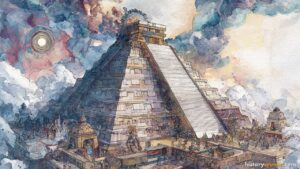
There was a large temple honoring Tezcatlipoca in the Aztec capital of Tenochtitlan. Diego Durán, a Dominican friar who authored one of the first books on Aztec history and culture titled ‘The History of the Indies of New Spain’ wrote the following of the Tezcatlipoca temple in Tenochtitlan: “lofty and magnificently built. Eighty steps led to a landing twelve or fourteen feet wide. Beyond it stood a wide, long chamber the size of a great hall…” There were other temples celebrating him throughout the Aztec Empire. The main festival held for Tezcatlipoca was called Toxcatl and occurred in the 5th month of the Aztec calendar. In preparation for the festival, a young man was usually chosen to represent Tezcatlipoca. He would dress in the likeness of the god, and carry out functions for the Aztec people on behalf of Tezcatlipoca for an entire year. During that year, he was treated like a god by the people, but at the time of the Toxcatl festival the young man was sacrificed in honor of Tezcatlipoca. It was considered an honor to represent Tezcatlipoca for the Aztec and young men did it willingly and with pride.