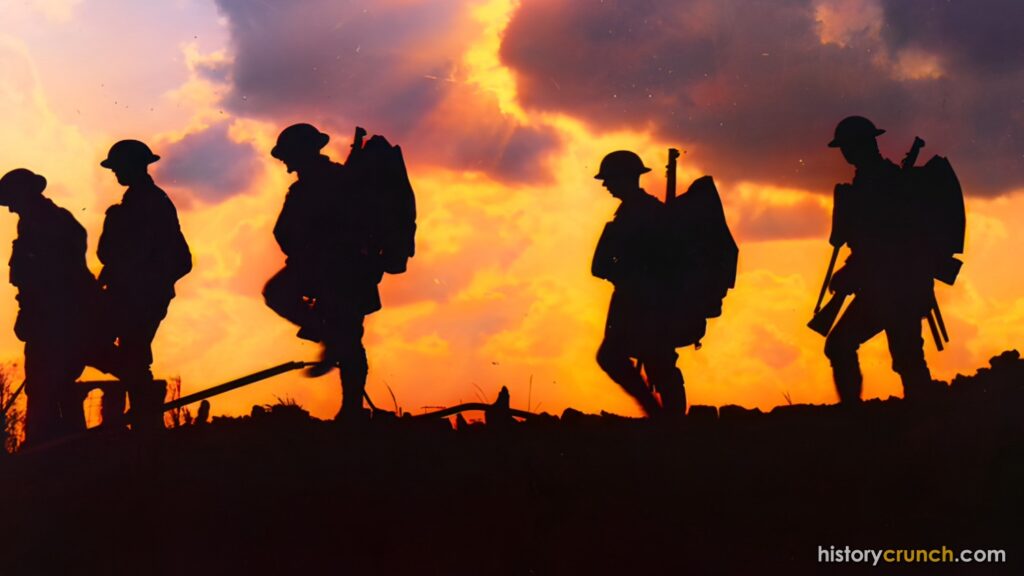
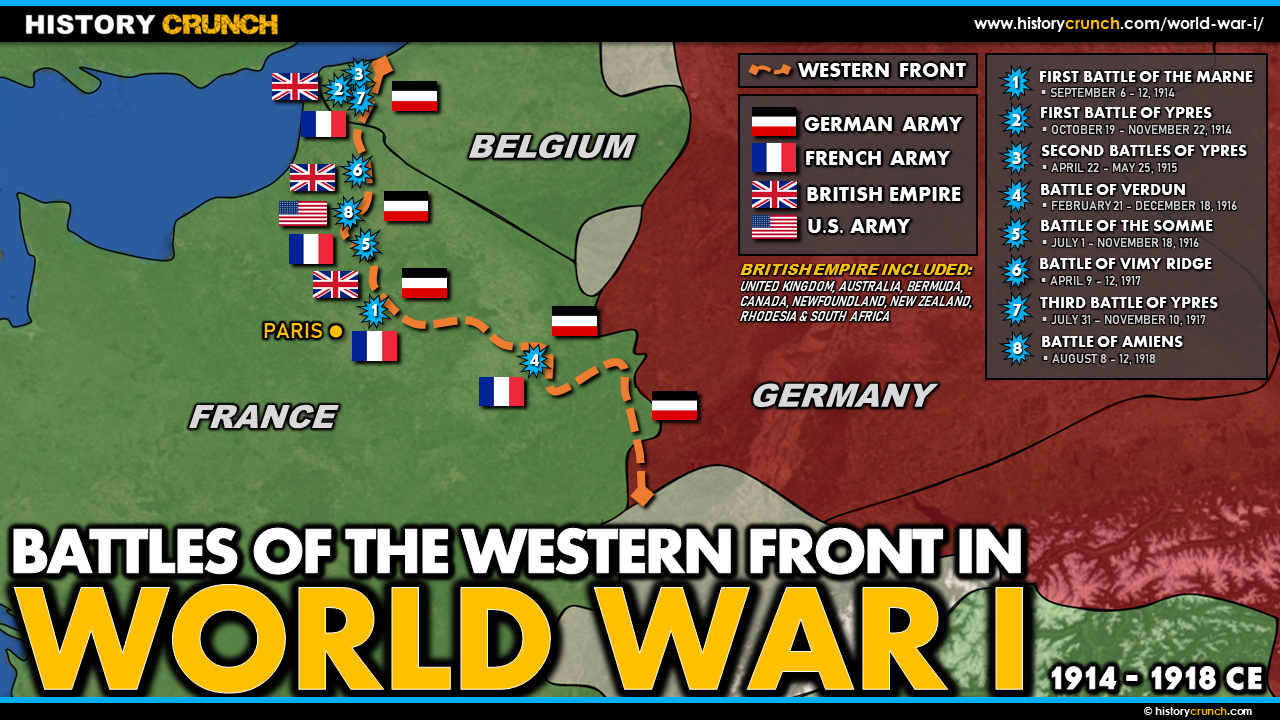
The Third Battle of Ypres, which is also known as the Battle of Passchendaele, is one of the most important battles of World War I. In fact, the battle was one of the more significant battles on the Western Front, which was the line of fighting that stretched along the trenches of Belgium and northern France. More specifically, the Third Battle of Ypres took place along the Ypres Salient in Belgium. This was the site of major fighting throughout World War I, including the First Battle of Ypres and the Second Battle of Ypres.
WHEN AND WHERE DID THE THIRD BATTLE OF YPRES OCCUR?
The Third Battle of Ypres was fought between the Allied Powers and Germany from July 31st to November 10th in 1917. As stated above, the battle took place close to the Belgian city of Ypres and was a major battle on the Western Front. The goal of the battle was for Allied forces (including: British, Canadian, Australian, New Zealand, South Africa, Indian, French and Belgium) to push German forces out of the area. The Germans had a strong hold of a ridge that overlooked the city of Ypres.
British commander, General Douglas Haig, wanted to carry out an attack of the area in the hopes of pushing back German forces and hopefully capturing coastal ports north of the region. Germany had been using the northern ports to launch its submarines that were causing havoc for merchant ships in the North Atlantic, and the Allied forces wanted to end the launching of these submarines.
WHAT HAPPENED DURING THE THIRD BATTLE YPRES IN WORLD WAR I?
The British attacked the Germans at Ypres on July 31st, but struggled to make any meaningful gains and both sides suffered massive losses. The continuous fire from both sides and the horrible conditions slowed the pace of battle and caused the battle to create stalemate-like conditions.

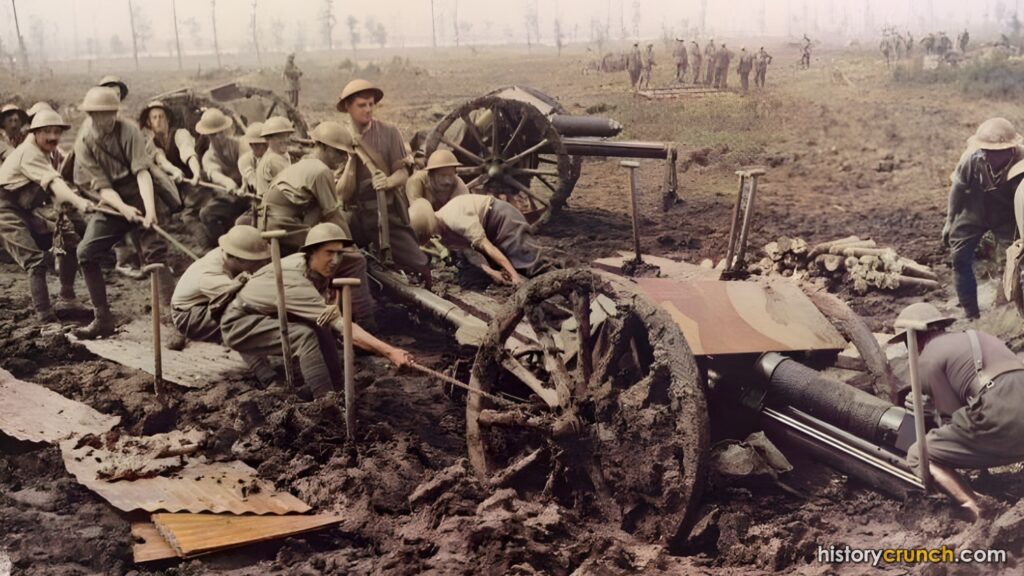
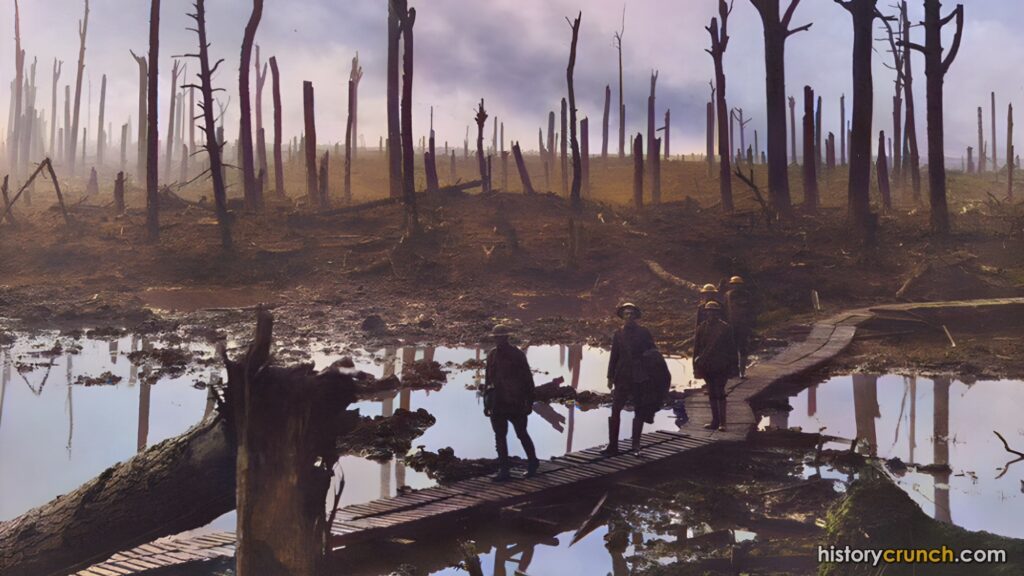
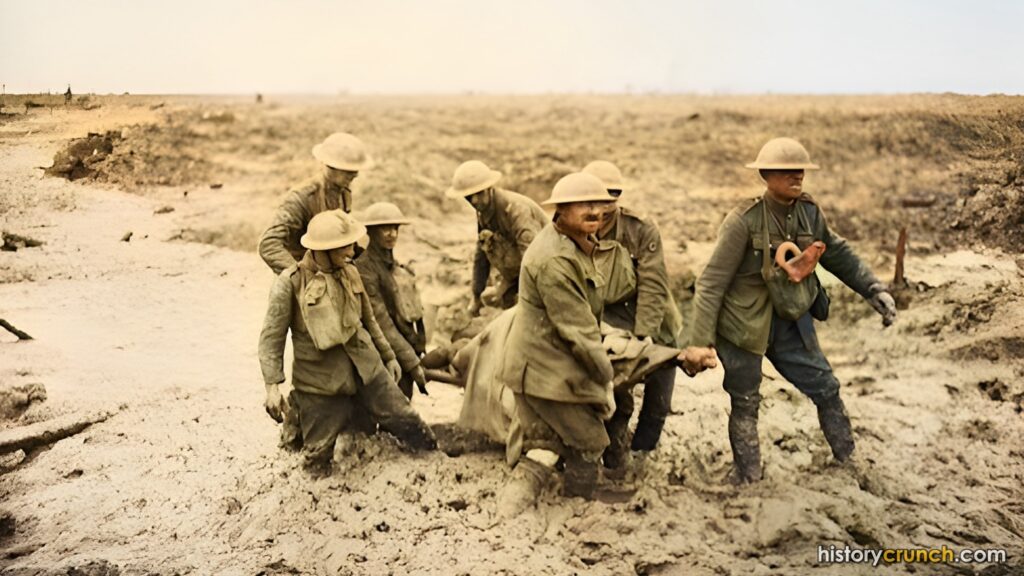
Therefore, Haig’s campaign on the German position would run into extreme difficulties. The Allied forces would have to contend with the weather and the horrible conditions of the battlefield. For example, rain and its impact on the battlefield would come to play an important role in the overall battle. The battlefields of Passchendaele would come to characterize the muddy, terrible conditions that World War I is famous for. The battlefield was littered with craters from artillery fire which, when filled with rain water, created deep pockets of mud that were, at times, deeper than the height of a man. This meant that soldiers killed on the battlefield would sometimes sink into the mud and be lost beneath the surface.
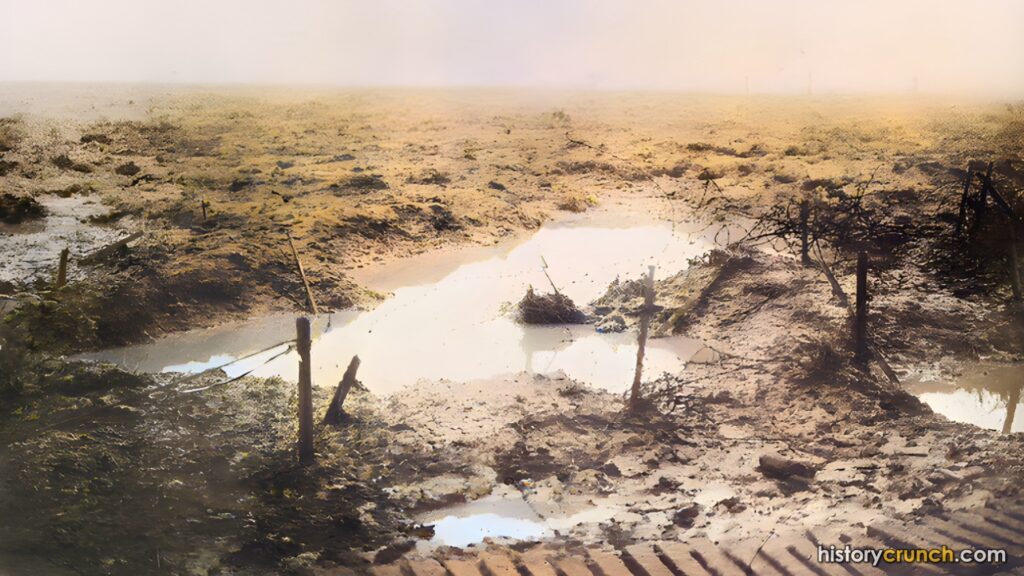
As well, attacking soldiers would have to run across boards to avoid becoming stuck in the mud and being vulnerable to enemy fire. The mud made every aspect of life for the soldiers difficult. Soldiers reported sinking into the mud as they slept, having the mud clog their rifles and having rain and mud fill their boots. The wet conditions created the perfect setting for trench foot, which could cause a soldier to get an infection in their foot. To combat this, the army provided soldiers with whale oil, which they were instructed to rub on their feet. The oil prevented the water from getting to their skin.
WHAT WAS THE OUTCOME OF THE THIRD BATTLE OF YPRES?
Eventually, the British called in the support of Canadian forces, which after many weeks of fighting were finally able to capture the ridge at Ypres from the Germans. The Allies captured the ridge in November of 1917 and the Third Battles of Ypres was over. For this reason, it is generally viewed as an Allied victory. With that said, the Third Battle of Ypres is also viewed as a massive loss of life for soldiers on all sides. For example, the muddy conditions of the trenches and battlefield were hard on the soldiers. In total, the Allies and Germans both suffered terrible losses. Historians disagree on the exact number, but it is generally agreed that the British likely suffered around 250,000 casualties, while the Germans suffered between 200,000 and 400,000 casualties. For this reason, the Third Battle of Ypres is remembered as a terrible battle for the soldiers of all nations involved.
Following the events of the Third Battle of Ypres, the Germany Army was pushed back during the Hundred Days Offensive, which was a major push by Allied forces, near the end of World War I, against the German forces in northern France. It took place from August 8th to November 11th in 1918. The Allied victories of the Hundred Days Offensive eventually led to the end of World War I, when Germany agreed to the November 11th armistice.