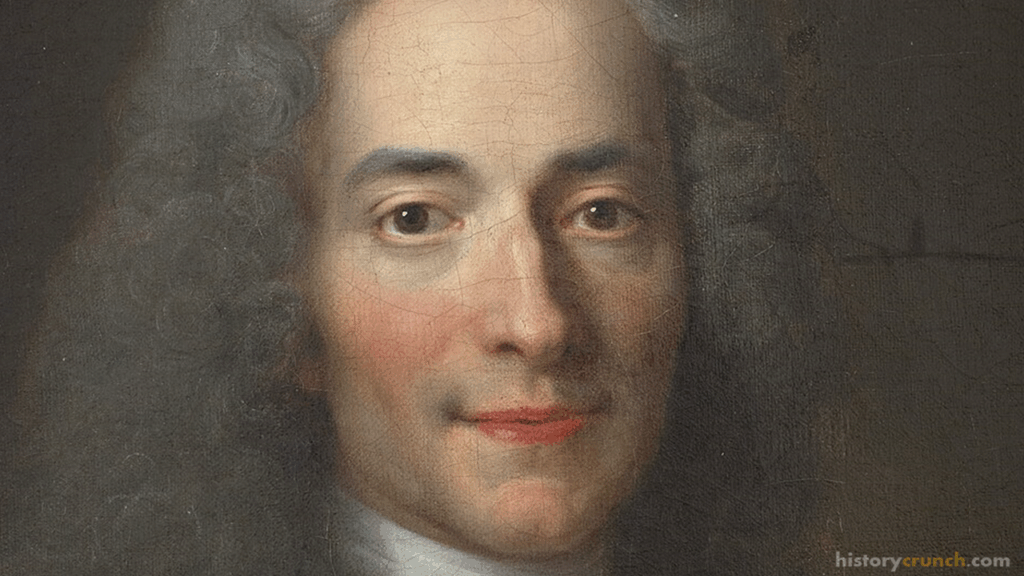
Voltaire was one of the most significant thinkers during the Age of Enlightenment. More specifically, he was a writer and philosopher and argued for freedom of speech, religious tolerance, and justice. His ideas and writings were central to the ideals of the Enlightenment and helped lay the framework for important concepts, such as: secularism, human rights, and modern liberal thought. As such, historians consider him to be one of the most significant voices during the Age of Enlightenment, alongside others, such as: Baron de Montesquieu, John Locke and Jean-Jacques Rousseau.
VOLTAIRE – EARLY LIFE
Voltaire was born on the 21st of November in 1694. His name at birth was François-Marie Arouet, but later became better known as ‘Voltaire’. He was born into a large family, and was the youngest of five children. Voltaire’s father was a lawyer, and his mother was from a family of French nobility.
He was educated at the College Louis Le Grand, where he learned Latin and theology. He later learned English, Italian and Spanish. Though his father wanted him to become a lawyer, Voltaire was drawn to literature and began writing plays and poems in his twenties. His work was liked by aristocratic families because it was witty. Furthermore, he spent much of his early life in Paris, and it is there that he took on the name, Voltaire.
VOLTAIRE – WRITER
As stated above, Voltaire was a prolific writer. In fact, in the early 1710s, Voltaire gained fame as a poet and playwright. Furthermore, Voltaire was a master of wit and satire. For instance, he used his writing to criticize injustice, religious intolerance, and abuses of power. His writing style was clear, sharp, and often humorous, which made complex ideas easy for ordinary people to understand.
His most famous work, ‘Candide’ (1759), is a satirical story that mocks blind optimism and exposes the cruelty and foolishness of society. Voltaire also wrote ‘Letters on England’ (1733), which praised English freedom of speech and religion while criticizing France’s lack of tolerance.
However, his satire and criticism of French politics and religion often landed him in trouble. For example, in 1717, he was imprisoned in the Bastille, a prison-fortress in Paris, for comments against French nobility. Upon his release, he adopted the pen name ‘Voltaire’.
After another clash with French authorities in 1726, Voltaire was exiled to England, where he stayed for three years. This period profoundly influenced him. In England, he encountered John Locke’s political philosophy and Isaac Newton’s scientific discoveries, which broadened his intellectual pursuits. He admired England’s relatively greater religious tolerance and constitutional monarchy compared to France’s absolute monarchy and Catholic dominance.
VOLTAIRE – AGE OF ENLIGHTENMENT
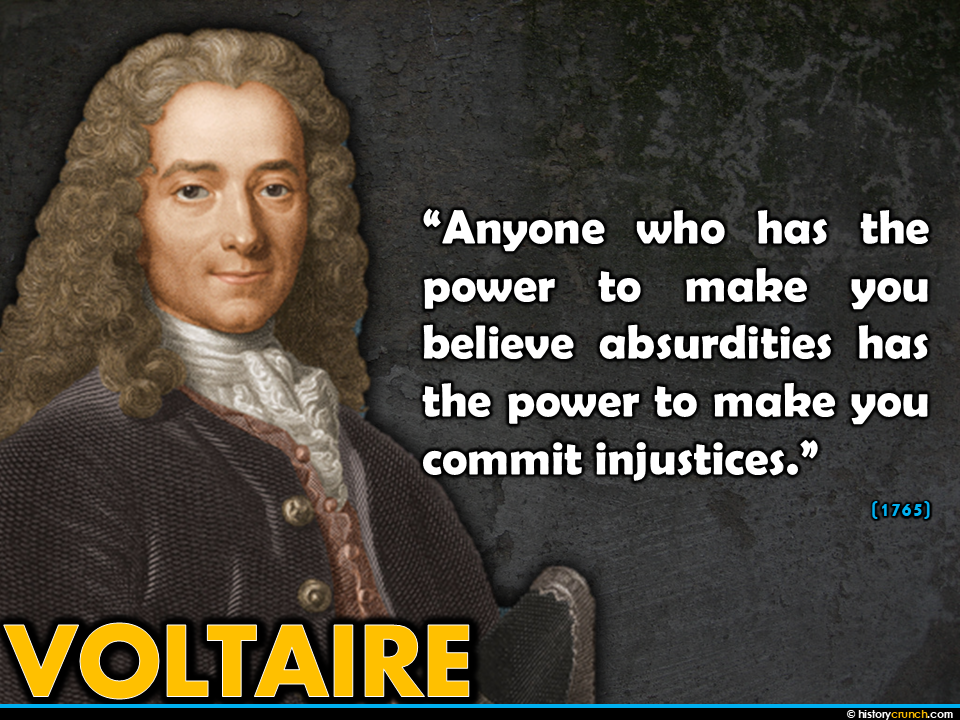
Today, Voltaire is known for his contributions to the Age of Enlightenment as a writer and philosopher. The Enlightenment was a cultural movement that emphasized reason, progress, and individual rights. His major ideas centered on religious tolerance, freedom of speech and criticism against Absolute authority.
For instance, Voltaire fiercely criticized religious intolerance and the abuses of the Catholic Church. He also believed in the right to express one’s views freely, even those one disagreed with. Although the famous phrase “I disapprove of what you say, but I will defend to the death your right to say it” was coined later by his biographer, it still accurately reflects Voltaire’s views on freedom of expression.
VOLTAIRE – LATER LIFE AND DEATH
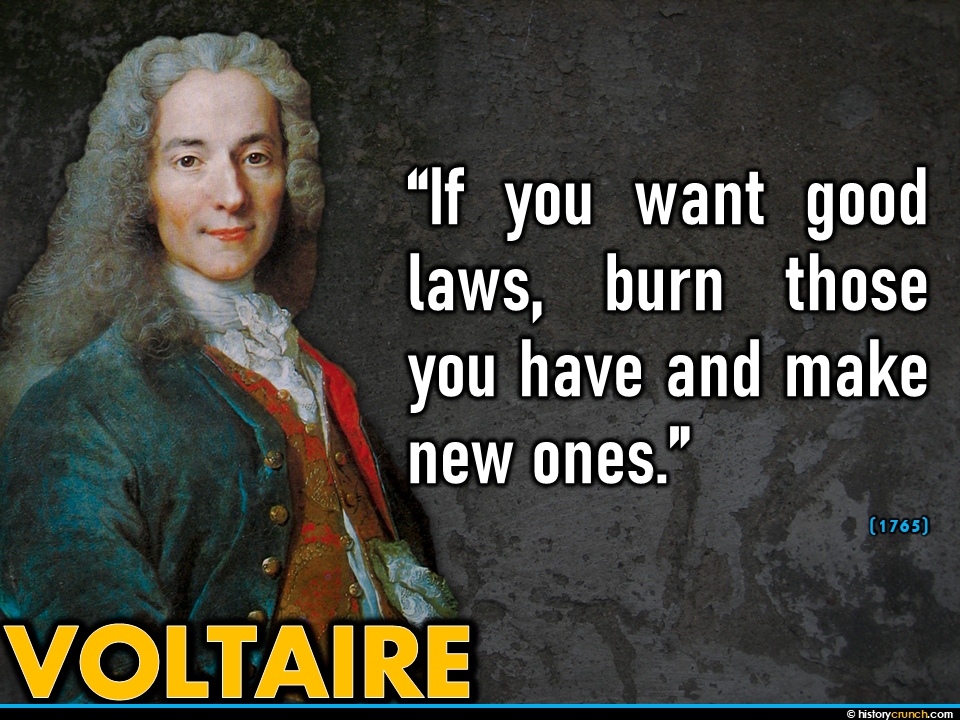
Voltaire spent much of his later life at his estate near the French-Swiss border, where he continued writing and corresponding with intellectuals across Europe. He became a symbol of Enlightenment thought, admired by both ordinary people and rulers.
He returned to Paris in 1778, shortly before his death, and was celebrated as a hero of free thought. Voltaire died on May 30th, 1778, at the age of 83. Because of his criticism of the Church, he was initially denied a Christian burial, but his remains were later moved to the Panthéon in Paris in 1791, a testament to his enduring legacy.
VOLTAIRE – SIGNIFICANCE
Voltaire is remembered as one of the greatest literary figures of his time, if not of all time. In particular, he is known for having a large impact on the Age of Enlightenment and the growth of liberty. He popularized Enlightenment ideals through witty, accessible works. Furthermore, he helped spread Locke’s, Newton’s, and other thinkers’ ideas across Europe. As well, his ideas inspired later revolutions, particularly the French Revolution and movements advocating free speech and religious liberty.