The War of the Spanish Succession was a major European conflict fought from 1701 to 1714, triggered by the death of King Charles II of Spain without an heir and the resulting struggle over who would inherit the Spanish throne and the vast Spanish Empire. The war pitted France and its allies against a Grand Alliance of England, the Dutch Republic, Austria, and other European powers who feared that French control of Spain would give Louis XIV of France an overwhelming dominance over the continent. It was one of the largest and most expensive wars of the Age of Absolutism, involving most of the major European powers and spreading into the Americas, the Mediterranean, and beyond. The peace settlement that ended it, the Treaty of Utrecht of 1713, fundamentally reshaped the balance of power in Europe and had consequences that shaped European politics for decades afterward.
What Was the Age of Absolutism?
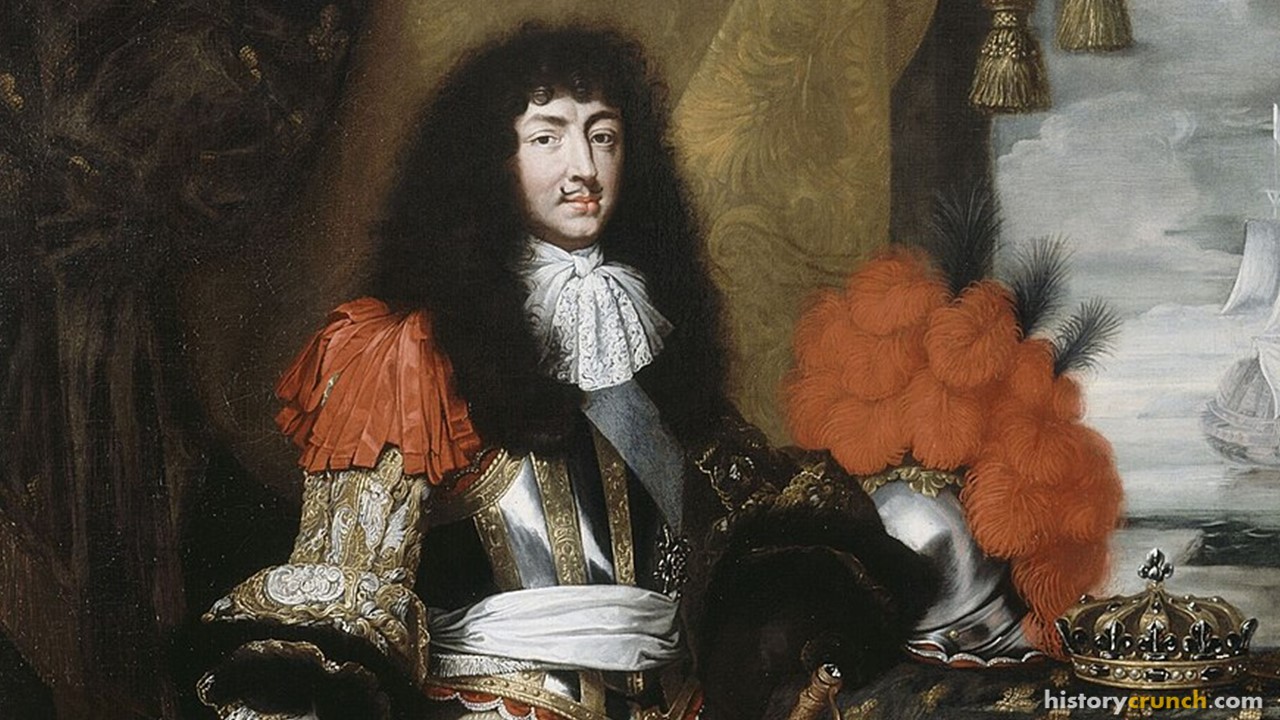
The Age of Absolutism was a period in European history lasting roughly from the early 17th century to the late 18th century, during which monarchs across Europe claimed total and unchecked authority over their kingdoms and justified their power through the idea of the divine right of kings. Louis XIV of France was the greatest example of absolute monarchy during this era, ruling from 1643 to 1715 and building the most powerful state in Europe. His ambition to extend French power and influence across the continent was the central cause of most of the major wars of the later 17th and early 18th centuries, and the War of the Spanish Succession was the most consequential of these conflicts.
War of the Spanish Succession – Background and Causes
The immediate cause of the War of the Spanish Succession was the death of Charles II of Spain in November 1700. Charles II was the last of the Spanish Habsburg line and had been in poor health for most of his life, a consequence of generations of inbreeding within the Habsburg dynasty that had left him physically and mentally incapacitated. His death without an heir created an enormous problem for European diplomacy, since the Spanish Empire was the largest in the world, encompassing Spain itself, the Spanish Netherlands, large parts of Italy, and the vast colonial territories in the Americas and the Philippines.
Before his death, Charles II had been the subject of years of diplomatic maneuvering by the major European powers, each of which hoped to influence the succession in its favor. Two main candidates had emerged. The first was Philip, Duke of Anjou, the grandson of Louis XIV of France and therefore a Bourbon prince. The second was Archduke Charles of Austria, the second son of Holy Roman Emperor Leopold I and therefore a Habsburg claimant. Both men had legitimate dynastic claims to the Spanish throne through different lines of descent.
The major European powers had attempted to negotiate a peaceful solution through a series of partition treaties that would have divided the Spanish inheritance between the candidates and prevented either France or Austria from gaining too large an advantage. However, when Charles II died, his will left the entire Spanish inheritance to Philip of Anjou, rejecting any partition. Louis XIV accepted the will on behalf of his grandson, who became Philip V of Spain, and moved quickly to establish French influence in Spain and the Spanish Netherlands.
The reaction of the other European powers was one of deep alarm. Louis XIV’s decision to place his grandson on the Spanish throne raised the prospect of an eventual union of France and Spain under a single Bourbon dynasty, which would give France an overwhelming dominance over Western Europe and control of the Spanish colonial empire. Furthermore, Louis XIV’s behavior in the months following the succession made clear his intention to treat Spain as effectively within the French sphere of influence. He recognized Philip V as King but continued to treat him as subject to French direction, and French troops moved into the Spanish Netherlands, threatening Dutch and English commercial interests there.
War of the Spanish Succession – The Grand Alliance
In response to the French seizure of the Spanish inheritance, England, the Dutch Republic, and the Habsburg Empire formed the Grand Alliance in 1701. England and the Dutch Republic were particularly alarmed by French dominance of the Spanish Netherlands, which lay directly across the English Channel and the Dutch border and whose ports and resources could potentially be used against them. The death of the exiled English Catholic King James II in 1701 and Louis XIV’s recognition of his son as the rightful King of England, in violation of the Treaty of Rijswijk of 1697, added further outrage and gave England an additional motivation for war.
The Grand Alliance committed its members to preventing the union of France and Spain under a single ruler, to securing the Spanish Netherlands and Spanish territories in Italy for the Austrian Habsburgs, and to winning trading rights and colonial concessions from Spain for England and the Dutch Republic. The war formally began in 1701 when Austrian forces invaded Spanish-controlled Italy. England and the Dutch Republic declared war on France in May 1702 following the death of King William III and the accession of Queen Anne.
War of the Spanish Succession – The War in Europe
The War of the Spanish Succession was fought across a wide range of theaters including the Spanish Netherlands, Germany, Italy, Spain itself, and at sea. The allied cause was served by two exceptional commanders who worked in close partnership throughout the war: John Churchill, the Duke of Marlborough, who commanded the English and Dutch forces, and Prince Eugene of Savoy, who commanded the Austrian forces.
The most celebrated engagement of the war was the Battle of Blenheim on August 13th, 1704, fought at the town of Blindheim on the Danube River in southern Germany. By 1704, Franco-Bavarian forces were threatening to capture Vienna and knock Austria out of the war entirely, which would have been a potentially decisive blow to the Grand Alliance. In response, Marlborough executed one of the most remarkable strategic marches in military history, moving his army of 40,000 men approximately 250 miles from the Spanish Netherlands to the Danube in just five weeks, keeping his destination secret from both his enemies and most of his allies. Joining with Prince Eugene’s Austrian forces, Marlborough engaged the Franco-Bavarian army at Blenheim and won an overwhelming victory. The French commander Marshal Tallard was captured, and the French and Bavarian forces suffered enormous casualties. The battle saved Vienna, knocked Bavaria out of the war, and shattered the myth of French military invincibility that had prevailed for half a century. In recognition of his achievement, Marlborough was given the royal estate of Woodstock in Oxfordshire, where the magnificent Blenheim Palace was built in his honor.
The allied forces continued to win important victories in subsequent years. Marlborough and Eugene triumphed at Ramillies in 1706, Oudenarde in 1708, and Malplaquet in 1709, gradually pushing French forces back and placing increasing pressure on Louis XIV. However, the war in Spain itself proved much more difficult. Archduke Charles briefly captured Madrid and was proclaimed King of Spain there, but was unable to hold it. The Spanish people showed strong support for Philip V as their king, and French and Spanish forces eventually drove the allied armies out of most of Spain. The war ground on without producing a decisive resolution in any theater.
War of the Spanish Succession – The Treaty of Utrecht
By the early 1710s, both sides were exhausted and eager for peace. The political situation in England changed significantly when the Tory party came to power in 1710 and began secret peace negotiations with France, withdrawing Marlborough from command in 1711. A crucial change in circumstances also occurred when Holy Roman Emperor Joseph I died in 1711 and was succeeded by Archduke Charles, who now became Emperor Charles VI. This meant that allowing Charles to become King of Spain as well would recreate the vast Habsburg empire of Charles V, which was precisely the kind of overwhelming dominance the Grand Alliance had gone to war to prevent. The strategic rationale for continuing to fight for Charles’s Spanish claim largely collapsed.
Peace negotiations were conducted at Utrecht in the Netherlands from 1712, and the main treaties were signed in April 1713. The Treaty of Utrecht produced a complex series of settlements between the various belligerents. Philip V was recognized as King of Spain and the Spanish overseas empire, but was required to permanently renounce for himself and his descendants any claim to the French throne, ensuring that France and Spain would never be united under a single ruler. Spain ceded Gibraltar and Minorca to Britain, a territorial transfer whose consequences proved extremely long-lasting, as Britain retained Gibraltar to the present day. Spain also granted Britain the Asiento, the exclusive right to supply enslaved African people to the Spanish colonies in America, a commercially valuable concession.
Austria received the Spanish Netherlands, the Kingdom of Naples, Sardinia, and the Duchy of Milan in Italy, consolidating Habsburg power in Central Europe and the Mediterranean. The Dutch Republic gained barrier fortresses in the Spanish Netherlands to help defend against future French aggression. France ceded significant territories to Britain in North America, including Newfoundland, Nova Scotia, and the Hudson Bay territory, substantially expanding British colonial power on the continent. A supplementary treaty, the Treaty of Rastatt, was signed between France and Austria in 1714 to settle the remaining disputes between those two powers.
War of the Spanish Succession – Significance
The significance of the War of the Spanish Succession in the history of the Age of Absolutism is considerable. First, the war decisively checked the ambitions of Louis XIV and prevented France from establishing the kind of overwhelming dominance over Europe that he had sought throughout his long reign. The settlements of Utrecht and Rastatt confirmed that the balance of power would be preserved and that no single state would be allowed to dominate the continent unchallenged.
Second, the war marked a significant step in the rise of Britain as a great European and global power. The military reputation established by Marlborough’s campaigns, the colonial territories gained in North America, the commercial concessions extracted from Spain, and the strategic position secured by the acquisition of Gibraltar all strengthened Britain’s position substantially and pointed toward the global maritime empire that Britain would build over the following century.
Third, the war established the principle of the balance of power as a central organizing concept of European diplomacy, a principle that would continue to shape international relations throughout the 18th century and beyond. The careful distribution of territories and the explicit prohibition on the union of France and Spain demonstrated that the major European powers regarded maintaining a rough equilibrium of strength among themselves as a shared interest worth fighting to preserve. As such, the War of the Spanish Succession stands as one of the most consequential conflicts of the Age of Absolutism and a defining moment in the political development of early modern Europe.