The First Red Scare was a significant period in American history from the 20th century. It was characterized by the widespread fear of communism. This era, spanning from approximately 1917 to 1920, saw the United States government and American society react to perceived threats with heightened suspicion. This article details the main historical events, people and significance of the First Red Scare.
FIRST RED SCARE – ORIGINS
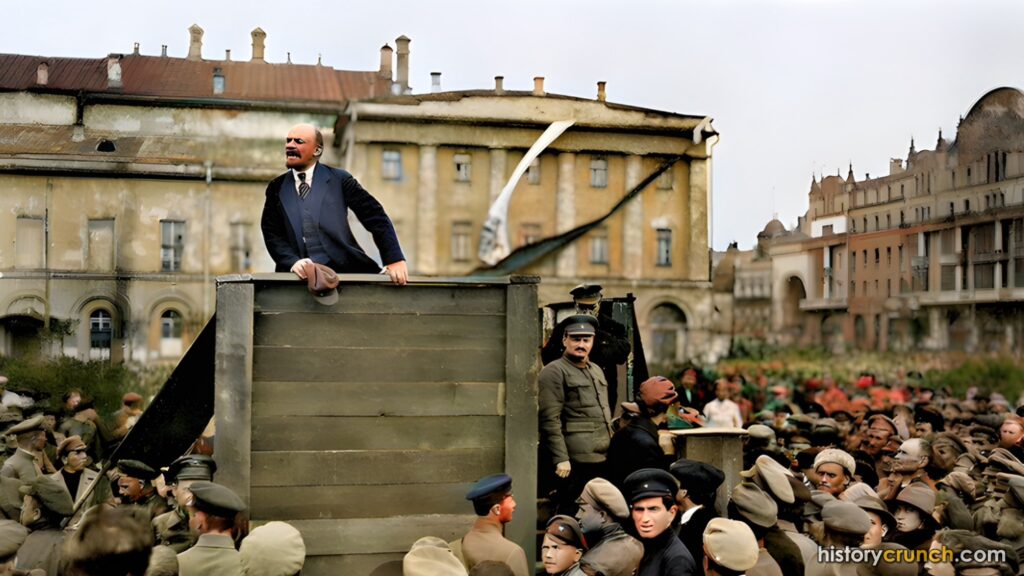
The First Red Scare had its beginnings in the aftermath of World War I (1914-1918) and the Russian Revolution of 1917. More specifically, the Bolshevik Revolution in Russia was led by Vladimir Lenin and resulted in the establishment of a communist government in Russia, which sparked fears of a global communist uprising. In the United States, these fears of communism were made worse by labor strikes and social unrest in the years after World War I. As such, the emergence of communism in Russia was a major factor in the fear of communism that sparked the First Red Scare.
FIRST RED SCARE – MAJOR EVENTS
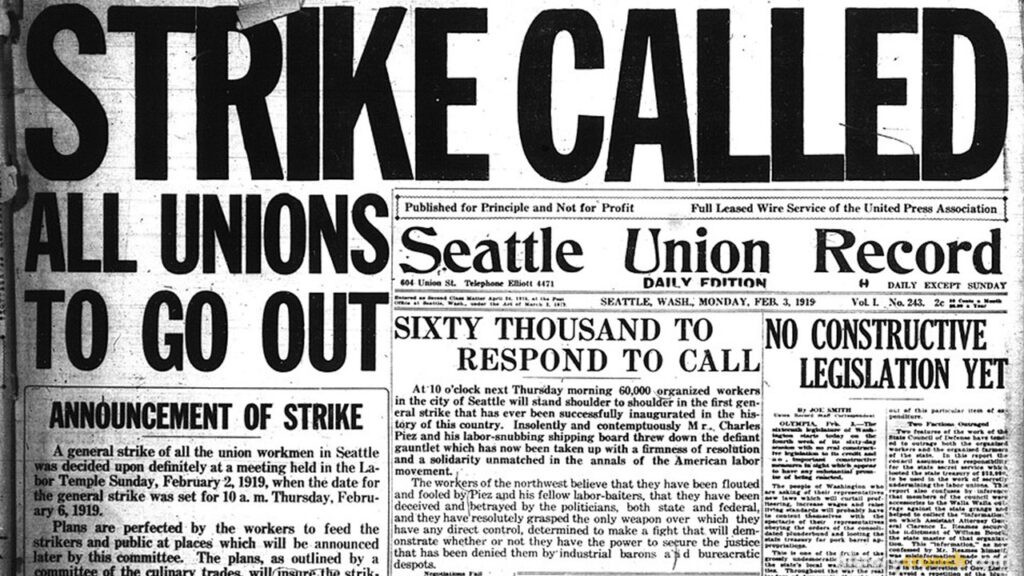
As stated above, the First Red Scare occurred from approximately 1917 to 1920 and was a period of heightened tensions in the United States based on fear or paranoia of the spread of communism. With that said the First Red Scare reached a high point between 1919 and 1920. Historians have identified several major events of the First Red Scare. For instance, the first major event was the Seattle General Strike of 1919. It was one of the first major strikes after the end of World War I and involved over 65,000 workers. In total, the strike lasted for five days and was centered on workers showing solidarity with shipyard workers in Seattle. However, the Seattle General Strike of 1919 was also viewed as a radical attempt to undermine American society. As such, this caused some to view the strike as the undertaking of communists in America. This resulted in the Seattle General Strike being one of the first major events of the First Red Scare.
Next was the Boston Police Strike of 1919. During this event, police officers in Boston went on strike for increased wages and improved working conditions. The strike obviously led to policing issues in Boston, which caused some to suggest that the strike was inspired by communists. In fact, opponents of the strike argued that it caused chaos and that communist radicals were attempting to destabilize the government. As such, historians view the Boston Police Strike of 1919 as a major event of the First Red Scare.
Another important event in the First Red Scare was the Palmer Raids. These raids were named after Attorney General A. Mitchell Palmer and occurred in November of 1919 and January of 1920. Furthermore, these were a series of raids conducted to arrest and deport suspected communist radicals and anarchists. In total, 6,000 people were arrested across 36 cities during the raids. The Palmer Raids are controversial because they disregarded civil liberties and due process. As well, some have argued that they targeted specific ethnic groups including Jewish and Italian immigrants.
As well, the First Red Scare was also significant due to the race riots that occurred. The end of World War I saw significant social changes in the United States, including the Great Migration, where thousands of African Americans moved from the rural South to urban centers in the North. This migration led to increased competition for jobs and housing in some communities and contributed to increased racial tensions. In fact, during the summer of 1919, a series of race riots erupted. One of the most famous riots occurred in Chicago, where a violent clash between black and white residents resulted in 38 deaths and over 500 injuries. Other prominent riots occurred in Washington D.C. and Elaine, Arkansas.
The final major event of the First Red Scare was the United States anarchist bombings of 1919. These were a series of bombings in 1919 that targeted government officials and prominent business leaders. In all, the bombings ultimately heightened public fears of a radical uprising and furthered the paranoia of the First Red Scare.

FIRST RED SCARE – GOVERNMENT RESPONSE
The United States government responded to the events of the First Red Scare in a variety of different ways. First, the government established the Espionage Act of 1917 and Sedition Act of 1918. These laws made it illegal to interfere with military operations or support America’s enemies during wartime. The laws were both used to control the spread of communism and other ideologies that were central to the fear and paranoia of the First Red Scare..
Next, the government carried out the deportation of immigrants. Many immigrants suspected of holding radical political views were deported without fair trials. In fact, many of those that were deported were arrested as part of the Palmer Raids, which were discussed earlier.
FIRST RED SCARE – IMPACTS
The First Red Scare had profound impacts on the lives of Americans at the time. One such impact was related to the issue of civil liberties in the United States. More specifically, many individuals were arrested without warrants, and freedom of speech was heavily limited. The period saw widespread violations of constitutional rights as the government prioritized national security over individual freedoms. In fact, this environment of fear and suspicion led to discrimination against immigrants and suppression of political dissent.
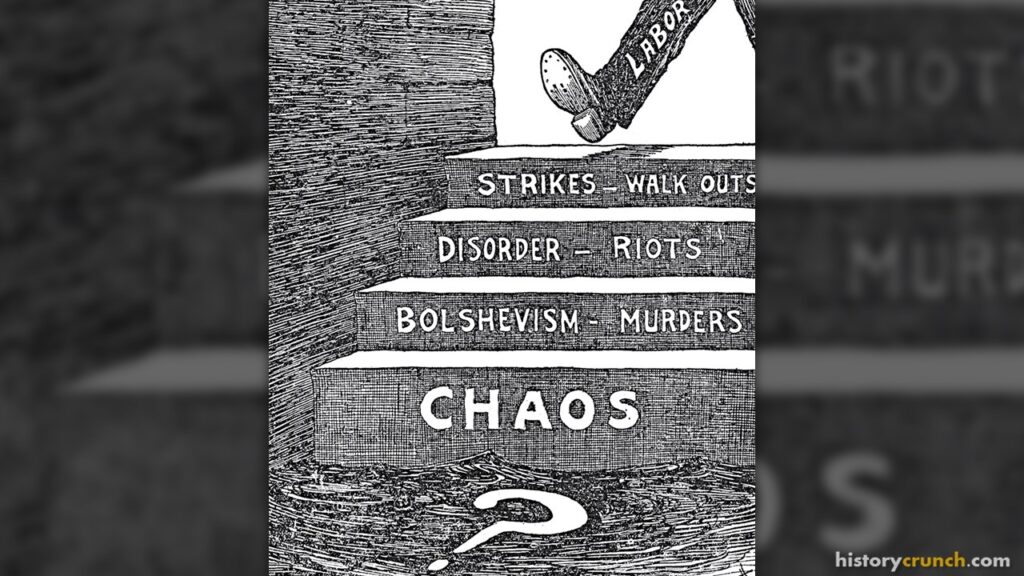
Historians have also identified social and cultural impacts of the First Red Scare. The social and cultural impacts of the First Red Scare extended beyond government actions. For example, anti-communist feelings among the greater American society, led to several issues. First, it led to increased xenophobia, which is the irrational fear or hatred of people from other countries. Immigrants, particularly those from Eastern Europe, were often viewed with suspicion and hostility during the First Red Scare. Next, the First Red Scare also led to the suppression of labor movements. For instance, labor unions and strikes were often viewed as communist plots, which undermined workers’ rights.
FIRST RED SCARE – SIGNIFICANCE
The significance of the First Red Scare is that it serves as a reminder of the dangers of allowing fear to dictate public policy and societal behavior. The era demonstrated how quickly civil liberties can be eroded in the name of national security. It also set a precedent for future periods of anti-communist fear, most notably the Second Red Scare and McCarthyism in the 1950s.