The soldiers of World War I, especially on the Western Front, experienced a regular daily routine. For instance, trench life was dominated by repetition with the soldiers following orders, prepping for the day, and experiencing periods of rest. The information below details the usual daily routine for the soldiers in the frontline trenches.
DAILY ROUTINE IN THE TRENCHES OF WORLD WAR I – MORNING
The first thing that soldiers did in the morning, was the daily ‘stand-to’, which involved the frontline soldiers preparing themselves for a possible enemy attack from across ‘No Man’s Land’. ‘Stand-to’ occurred at dawn, since it was the most common time for an enemy attack. If there was no enemy attack and the soldiers were not ordered ‘over the top’ to carry out their own attack, then they would begin their jobs for the day. For instance, during the morning routine, soldiers were subject to rifle and personal inspections from officers. The inspections were to ensure that the soldiers kept their rifles and themselves clean in the dirty and muddy conditions of the trenches. More specifically, military officers often kept a lookout in the soldiers for signs of ‘Trench Foot’, which was an infection of the foot caused by wet and muddy conditions.

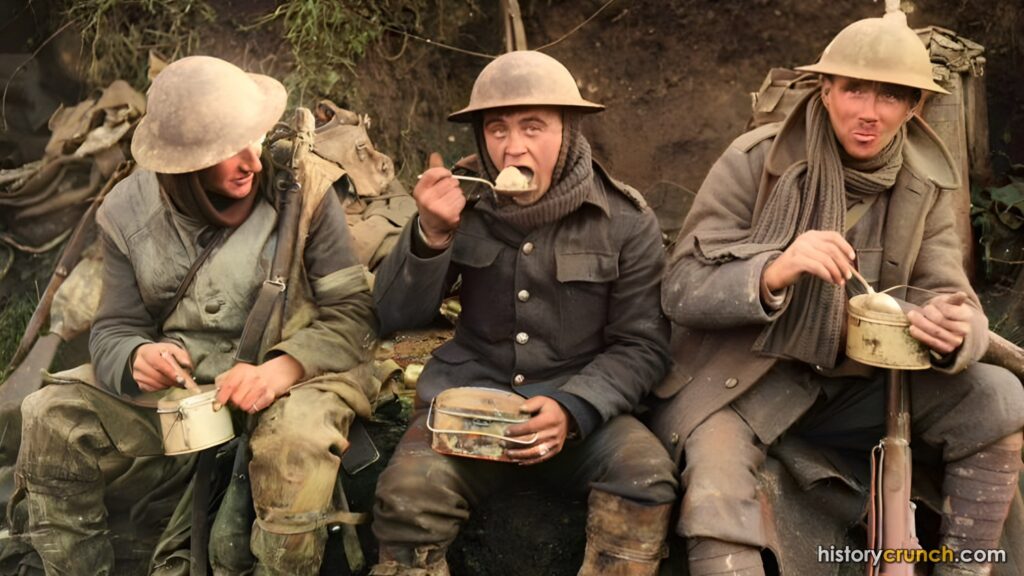
Following inspections, the soldiers were provided with breakfast and their daily alcohol ration. Soldiers from all of the major powers were provided with alcohol while on the frontlines. For example, Britain gave their soldiers a rum ration, while France gave their soldiers a wine ration. For food, the soldiers in the trenches were provided with whatever was available, but it usually included a meat ration alongside bread or crackers. As the war progressed, the armies struggled to maintain food supplies, so sometimes the rations were lessened.

DAILY ROUTINE IN THE TRENCHES OF WORLD WAR I – MID-DAY
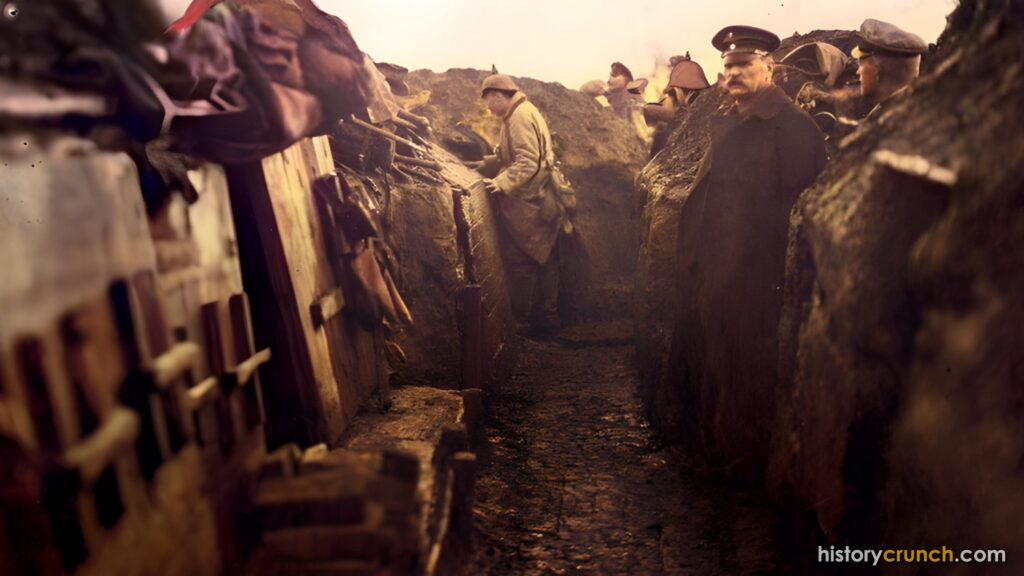
Throughout the day, the soldiers were required to complete different sets of chores. The main set of these chores focused on repairing and maintaining the trenches. For example, several common afternoon chores included: digging new trenches, filling sandbags for the front wall of the trench (parapet), repairing or laying down duckboards on the bottom of the trench, etc.
When all of the chores were complete, the soldiers also had time for rest and relaxation. For example, soldiers often spent their downtime by: sleeping, writing letters, reading, playing cards, etc. Some of the soldiers also created numerous pieces of art out of bullet cartridges, which was a common material found in the frontline trenches of World War I. However, a constant experience for the soldiers at this time was boredom. The trenches of World War I offered the soldiers little in the way of entertainment and when there were no active attacks, the soldiers experienced unrelenting boredom. Further to this idea, soldiers kept their heads down in the trenches due to the threat of snipers during daylight hours. As such, this limited the ability of the soldiers to move around within the trenches.
DAILY ROUTINE IN THE TRENCHES OF WORLD WAR I – NIGHT
The cover of darkness allowed the soldiers of the frontline trenches to carry out the more dangerous work. For instance, at night was when the soldiers would sometimes venture into ‘No Man’s Land’, which was the region between the two frontline trenches. They would go into ‘No Man’s Land’ in order to repair barbwire defenses, along with other features of the trench system. The soldiers also did nighttime patrols in no man’s land, in order to spy on enemy nighttime operations and listen for enemy troop movements.
Finally, nighttime was also when some soldiers were tasked with keeping watch, while others slept. They took rotating shifts on watch, during which they kept an eye out for enemy advances. Although this was rare, since almost all attacks took place at dawn, in the morning.