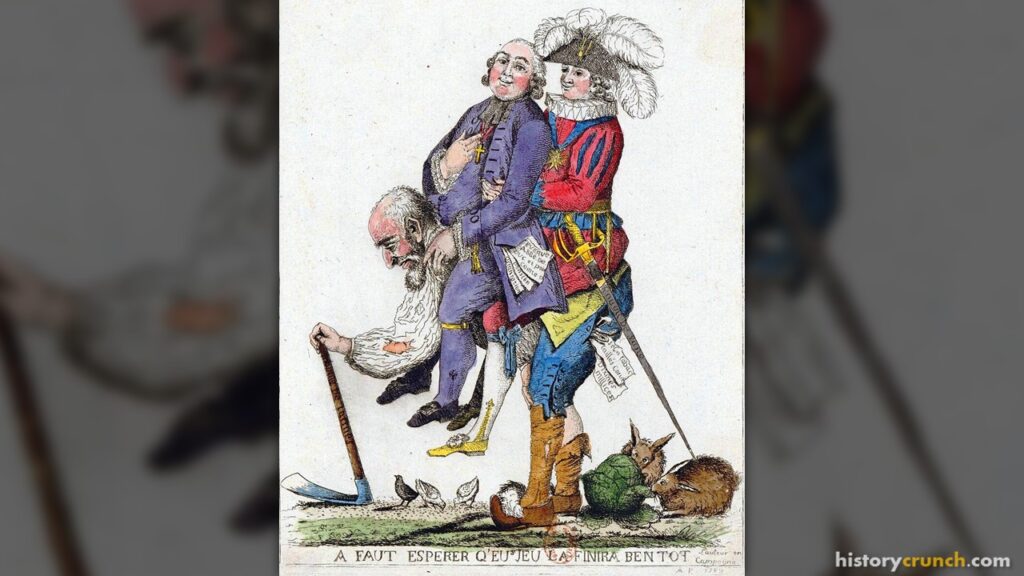
The Estates System of France before the French Revolution refers to how France’s society was divided into three estates, or social classes. The First Estate consisted of the clergy, the Second Estate was the nobility, and the Third Estate included everyone else, including: peasants, urban workers, and the bourgeoisie. Collectively, they made up about 98% of the population. Despite their numbers, the Third Estate had the least power and paid the heaviest tax burden, while the First and Second Estates enjoyed social, economic and political privileges.
FRANCE BEFORE THE FRENCH REVOLUTION
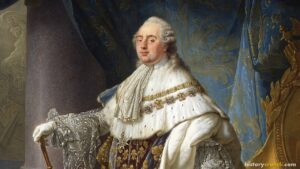
French Society in the late 18th Century was divided between distinct classes or groups in society. At the top of society was Louis XVI, the absolute monarch of France. He believed that his authority to rule came from God and that any decision that Louis XVI made had to be obeyed by everyone within France.
In the 1780’s the population of France numbered about 24,700,000, and it was divided into three estates or orders. The estate to which a person belonged was very important because it determined that person’s rights, obligations and status. Usually a person remained in one estate for his or her lifetime, and any movement from upwards in the estate system could take many generations. This is the period before the French Revolution and is a time known as the Ancien Regime.
ESTATES SYSTEM IN FRANCE (FRENCH REVOLUTION) – SUMMARY
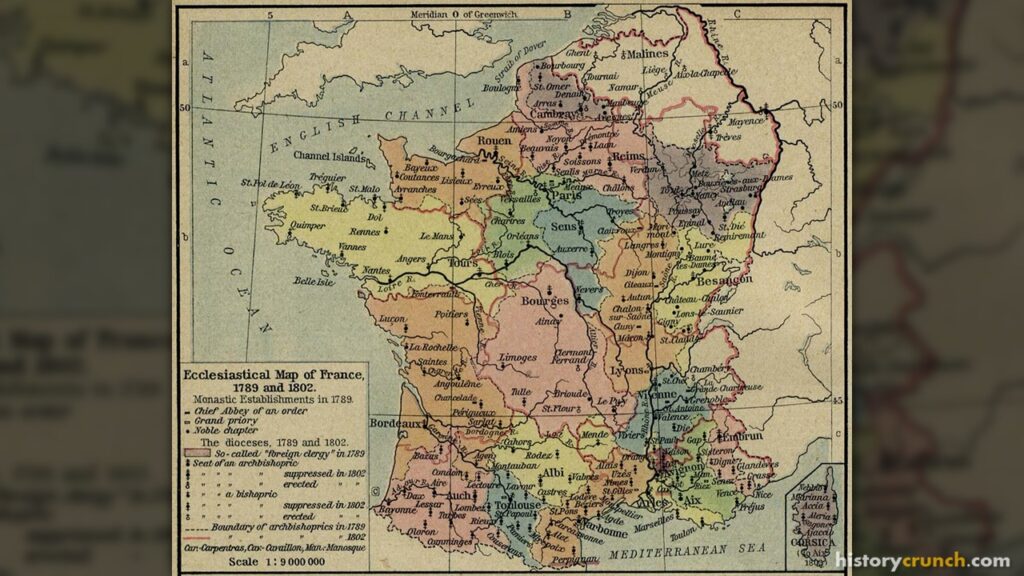
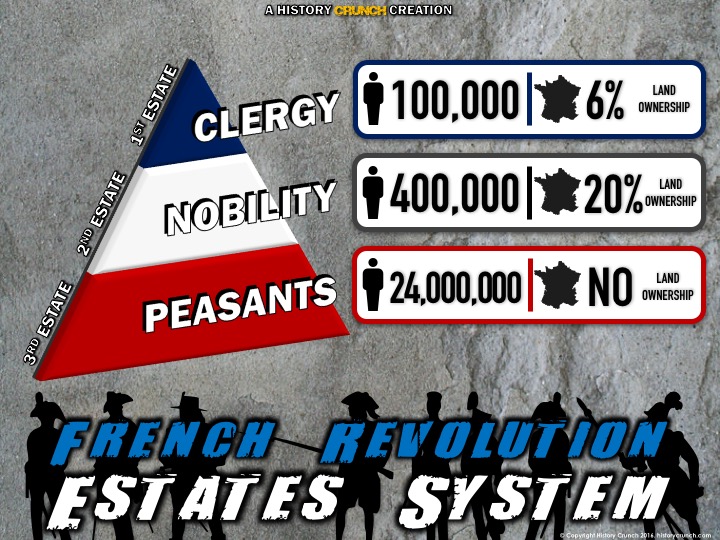
The First Estate was made up of the Roman Catholic clergy who numbered about 100,000 in the 1780’s. The clergy included people such as: monks, nuns, parish priests and bishops. The clergy was divided in that the higher church positions, like bishops, were held by members of the nobility, while positions in lower clergy were often held by members of the peasant class. The Church had many privileges, including the collection of tithes. Tithes are one-tenth of a person’s income which is formally taken in support of the church and clergy. Also, the Church did not pay land taxes, even though it owned about 6% of the land and was very wealthy.
The Second Estate consisted of the French nobility, which numbered about 400,000 people. The nobles owned about 20% of the land and had many feudal privileges. For example, they were exempt from paying many taxes and were allowed to collect dues from the peasants. The nobility occupied most of the powerful positions in the army, Church and government.
All other people in France, about 98% of the population belonged to the Third Estate. This group included: merchants, lawyers, poor laborers, and ordinary peasants. They paid most of the taxes collected by the government but were generally looked down upon by the nobility. They resented the power of the Church and the nobility.
ESTATES SYSTEM IN FRANCE (FRENCH REVOLUTION) – SIGNIFICANCE
The Estates System in France before the French Revolution was significant because it highlighted the deep social and economic inequalities that ultimately led to the events of the French Revolution. For instance, it unfairly divided French society into three rigid classes, where the First (clergy) and Second (nobility) Estates held most of the power and privileges, while the Third Estate carried the tax burden and had little political influence.
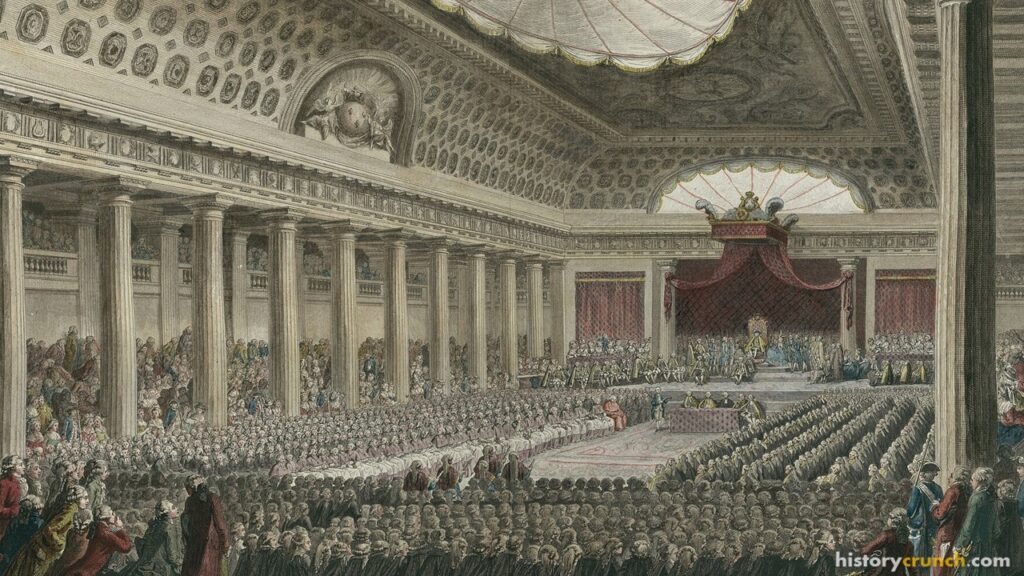
This system created widespread anger and frustration, especially among the growing middle class of French society, or bourgeoisie, who were educated and wealthy but lacked political rights. The unequal structure of the Estates System contributed directly to the calling of the Estates-General of 1789, which became an important factor in the outbreak of the French Revolution. Ultimately, the collapse of this system marked a turning point in the move toward equality, liberty, and the end of Louis XVI’s absolute monarchy in France.