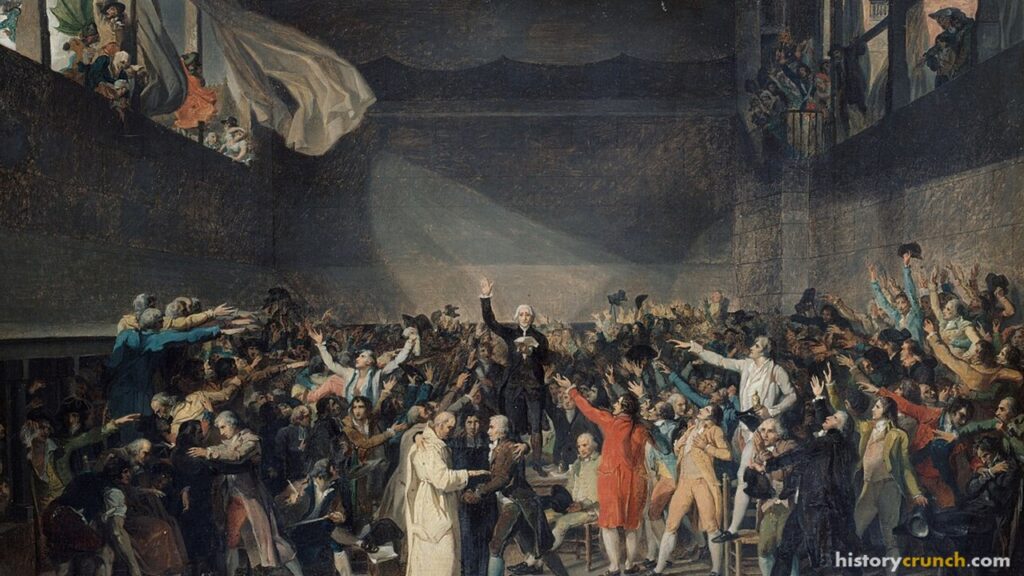
The Tennis Court Oath in the French Revolution took place on June 20th, 1789, when members of the Third Estate were locked out of a meeting of the Estates-General of 1789. In response, they gathered in a nearby indoor tennis court and pledged not to disband until they had written a new constitution for France. This bold act marked the first time the people formally stood against the authority of the king and the traditional social order of France.
WHAT WAS THE FRENCH REVOLUTION?
The French Revolution was a major event in the history of Western societies, and had a profound effect on the world today. Beginning in 1789, the revolution saw the French people overthrow their absolute monarchy and bring about a republic that was based on the principles of equality, liberty and fraternity. The revolution unfolded as a series of major events beginning when Louis XVI called the Estates-General in May of 1789. However, the Estates-General failed due to divisions between the representatives of the estates and poor decision-making of the king. As such, the failure of the Estates-General ultimately led to the events of the Tennis Court Oath.

TENNIS COURT OATH – SUMMARY
Once the Estates-General of 1789 failed, the representatives of the Third Estate and their newly created National Assembly moved to the nearby tennis court in order to carry out their own discussions. The representatives of the Third Estate were angered with the inaction of the Estates-General and upset with their position in French society. They resented the Estates System and the absolute monarchy of Louis XVI. For instance, the Estates System limited the power and privilege of the Third Estate, which made up approximately 98% of the French population. Furthermore, the absolute monarchy of Louis XVI, angered many French citizens, since they lacked the ability to have input in the governance of their country.
It was in the tennis court that on the 20th of June 1789 the Third Estate established the National Assembly, the new revolutionary government, and pledged “not to separate, and to reassemble wherever circumstances require, until the constitution of the kingdom is established.”
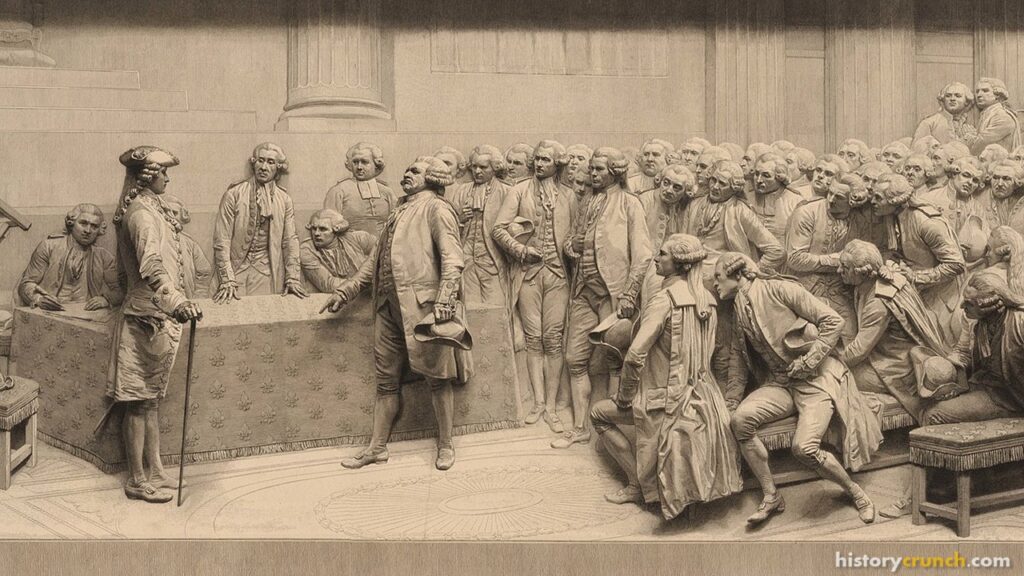
TENNIS COURT OATH – SIGNIFICANCE
The Tennis Court Oath was significant because it showed the growing unrest against Louis XVI and laid the foundation for later events, including: the Declaration of the Rights of Man and of the Citizen and the storming of the Bastille. For instance, the Tennis Court Oath was the first formal act of defiance by the Third Estate against the authority of the monarchy during the French Revolution. It demonstrated the unity and determination of the common people to demand political representation and constitutional reform. By vowing not to separate until a new constitution was established, the Tennis Court Oath laid the foundation for the National Assembly and the beginning of a new political era in France. It challenged the legitimacy of absolute monarchy and inspired revolutionary actions across France. For instance, historians consider the Tennis Court Oath to be significant in relation to the Storming of the Bastille, which took place just a few weeks later on July 14th of 1789.