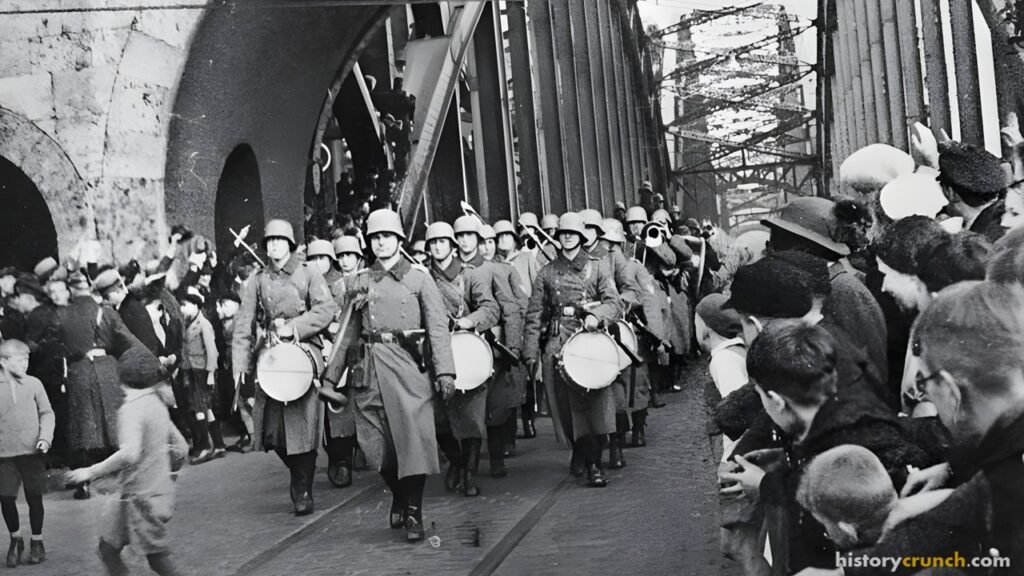
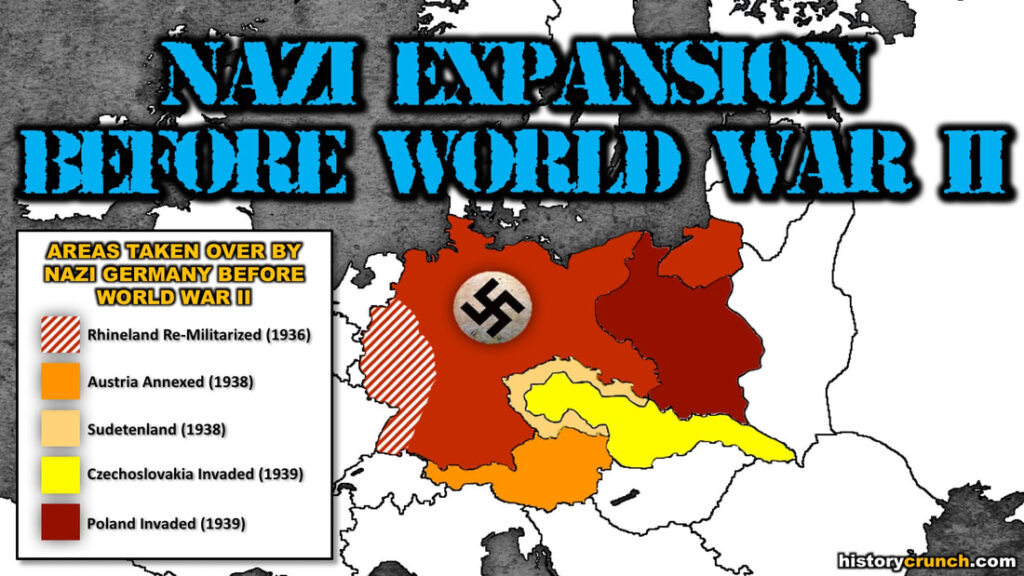
The remilitarization of the Rhineland by Nazi Germany was an important event that occurred in the years before the outbreak of World War II. It took place on March 7th, 1936, when Adolf Hitler violated the Treaty of Versailles and the Locarno Pact by sending German military forces into the Rhineland. In short, the Rhineland was a demilitarized zone along Germany’s western border with France, and had been ordered demilitarized since the end of World War I. Historians consider this event to be highly significant to the policy of appeasement practised by France and Britain in the years before World War II.
REMILITARIZATION OF THE RHINELAND BY NAZI GERMANY – BACKGROUND
Appeasement before World War II refers to the foreign policy strategy used primarily by Britain and France in the 1930s to avoid conflict with Nazi Germany. This time is known as the ‘interwar years’ and is the general time frame for when the Nazi Party and Adolf Hitler took control of Germany. After rising to power in Germany, Hitler began to carry out aggression towards other nation-states in Europe and Hitler carried out actions that went against the general terms of the Treaty of Versailles. The policy essentially worked by conceding to some of Adolf Hitler’s, the Nazi leader, demands. It was driven by the desire to maintain peace in Europe, especially in the relation to the death and destruction caused by the events of World War I.
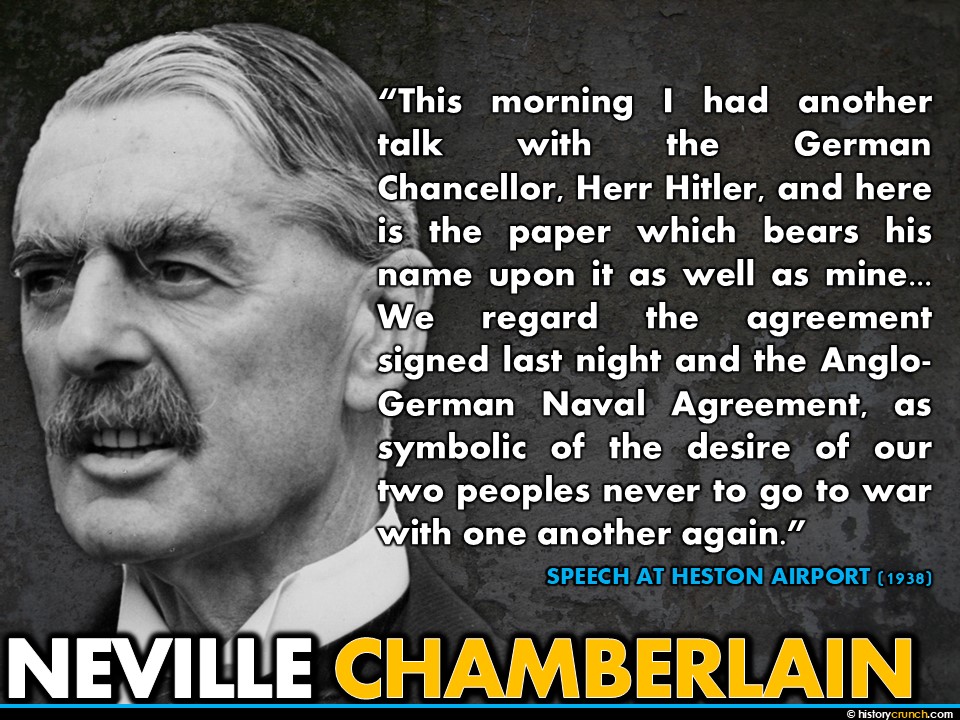
The Western European democracies of Britain and France did not want to enter into a military conflict with Germany at this time as both had been reducing their armies and ability to wage war. Furthermore, the two countries also were facing economic struggles that made them reluctant to go to war. This lack of will to fight pushed both countries towards the policy of appeasement which involved giving into the demands of an aggressive country in the hopes that the aggression could be contained. The policy is closely linked to Neville Chamberlain who was the British Prime Minister at the time, as he is the one who proposed it as the best means of containing Nazi aggression and avoiding a world war.
The policy of appeasement that was carried out by Britain and France is often considered to be one of the main causes of World War II. For instance, it began by Germany carrying out actions against the basic terms of the Treaty of Versailles, which Germany was forced to accept at the end of World War I. For example, one of the first steps Nazi Germany took during this period was to remilitarize the Rhineland.
REMILITARIZATION OF THE RHINELAND BY NAZI GERMANY – SUMMARY
Adolf Hitler viewed the Rhineland’s demilitarization as a humiliation for Germany. In fact, the entire Treaty of Versailles was a major point of anger and frustration for Adolf Hitler and the Nazi Party. As well, he viewed the remilitarization of the Rhineland as an opportunity to express German sovereignty and test the resolve of Britain and France.
The Treaty of Versailles required Germany to keep the Rhineland (a region in Germany that bordered with France) free of any kind of military forces. However, on March 7th of 1936, Nazi Germany remilitarized the Rhineland under the direction of Adolf Hitler. More specifically, Hitler ordered approximately 22,000 German troops to march into the Rhineland. This was a calculated risk for Hitler and the Nazi Party since the German military was still relatively weak following its demilitarization after World War I. Also, Hitler instructed the troops to retreat if they faced resistance.
France was angered by the move but lacked the ability to respond and did not have the support of Britain as Britain did not fully denounce the move. This lack of a response by both Britain and France to the remilitarization of the Rhineland only confirmed for Hitler that he would not be challenged as he expanded his aggression. As such, his success in remilitarizing the Rhineland emboldened him to carry out further agressions.
Hitler portrayed the remilitarization of the Rhineland as a defensive move in response to the recent ‘Franco-Soviet Treaty of Mutual Assistance’, which was agreed to in 1935. Hitler suggested that this agreement would cause Germany to be surrounded. As such, he argued that Germany should be allowed to take steps to defend itself. In reality, it was an aggressive step intended to challenge the post-World War I international order.

REMILITARIZATION OF THE RHINELAND BY NAZI GERMANY – SIGNIFICANCE
The remilitarization of the Rhineland by Nazi Germany was a highly significant event. As stated previously, historians consider the remilitarization of the Rhineland to be an example of the failure of appeasement as a foreign policy. For instance, Hitler became convinced that the Western democracies of Britain and France would not stop him. As such, historians have argued that the failure of appeasement gave Hitler and the Nazi regime confidence to pursue more aggressive territorial expansions, such as the Annexation of Austria in 1938 and the occupation of Czechoslovakia in 1939. In fact, some historians have argued that if the British and French had acted earlier, such as during the remilitarization of the Rhineland, then they may have been able to stop Hitler and the Nazi’s and avoided the devastation of World War II. As such, many now look to the failure of appeasement as a reason to not use the same foreign policies in modern-day global conflicts.
The successful remilitarization of the Rhineland was a huge propaganda victory for Hitler. It helped him greatly increase his popularity in German society and was important in solidifying his control over the German military. For these reasons, many historians view the remilitarization of the Rhineland as one of several significant steps towards the outbreak of World War II in September of 1939.