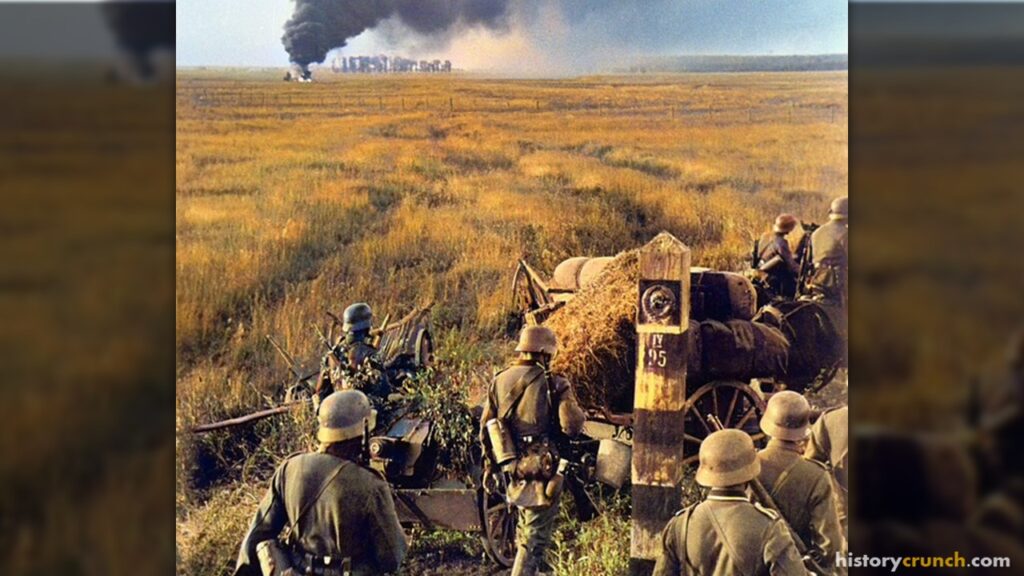
Operation Barbarossa in World War II was the codename for the German invasion of the Soviet Union, and it was one of the most significant campaigns of the entire Second World War. It was launched on June 22nd, 1941, and was one of the largest military operations in history in terms of manpower and casualties. In short, Operation Barbarossa was a major turning point in World War II, because it shifted the balance of power. For instance, the invasion of the Soviet Union was a major failure for Nazi Germany and was one of the main contributing factors that led to Germany’s failure in the war.
OPERATION BARBAROSSA IN WORLD WAR II – BACKGROUND
The Soviet Union, led by Joseph Stalin, had traditionally been part of the Allied powers with Britain and France. However, when World War II began in 1939, Germany avoided facing the Soviet Union in battle by agreeing to a nonaggression pact with the country, called the Molotov–Ribbentrop Pact. Yet, after Germany defeated France during the Battle of France and engaged Britain in the Battle of Britain, it turned its attention to the Soviet Union, and in June of 1941 began its invasion of the Soviet Union with a surprise attack.
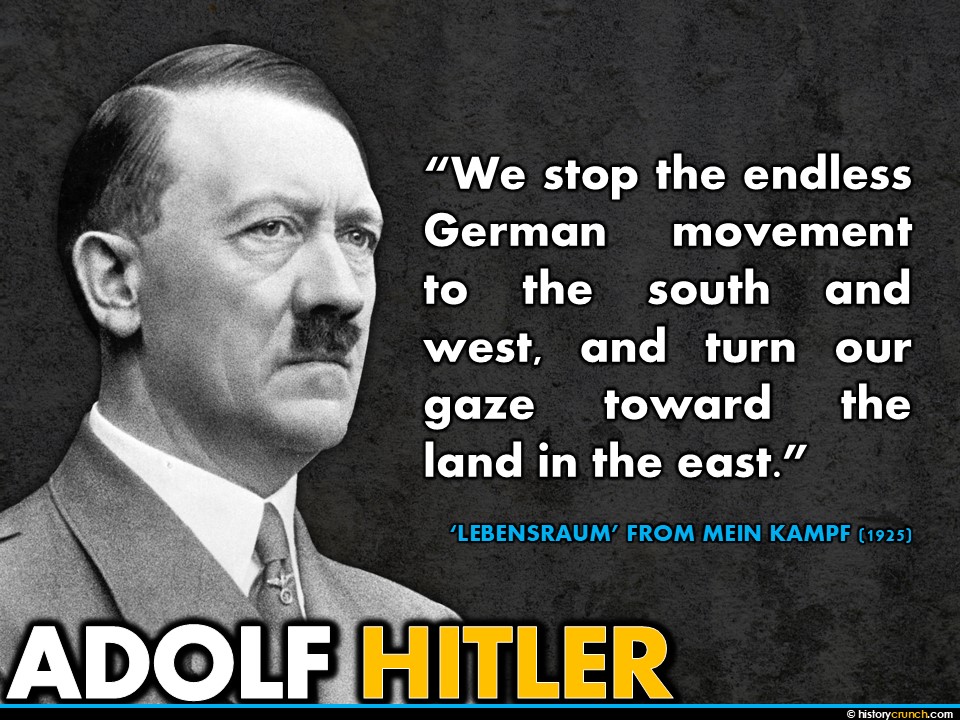
Operation Barbarossa had its beginnings in the ideas of Adolf Hitler, leader of Nazi Germany during World War II. During Hitler’s rise to power as the leader of Germany, he wrote an autobiographical book that detailed his worldview and ideological understanding of the world. In the the book, titled ‘Mein Kampf‘ (My Struggle), Hitler wrote about his view that Germany required Lebensraum or “living space”. Hitler proposed the idea that Germany needed increased farm land and living space in order to promote a growing German population. Hitler saw the Soviet Union as the land he desired for his plan of “living space” and began to carry out Operation Barbarossa.
OPERATION BARBAROSSA IN WORLD WAR II – SUMMARY
As stated above, Operation Barbarossa began on June 22nd, 1941, when Nazi Germany, launched a surprise attack on the Soviet Union across a 1,800-mile front, violating the terms of the Molotov-Ribbentrop Pact. In all, the operation last for over 5 months, and didn’t end until December 5th, 1941.
Operation Barbarossa was a major campaign of World War II and involved huge amounts of soldiers and military equipment. For instance, over 3 million Nazi German troops, 3,000 tanks, 7,000 artillery pieces, and 2,500 aircraft participated in the invasion of the Soviet Union. The Nazis divided their forces into three main army groups, and each had a different objective. The northern army group targeted the Soviet city of Leningrad, while the central army group advanced towards the Soviet capital of Moscow. Finally, the southern army group advanced towards Ukraine, with the goal of capturing valuable resources for the Nazi war effort.
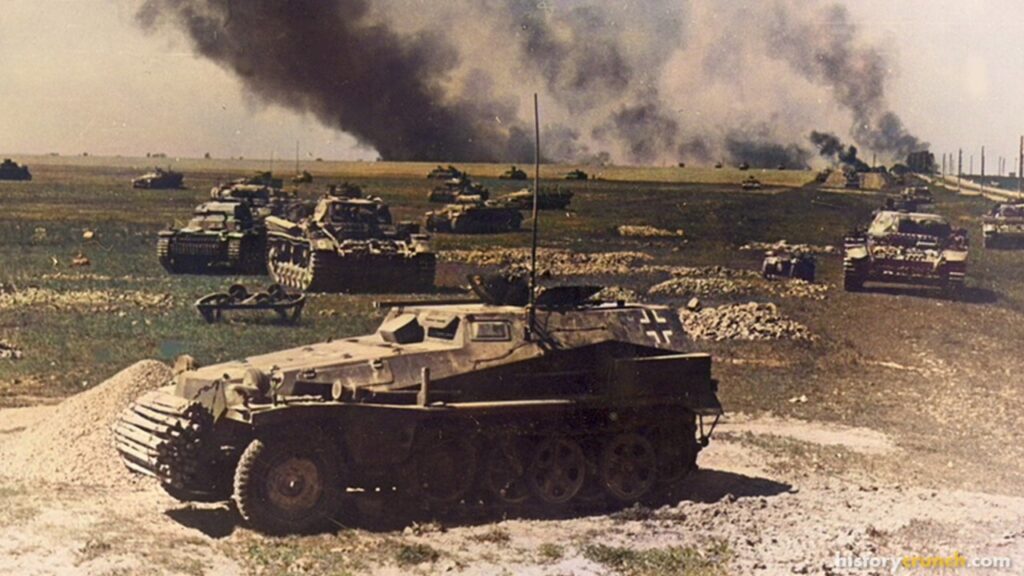
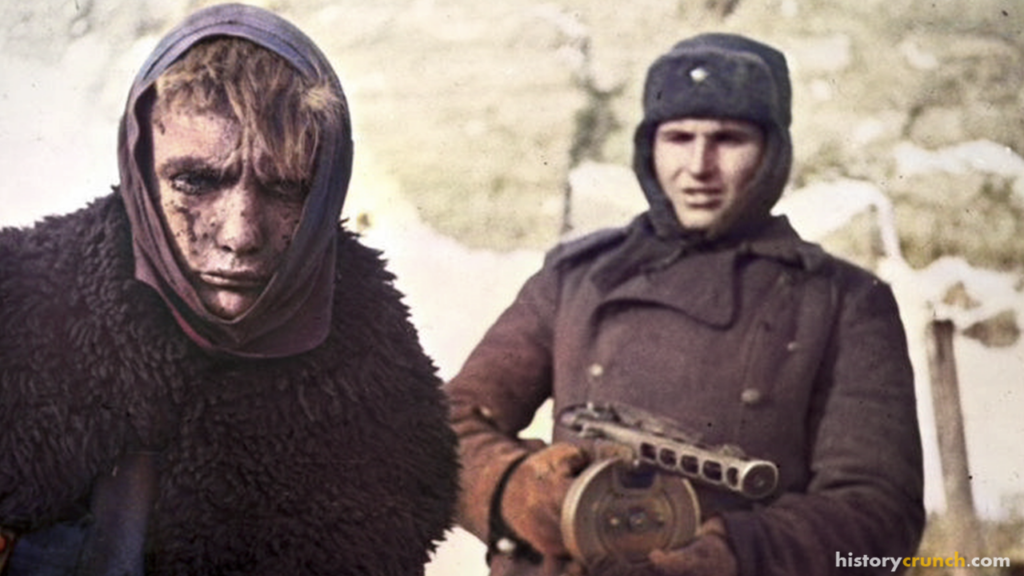
When the Nazi German invasion of the Soviet Union began in June of 1941 it experienced convincing victories against the much weaker Soviet troops. As such, the German forces were able to advance deep into the Soviet Union and captured huge sections of the Ukraine and Poland. For example, the Nazi Germany Air Force (Luftwaffe) quickly destroyed much of the Soviet Air Force on the ground, and Nazi German forces were able to advance deep into Soviet territory with stunning speed. This allowed them to capture millions of Soviet soldiers in massive encirclements, using blitzkrieg tactics.
Blitzkrieg in World War II refers to the speed and efficiency in which the Nazi German forces carried out their attacks. In short, blitzkrieg is a term for ‘lighting war’ which was a German war tactic during World War II that proved effective for the German advances in the early years of the war. It was characterized by rapid, highly mobile attacks that combined air power, infantry, and armored units. Blitzkrieg aimed to surprise and overwhelm the enemy before they could effectively mobilize a defense. Nazi Germany used blitzkrieg tactics with a great deal of success in battles such as the Nazi German invasion of Poland, the Battle of France, and the early stages of Operation Barbarossa.
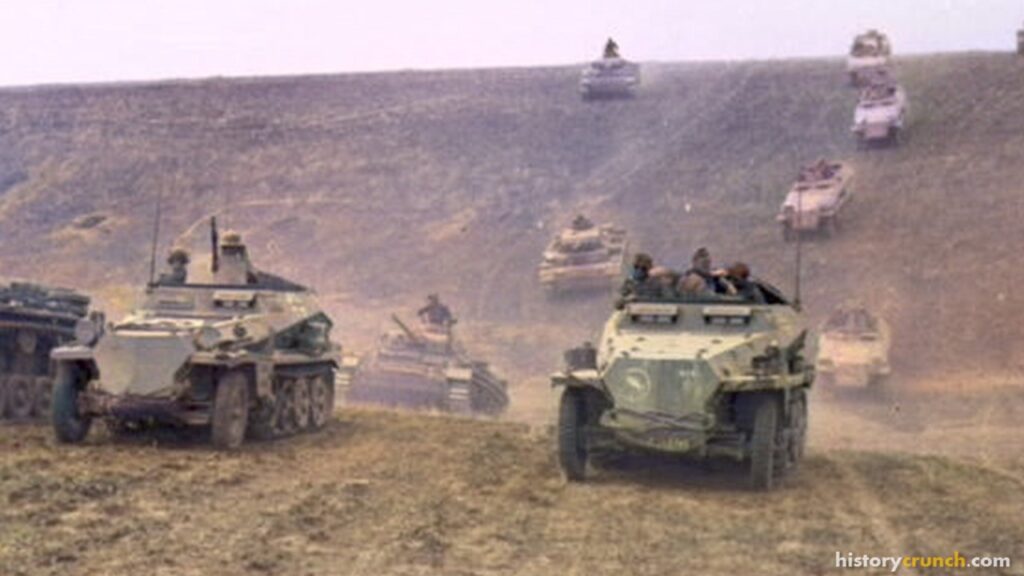
There were several significant battles that occurred during the events of Operation Barbarossa. First, was the Battle of Smolensk, which took place during July and August of 1941. This battle slowed the Nazi German advance toward Moscow but resulted in huge Soviet losses. Next, was the Siege of Leningrad, which began in 1941 and continued until 1944. In fact, the siege saw German forces assault the city of Leningrad, in the Soviet Union, for 872 days. The conflict led to the deaths of over 1 million Soviet civilians. Another significant conflict was the Battle of Kiev, which took place during August and September of 1941. This was a significant victory for the Nazis, as it led to the surrender of over 600,000 Soviet soldiers and allowed Germany to secure important lands and resources in the Ukraine. Finally, there was the Attack on Moscow, which took place from October to December in 1941. The success of blitzkrieg tactics allowed Nazi German troops to push forward until their advance was ultimately halted on the edge of Moscow. In fact, German forces came within 20 miles of Moscow, and were stopped due to fierce Soviet resistance, supply problems, and the onset of brutal winter conditions.
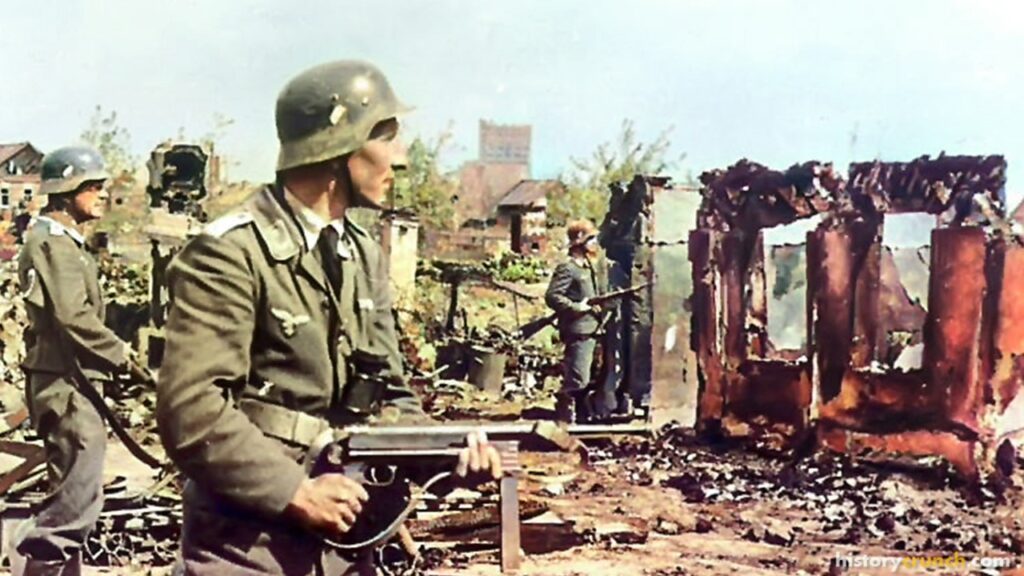
At this time, Hitler’s forces were repelled by a Soviet counter assault and Germany was never again able to push in to the interior of the Soviet Union. In fact, the Soviet counteroffensive in December 1941 marked Germany’s first major defeat on the Eastern Front. Hitler called for further assaults in the region, including the failed Battle of Stalingrad, but Germany continued to struggle against the Soviet defense. Eventually, following a series of losses, Germany was forced out of the Soviet Union and was never able to recover.
OPERATION BARBAROSSA IN WORLD WAR II – SIGNIFICANCE
Operation Barbarossa opened the fighting on the Eastern Front, which became the largest and deadliest front in World War II. In fact, Operation Barbarossa led to millions of casualties on both sides. As well, it is important to note that atrocities were committed, including mass executions. The Holocaust, which was the Nazi German extermination of 11 million people, occurred during this timeframe. Millions of people living in Eastern Europe and the Soviet Union were brutalized by the Nazi regime as part of the events of the Holocaust. This included, the Nazi Death Squads (Einsatzgruppen) that were responsible for killing thousands.
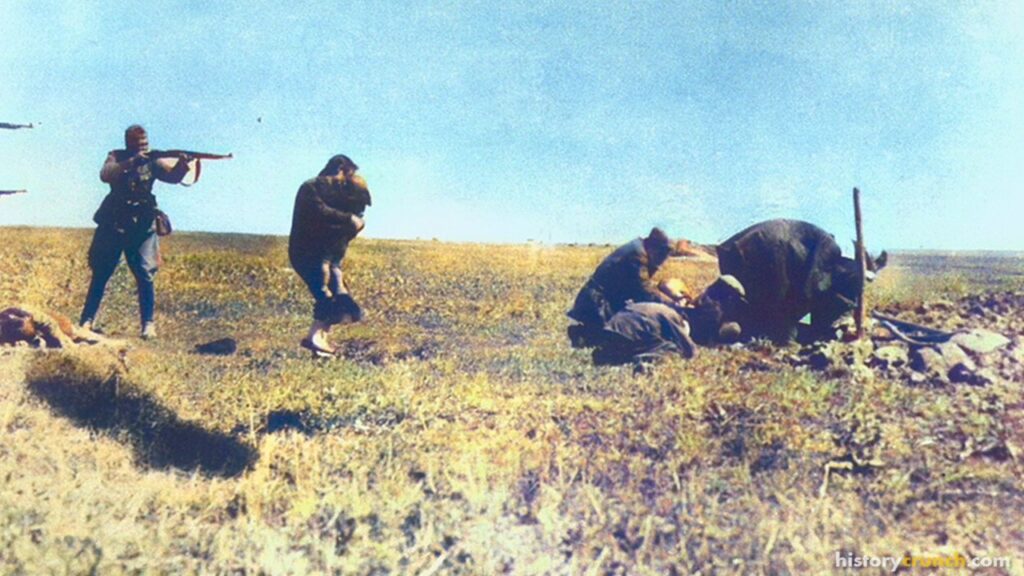
Operation Barbarossa is also considered by many historians to be a major turning point in World War II. The German Army was rapidly advancing throughout Europe in the years before the operation but was never able to overcome the massive losses of fighting in the Soviet Union. As well, German soldiers struggled to survive in the prolonged Russian winter, while Russian soldiers for better equipped to withstand the cold. After the failure of Operation Barbarossa Germany was never able to recover and suffered continual losses until it was finally defeated in 1944 during the Battle of Berlin.
For instance, historians generally view Hitler’s refusal to retreat or adjust plans as a catastrophic miscalculation that led to numerous losses for the Nazi forces in the harsh Russian winter. Furthermore, the prolonged Eastern campaign drained Nazi German resources and manpower, which weakened efforts on other fronts.