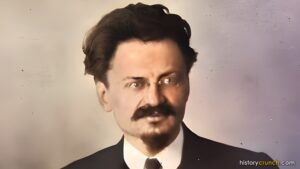
Francisco Franco was the military dictator of Spain from 1939 until his death in 1975. He came to power following the events of the Spanish Civil War, which was a brutal conflict that Spain endured in the late 1930s. He then went on to rule Spain for nearly four decades as one of the longest-serving dictators of the 20th century. Franco’s regime was authoritarian and repressive, suppressing political opposition, regional languages and cultures, and basic civil liberties. His relationship with fascist Italy and Nazi Germany during the era of World War II, and his subsequent survival as a dictator into the Cold War era, make him one of the most complex and significant political figures of modern European history.
Early Life of Francisco Franco
Francisco Franco Bahamonde was born on December 4th, 1892, in the coastal town of Ferrol in the Galicia region of northwestern Spain. He came from a naval family, with his father serving as a naval officer, and it was expected that Franco would follow the same path. However, when the naval academy closed admissions, Franco chose instead to pursue a career in the army and enrolled in the Infantry Academy in Toledo in 1907. He graduated in 1910 and was commissioned as a second lieutenant at the age of 17.
Franco quickly distinguished himself as a capable and ambitious officer. He volunteered for service in Spanish Morocco, where Spain was engaged in a long and brutal colonial war against Berber tribes in the Rif region of northern Africa. The fighting in Morocco was extremely dangerous and Franco earned a reputation for bravery and decisive leadership under fire. He rose through the ranks rapidly, becoming one of the youngest generals in the entire Spanish army at the age of just 33. His experiences in Morocco shaped his worldview profoundly, reinforcing his belief in military discipline, order, and a strong authoritarian approach to leadership.
Spanish Civil War
The event that brought Francisco Franco to national prominence and ultimately to power was the Spanish Civil War, which lasted from 1936 to 1939. The war was the result of deep political, social, and economic divisions within Spanish society that had been building for decades. By the 1930s Spain was deeply polarized between a conservative right wing that included the military, the Catholic Church, large landowners, and monarchists, and a left wing that included socialists, communists, anarchists, and regional independence movements. In 1931 Spain had become a republic, and the left-wing Popular Front government that came to power in February of 1936 alarmed conservative elements of Spanish society who feared revolution.
In July of 1936, a group of nationalist military officers launched a coup against the elected Republican government, intending to seize power quickly. The coup did not succeed as planned and instead triggered a full-scale civil war between the Nationalist forces, who supported the rebel military, and the Republican forces, who defended the elected government. Francisco Franco was not among the original planners of the coup, but he quickly emerged as the most capable and politically astute of the Nationalist military leaders. In September of 1936 he was appointed Generalissimo, meaning supreme commander, of the Nationalist forces, and he gradually consolidated his political authority until he was recognized as the undisputed leader of the Nationalist cause.
The Spanish Civil War was one of the most brutal conflicts of the 20th century. The Nationalists received significant military support from fascist Italy under Benito Mussolini and Nazi Germany under Adolf Hitler, who sent troops, aircraft, and weapons to aid Franco’s forces. The most infamous example of this support was the bombing of the Basque town of Guernica in April of 1937 by the German Luftwaffe’s Condor Legion, an attack that killed hundreds of civilians and became one of the most powerful symbols of the horror of modern warfare. The Republican side received support from the Soviet Union and from thousands of international volunteers who came from around the world to fight against fascism. The war ended in April of 1939 with a Nationalist victory and the establishment of Francisco Franco as the ruler of Spain.
Franco’s Dictatorship
Following the end of the Civil War, Francisco Franco established a highly authoritarian regime in Spain that he called the Estado Nuevo, meaning the New State. Franco held the titles of Head of State, Head of Government, and Commander in Chief of the Armed Forces simultaneously, concentrating enormous power in his own hands. He referred to himself as El Caudillo, which translates to “the Leader” or “the Chief,” a title that echoed the cults of personality built by Mussolini and Hitler with their own titles of Il Duce and Fuhrer.
In the years immediately following the Civil War, Franco’s regime carried out a brutal campaign of repression against those who had supported the Republican cause. Hundreds of thousands of people were imprisoned, executed, or forced into exile in what became known as the White Terror. Political parties other than Franco’s own movement were banned, and Spain became a single-party state. The regime also suppressed regional languages and cultures, particularly those of Catalonia and the Basque Country, as part of a broader campaign to enforce a single Spanish national identity. Catalan and Basque were banned from public life and education, and the use of regional flags and cultural expressions was severely restricted. Freedom of the press, freedom of assembly, and other basic civil liberties were denied to ordinary Spanish citizens throughout much of the Franco era.
The Catholic Church played a central role in Franco’s Spain, and the regime cultivated a close relationship with the Church as a source of legitimacy and social control. Religion was made compulsory in schools, and the Church was given significant influence over education, marriage, and public morality. This close alliance between the Franco regime and the Catholic Church became one of the defining characteristics of Francoist Spain and represented a form of government that historians often describe as national Catholicism.
Franco and World War II
One of the most historically significant aspects of Francisco Franco’s rule was his relationship with Nazi Germany and fascist Italy during World War II. Given the support he had received from Hitler and Mussolini during the Civil War, and the ideological similarities between his own regime and theirs, many expected Franco to align Spain openly with the Axis Powers when the war broke out in 1939. However, Franco adopted a policy of formal neutrality, citing Spain’s economic exhaustion after the Civil War as the reason the country could not afford to enter another conflict.
Despite this official neutrality, Franco’s position was not truly neutral. He declared Spain a “non-belligerent” nation in 1940, signaling his sympathy with the Axis, and in October of 1940 he met personally with Adolf Hitler at the Spanish border town of Hendaye to discuss the possibility of Spain entering the war. The meeting was famously unproductive, with Hitler reportedly saying afterward that he would rather have several teeth pulled than go through another meeting with Franco. Franco demanded such a high price for Spanish entry into the war, including large amounts of French colonial territory in Africa, that an agreement was never reached. Franco did, however, allow the formation of a volunteer unit called the Blue Division, which fought alongside German forces on the Eastern Front against the Soviet Union.
As the war turned against the Axis Powers, Franco gradually adjusted his position, moving toward a more genuinely neutral stance and eventually declaring Spain neutral rather than non-belligerent in 1943. His ability to navigate World War II without formally joining the losing side proved crucial to his political survival after the war ended.
Franco’s Spain After World War II
After World War II, Franco and his regime faced significant international isolation. Spain was excluded from the United Nations, denied membership in the Marshall Plan, and seen by much of the democratic world as a fascist holdover from the era of Hitler and Mussolini. However, the onset of the Cold War changed Spain’s international position considerably. The United States, under its policy of containing communism, found in Franco a reliable anti-communist ally in Western Europe. In 1953 Spain and the United States signed a series of agreements that allowed the United States to establish military bases on Spanish soil in exchange for economic and military aid. This effectively ended Spain’s international isolation and allowed Franco’s regime to survive and stabilize.
Throughout the 1950s and 1960s Spain underwent significant economic development, with a period of rapid growth sometimes referred to as the Spanish Miracle. Living standards rose considerably during these decades and Spain began to modernize its economy, in part due to the development of a significant tourism industry. However, political repression continued throughout this period, and critics of the regime faced imprisonment, torture, and execution. The Basque separatist organization ETA carried out violent attacks against the Franco regime from the late 1950s onward, and the regime responded with brutal crackdowns against Basque political activists and ordinary citizens.
Death of Francisco Franco
As Franco aged through the late 1960s and into the 1970s, questions about the future of Spain after his death became increasingly important. In 1969 Franco formally designated Prince Juan Carlos, the grandson of the last king of Spain, as his successor and future head of state. This decision was significant because it suggested that Franco intended for a monarchy rather than a continuation of his own political movement to follow his rule. Franco died on November 20th, 1975, at the age of 82, following a prolonged illness. His death brought his nearly four-decade rule to an end and opened the door to a dramatic transformation of Spanish society.
In the years immediately following Franco’s death, Spain underwent a peaceful transition to democracy known as the Transition, guided in large part by King Juan Carlos I, who surprised many observers by actively supporting democratic reform rather than continuing authoritarian rule. Spain adopted a new democratic constitution in 1978, held free elections, and became a full member of the international community, eventually joining NATO in 1982 and the European Community in 1986. The speed and relative peacefulness of Spain’s transition to democracy after decades of dictatorship is widely regarded as one of the most remarkable political transformations of the 20th century.
The legacy of Francisco Franco remains deeply contested in Spain to the present day. To his supporters, he was a strong leader who brought stability and economic growth to a country that had been torn apart by civil war. To his critics, and to the families of the hundreds of thousands who were killed, imprisoned, or exiled under his rule, he was a brutal dictator whose crimes have never been fully reckoned with. In 2007 Spain passed a Law of Historical Memory that acknowledged the victims of the Franco regime and began a slow process of confronting the history of the dictatorship. In 2019 Franco’s remains were exhumed from the Valley of the Fallen, a massive monument he had ordered built by Republican prisoners of war, and reburied in a private cemetery. The debate over his legacy continues to be one of the most sensitive and divisive topics in Spanish public life.
Significance of Francisco Franco
Francisco Franco’s significance in history extends well beyond Spain. His long rule was one of the most enduring examples of right-wing authoritarian government in 20th-century Europe, outlasting both Hitler and Mussolini by decades. His ability to survive the end of World War II despite his close association with the Axis Powers demonstrated how Cold War geopolitics could allow authoritarian regimes to persist so long as they aligned themselves with the right side of the ideological divide. His regime also left a deep and lasting mark on Spanish society, suppressing regional identities and cultures, denying citizens their basic rights for nearly four decades, and leaving a legacy of division and trauma that Spain has continued to grapple with long after his death. For all of these reasons, Francisco Franco remains one of the most important and studied political figures of the 20th century.