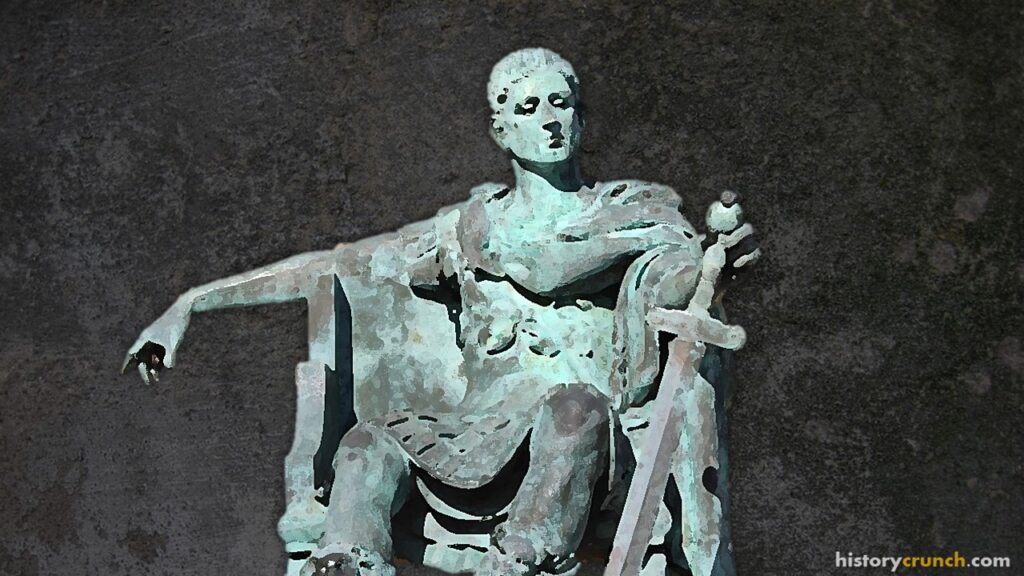
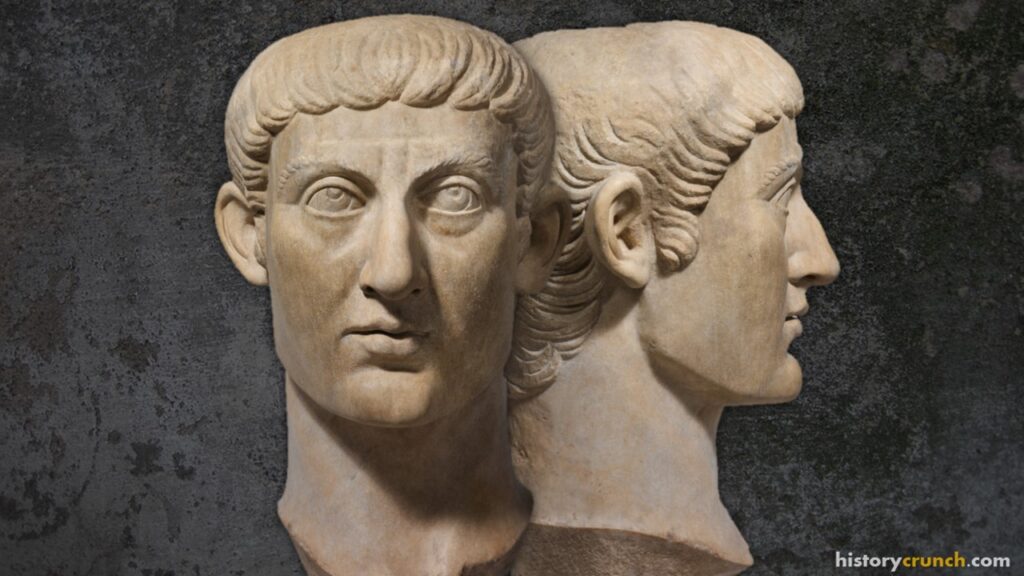
Constantine the Great was one of the most significant rulers in all of ancient Roman history. He reigned from 306 CE to 337 CE and is remembered for founding the city of Constantinople, which later became the capital of the Byzantine Empire. He was also the first Roman emperor to convert to Christianity and made Christianity the official religion of the Roman Empire.
CONSTANTINE – EARLY LIFE
Constantine the Great was born, Flavius Valerius Constantinus, on the 27th February in 272 CE. Constantine’s father Constantius Chlorus was a respected military leader in the Roman Empire and became deputy emperor in the western region of the Roman Empire in 293 CE. Constantine’s mother, Helena, was likely born around 248 CE. Helena was far below the social class of the Roman elite and despite this, Constantius Chlorus took her as his wife. Together they had Constantine around 272 CE. As a young man, Constantine was educated at the imperial court of Diocletian in the East, where he learned the skills of leadership, administration and warfare.
CONSTANTINE – RISE TO POWER
Constantine rose through the ranks of the Roman Army and then became senior western emperor in 305 CE and ruled over Britannia under his father. When his father died in 306 CE, Constantine’s soldiers in Britain proclaimed him emperor. However, Rome was still under the Tetrarchic system. As such, several rivals claimed the throne for themselves, including: Maxentius and Licinius. This led to years of civil war and political instability. Over the next several years, Constantine skillfully built alliances and defeated his rivals through a combination of military might and political strategy.
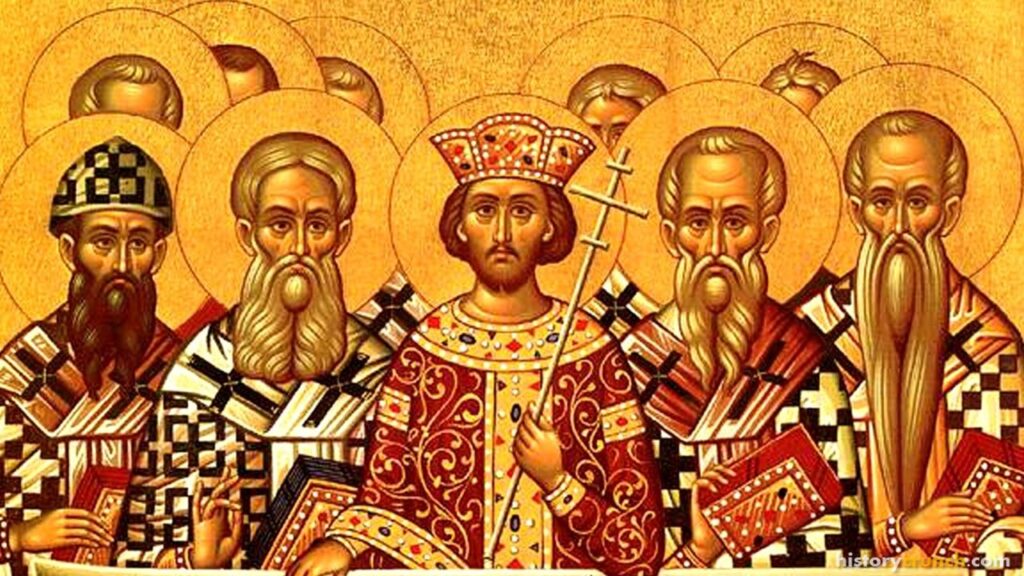
Constantine’s rise to power reached its peak in 312 CE, at the Battle of the Milvian Bridge, near Rome. Constantine’s forces won a decisive victory. Following his victory at the battle, Constantine became the sole ruler of the Western Roman Empire and soon after unified the entire empire under his own authority. In 313 CE, he issued the Edict of Milan with his co-emperor Licinius, which granted religious tolerance to Christians and all other faiths. This was a revolutionary act because it was a radically different policy towards religion, and Christianity in general, than the earlier emperors. In fact, the Edict of Milan ended persecutions against Christians and instead allowed them to practice their religion freely. As such, historians consider Constantine as significant in the development of Christianity as a religion.
By 324 CE, after defeating Licinius in battle, Constantine became the sole emperor of the entire Roman Empire and united East and West under his rule.
CONSTANTINE – EMPEROR OF ROME
When he was emperor, Constantine strengthened the Roman Empire by putting financial, social and military reforms into place. It was during his reign, that the government was restructured and civil and military sections were separated. Constantine reorganised the army and as a result was able to take over a number of unsettled territories. He introduced a new gold coin called the solidus which became the standard currency for over 1000 years in Europe.
But perhaps his most lasting reform was his decision to move the capital of the empire from Rome to a new city in the East. Constantine built and named the city of Constantinople after himself and it became the capital of the Ancient Roman Empire for over 1000 years. In 330 CE, he officially dedicated the city of Constantinople, which today is the modern city of Istanbul in Turkey. Its location between Europe and Asia made it a perfect center for trade, defense and governance.
CONSTANTINE – DEATH AND SIGNIFICANCE
Constantine ruled until his death on the 22nd of May in 337 CE. He was buried in the Church of the Holy Apostles in Constantinople. After he died, his son became emperor which meant that the principle of dynastic succession was put into place, which was another first for the Roman Empire.
Constantine was a highly significant person in history, especially in relation to Ancient Rome and the history of Christianity. He transformed Rome politically by reuniting the empire and creating a new, lasting capital in the East. Religiously, he altered the course of history by embracing Christianity and granting it legitimacy within the Roman Empire. His policies laid the groundwork for the growth of Christianity in Europe and influenced medieval kings, popes and emperors for centuries.