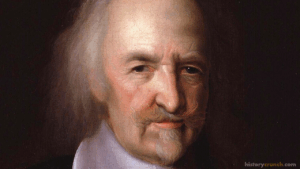
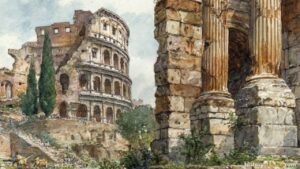
Marcus Aurelius was one of the most significant rulers in the history of Ancient Rome. He reigned as emperor from 161 CE to 180 CE and is remembered not only for his leadership of the Roman Empire but also for his contributions to the study of philosophy. As such, historians consider him to be highly significant when studying about the history of Ancient Rome.
MARCUS AURELIUS – EARLY LIFE
Marcus Aurelius was born on the 26th of April in 121 CE. He was born in Rome to a wealthy family. In fact, Marcus Aurelius’s aunt was married to the emperor. As well, his grandmother was the heiress to a massive Roman fortune and Marcus was related to a number of prominent Roman rulers.
For instance, Aurelius was adopted by Emperor Antoninus Pius in 138 CE, following the wishes of the previous emperor, Hadrian, who saw potential in him. This adoption set the stage for him to become an emperor of Rome himself. In fact, under Antoninus Pius’s guidance, Marcus received an education in literature, law and philosophy. In particular, Aurelius was trained in the philosophy of ‘Stoicism’. This was an Ancient Greek philosophy that emphasized reason, self-control and virtue. This played an important role in Aurelius’ life and is something that he is remembered for still today.
MARCUS AURELIUS – RISE TO POWER
When Antoninus Pius died in 161 CE, Marcus Aurelius became the next emperor of Ancient Rome. In an unusual move, he chose to share power with his adoptive brother Lucius Verus, making them co-emperors. This was the first time in Roman history that the empire had two joint leaders, who both had the same status and power. The brothers ruled together from 161 CE until Verus died in 169 CE. Despite the equal status it is thought that Marcus was the one who was in charge of setting the constitutional goals and leading the Roman military through wars.
Their early reign was marked by challenges, including wars on the empire’s eastern frontiers and a devastating plague that spread throughout Rome after soldiers returned from battle in the East. When Lucius Verus died in 169 CE, Marcus ruled alone and faced increasing pressures along the northern borders of the empire.
MARCUS AURELIUS – EMPEROR
Throughout his reign, Marcus Aurelius spent much of his time trying to protect the Roman Empire from external threats and enemies. For example, he spent much of his life on military campaigns, especially against Germanic tribes in the Marcomannic Wars along the Danube River. Despite being a philosopher at heart, he proved to be a capable and disciplined military leader, enduring harsh conditions alongside his soldiers. His leadership helped maintain the empire’s stability during a time of crisis and demonstrated his deep sense of duty to Rome. He saw ruling not as a privilege but as a moral responsibility to serve his people and preserve justice. In fact, some historians consider his time as the emperor that ruled during the Golden Age of the Roman Empire.
In addition, Aurelius’ Stoic book ‘Meditations’, which he wrote while out on military campaigns between 170 CE and 180 CE, are still considered important literary pieces that describe how to find calmness during conflict by looking to nature for guidance. For instance, lines such as “You have power over your mind — not outside events” reveal his belief in inner strength and moral integrity.
Despite his wisdom, it should also be noted that Marcus Aurelius’s reign was a period of hardship for the Roman people. In fact, the empire faced economic strain, disease and constant warfare during these years. For instance, a smallpox epidemic killed millions, including many soldiers and citizens in Rome.
MARCUS AURELIUS – LATER LIFE AND DEATH
One of his most controversial decisions, in his later life, was naming his biological son, Commodus, as his successor. This broke the long tradition of adopting capable heirs and, unfortunately, led to problems after Marcus’s death. Commodus proved to be a cruel and incompetent ruler, and his reign marked the beginning of the empire’s decline.
Marcus Aurelius died on the 17th of March, 180 CE, in the modern-day city of Vienna, Austria. He was cremated almost immediately upon his death and his ashes were returned to Rome. His death marked the end of the Pax Romana, the era of peace that had lasted for nearly two centuries, since the reign of Emperor Augustus. Although the empire would continue for many more years, his death symbolized the beginning of a slow decline.