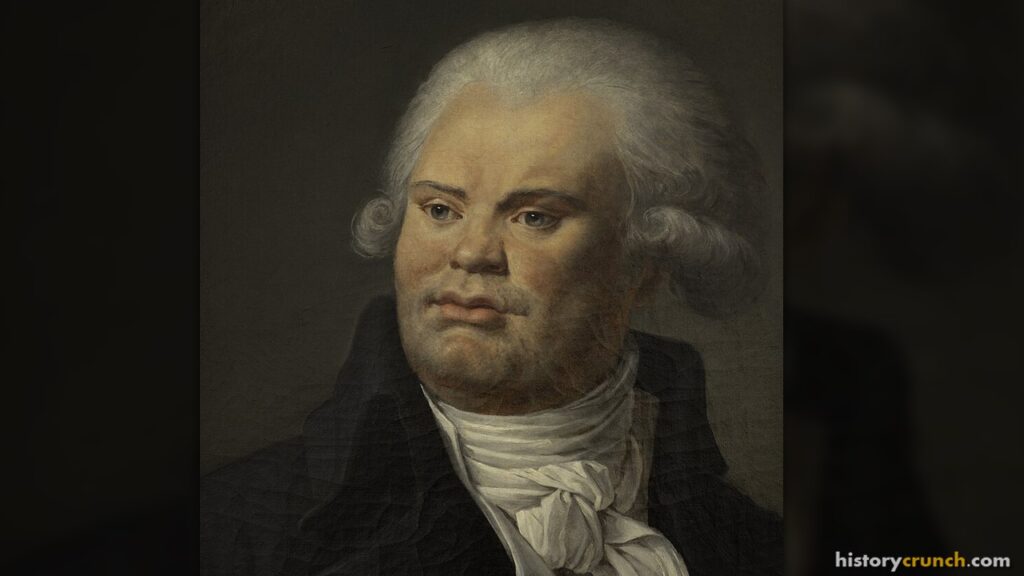
Georges Danton was a major leader of the French Revolution who helped push events toward the fall of the monarchy in 1792. He is also remembered for later calling for less violence during the Reign of Terror before being executed in 1794.
GEORGES DANTON – EARLY LIFE
Georges Jacques Danton was born on October 26th, 1759, in Arcis-sur-Aube, France, in the Champagne region. He was the son of a lawyer, studied in Troyes, France, earned a law degree in Reims, France, in 1784, and later moved to Paris, France, where he worked as an advocate in the Conseil du Roi, which means the King’s Council. Therefore, before the French Revolution began, Danton was a trained lawyer rather than a soldier or nobleman.
His early career mattered because it gave him the speaking and legal skills that later made him such a powerful revolutionary figure. Danton was not one of the most famous politicians in France at first, but he was a forceful speaker and quickly gained attention once the Revolution opened political life to new voices.
GEORGES DANTON – RISE IN THE FRENCH REVOLUTION
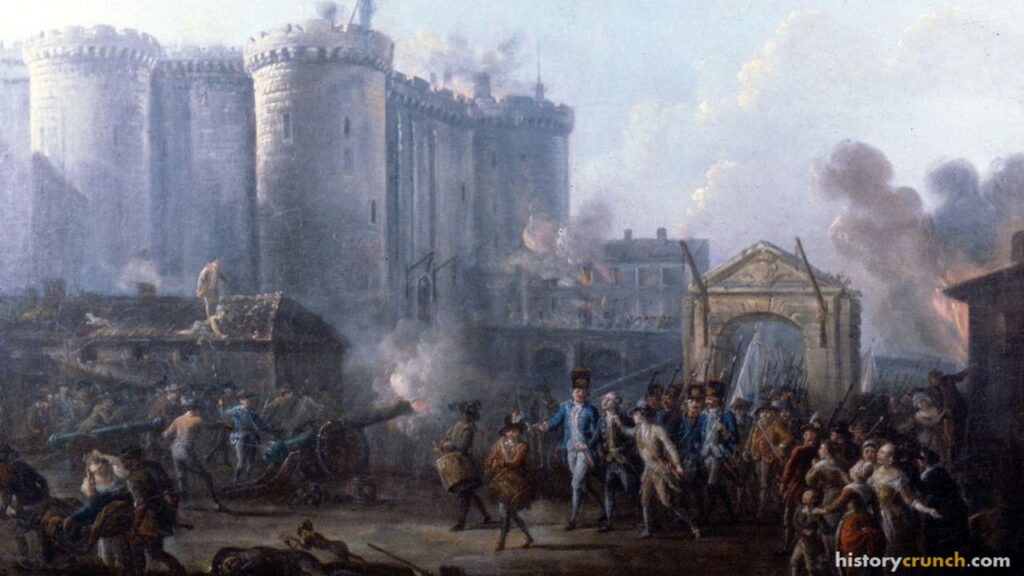
When the French Revolution began in 1789, Danton became active in the Cordeliers district of Paris, France. The Revolution had started with demands for reform, limits on royal power, and a greater voice for the common people. However, events quickly became more intense, especially after the Storming of the Bastille on July 14th, 1789, showed that the people of Paris were willing to use force to defend the Revolution. In this setting, Danton rose as an energetic speaker connected to the more radical side of Paris politics.
Danton helped found the Cordeliers Club in 1790. The Cordeliers were more radical than many early revolutionaries and believed the people should stay active in politics instead of leaving power in the hands of moderate leaders. This mattered because the Revolution was no longer being shaped only by debates in assemblies. It was also being driven by the crowds, clubs, and political pressure of Paris, France.
As the Revolution moved forward, the monarchy lost more support. The failed flight of Louis XVI in June of 1791 made many French people view the king as a traitor, and tensions continued to rise between supporters of the monarchy and supporters of a republic. Danton became increasingly associated with the side that believed the Revolution had to go further.
GEORGES DANTON – THE FRENCH REVOLUTION
A major turning point came on August 10th, 1792, when revolutionaries in Paris, France, attacked the Tuileries Palace. This uprising effectively destroyed the remaining power of the monarchy and opened the way for the creation of a republic. Danton was widely seen as one of the important figures behind this turning point, and afterward he became minister of justice. This is significant because the Revolution was no longer simply trying to reform the monarchy. It was moving beyond monarchy altogether.
Danton then rose during a moment of national emergency. France was at war with Austria and Prussia, and many revolutionaries feared that foreign armies and internal enemies would crush the Revolution. In early September of 1792, panic and anger in Paris helped lead to the September Massacres, when crowds killed many prisoners. Danton has long been connected to these events because he was one of the leading officials in Paris at the time, although historians continue to debate exactly how responsible he was. What is clear is that the Revolution had entered a far more violent stage.
Later in September of 1792, the National Convention met and officially ended the monarchy. France became a republic, and Danton was elected as a deputy from Paris, France. In this new phase of the Revolution, the government had to fight foreign enemies, deal with rebellion at home, and decide what to do with the former king. Louis XVI was executed on January 21st, 1793, and this pushed the Revolution into an even more dangerous and divided period.
In April of 1793, the National Convention created the Committee of Public Safety. This body was meant to defend revolutionary France during war and internal crisis, and Danton became its first president. The committee later became closely tied to the Reign of Terror, which was the period from 1793 to 1794 when revolutionary leaders used arrests, trials, and executions against people seen as enemies of the Revolution. Tens of thousands died during this period, many by guillotine. Danton at first supported strong emergency action, which shows that he was part of the Revolution’s radical phase, not outside it.
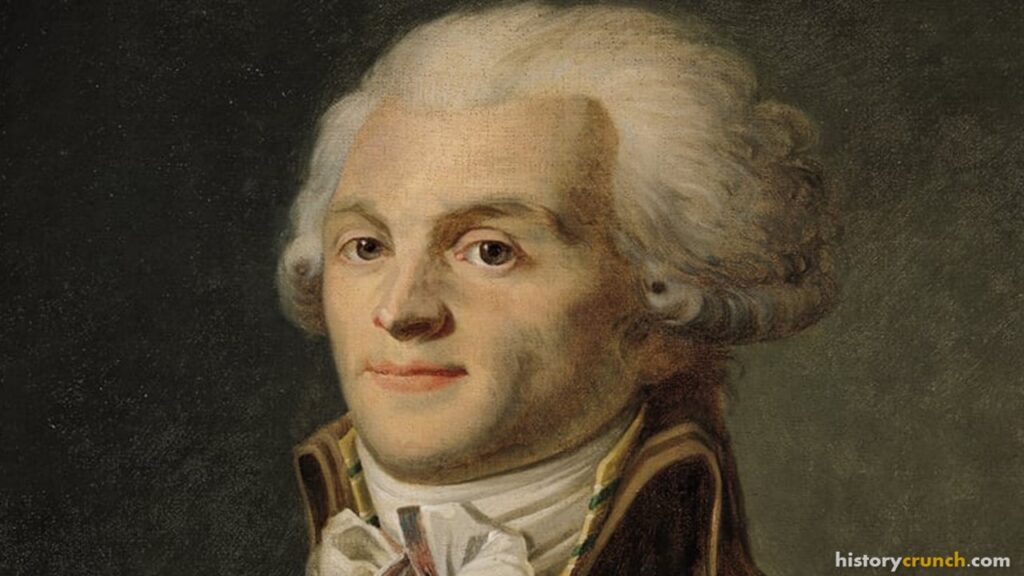
However, Danton later became more moderate. As the Reign of Terror grew harsher under leaders such as Maximilien Robespierre, Danton argued that the killing should slow down and that the Revolution needed less bloodshed. This put him in conflict with the men who believed terror was still necessary to protect the republic. Therefore, Danton moved from being a leader of revolutionary pressure to becoming a target of it.
GEORGES DANTON – EXECUTION
By the spring of 1794, Danton had become dangerous to the ruling radicals because he was calling for clemency and criticizing the Terror. On March 30th, 1794, revolutionary leaders decided to arrest him and several of his allies, including Camille Desmoulins. His trial began on April 2nd, 1794, and ran from April 3rd to April 5th before the Revolutionary Tribunal. Witnesses for the defense were blocked, and political pressure shaped the outcome. Therefore, Danton’s trial was less a fair legal case than a political struggle over who would control the Revolution.
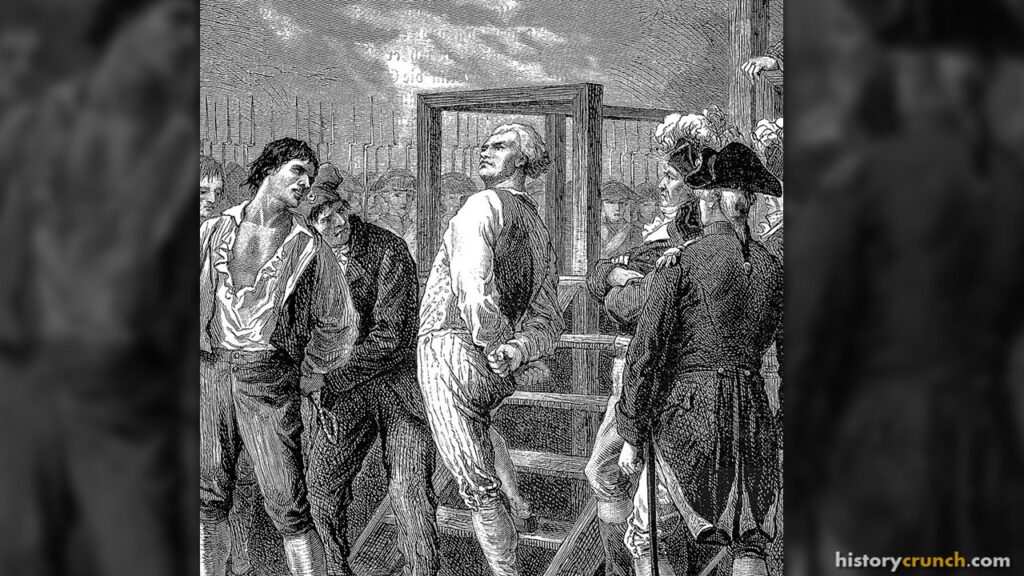
Danton was found guilty and guillotined on April 5th, 1794, in Paris, France. His death was important because it showed that even major revolutionary leaders were no longer safe once they challenged the Terror. In fact, Danton’s execution helped show how far the Revolution had moved from its earlier calls for liberty and reform into a period dominated by suspicion and political violence.
GEORGES DANTON – SIGNIFICANCE
Georges Danton was significant because he was one of the major voices that pushed the French Revolution from constitutional crisis toward republic and mass politics. He helped energize the Paris crowd, became minister of justice after the fall of the monarchy, and then stood at the center of the revolutionary government during one of its most difficult moments.
At the same time, Danton remains a debated historical figure. Some people remember him as a bold revolutionary leader and powerful orator who helped save the Revolution in 1792 and 1793. Others focus on his connection to revolutionary violence, even though his exact responsibility for some events remains disputed. Regardless, Georges Danton is important to study because his life helps explain how the French Revolution became more radical, more violent, and more divided over time.