The Renaissance, which is a French word meaning ‘rebirth’, refers to a major period of European history that is generally considered to have lasted from approximately the 14th century to the 17th century. During this time, scholars, artists, and thinkers across Europe rediscovered the knowledge and culture of ancient Greece and Rome and used it as the foundation for a new flowering of art, literature, science, and philosophy. The Renaissance began in the Italian city-states before gradually spreading to the rest of Europe. It marked a major shift in how people thought about themselves, the natural world, and their place in society. The main aspects of the Renaissance include: the causes of the Renaissance, Renaissance humanism, the Italian city-states, Renaissance art and artists, the Protestant Reformation, the printing press, and the significance of the Renaissance.
EUROPE BEFORE THE RENAISSANCE
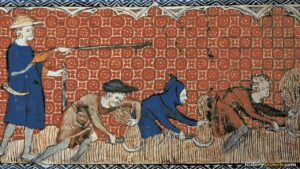
To understand the Renaissance, it is important to understand the conditions that existed in Europe before it began. The Renaissance emerged out of a period of European history known as the Middle Ages, which lasted from roughly the 5th century to the 14th century. During the Middle Ages, European society was organized around the feudal system, in which lords owned land and peasants worked it in exchange for protection. The Catholic Church played a dominant role in nearly every aspect of life, from politics and education to art and culture.
By the 14th century, a series of major events had begun to destabilize the medieval world. The Black Death, a devastating plague that swept across Europe from 1347 to 1351, killed an estimated one-third of Europe’s population and produced profound social, economic, and cultural disruption. The weakening of the feudal system and the growing wealth of merchants and traders in the Italian city-states created new social conditions in which individuals with money and ambition could support artists, scholars, and thinkers outside of the traditional structures of the Church. At the same time, increased contact between Europe and the Islamic world, particularly through the Crusades and trade routes such as the Silk Road, brought European scholars into contact with preserved classical Greek and Roman texts that had been lost to much of Europe during the Middle Ages. These conditions together helped spark the Renaissance. Click on the links to learn more about Europe Before the Renaissance, the Black Death, the Silk Road, Feudalism, and the Causes of the Renaissance.
CAUSES OF THE RENAISSANCE
Historians have identified several main causes of the Renaissance, including: the rediscovery of ancient Greek and Roman texts, the emergence of humanism, the wealth of the Italian city-states, increased trade and cultural exchange, and the impact of events such as the Black Death and the Crusades.
The rediscovery of ancient Greek and Roman texts was one of the most important causes of the Renaissance. During the Middle Ages, much of the knowledge produced by ancient Greek and Roman scholars had been lost to Western Europe, though it had been preserved in the Islamic world and in the Byzantine Empire. As contact between Europe and these regions increased through trade and the Crusades, classical texts began to make their way back into European hands. Scholars who read these texts were inspired by the intellectual achievements of the ancient world and sought to revive and build upon that knowledge.
The wealth of the Italian city-states was another important cause of the Renaissance. Cities such as Florence, Venice, Milan, Rome, Naples, and Genoa had grown prosperous through trade and commerce. Wealthy merchant families, most notably the Medici family of Florence, used their wealth to become patrons of artists and scholars, providing financial support that allowed creative and intellectual work to flourish. This system of patronage was central to the cultural achievements of the Renaissance. Click on the links to learn more about the Causes of the Renaissance, the Renaissance City-States, and the Medici Family.
RENAISSANCE HUMANISM
One of the most important intellectual developments of the Renaissance was the rise of humanism. Renaissance humanism was a cultural and intellectual movement that placed human beings and human experience at the center of thought, in contrast to the medieval focus on religious doctrine and the afterlife. Humanists studied the literature, philosophy, history, and art of ancient Greece and Rome, believing that these works offered models for living a full and virtuous human life. They placed great value on education, individual achievement, and the potential of human beings to understand and shape the world around them.
Renaissance humanism did not reject Christianity, but it did challenge the idea that religious authorities should be the sole source of knowledge and learning. Humanist scholars such as Petrarch, Erasmus, Guillaume Budé, and Michel de Montaigne were central figures in developing and spreading humanist ideas across Europe. The concept of the ‘Renaissance Man’, or a person who excelled across many different fields of knowledge and skill, emerged from humanist ideals. The best example of a Renaissance Man was Leonardo da Vinci, who made significant contributions to art, science, engineering, and anatomy. Click on the links to learn more about Renaissance Humanism, Renaissance Scholars and Philosophers, the Renaissance Man, Petrarch, and Erasmus.
THE ITALIAN CITY-STATES
The Renaissance began in the Italian city-states, which were independent political units centered on major cities. Unlike much of the rest of Europe, which was organized under feudal kingdoms, the Italian city-states were governed by wealthy merchant families and civic councils. This gave them a more secular and commercially minded culture that was receptive to new ideas. The wealth generated by trade gave Italian cities the resources to support artists, architects, and scholars on a scale that was not possible elsewhere in Europe.
Florence was the most important center of the early Renaissance. Under the patronage of the Medici family, Florence became the leading center of Renaissance art, architecture, and humanist scholarship. Artists and thinkers including Brunelleschi, Donatello, Botticelli, Leonardo da Vinci, and Michelangelo were all associated with Florence at key points in their careers. Rome became increasingly important as a center of Renaissance culture in the late 15th and early 16th centuries, particularly under the patronage of the papacy. Venice was another major center of Renaissance culture, known especially for its distinctive artistic tradition and its wealth generated through maritime trade. Milan, Naples, and Genoa were also significant city-states that contributed to the culture of the Renaissance. Click on the links to learn more about Renaissance City-States, Florence in the Renaissance, Rome in the Renaissance, Venice in the Renaissance, Milan in the Renaissance, Naples in the Renaissance, and Genoa in the Renaissance.
RENAISSANCE ART AND ARTISTS
Renaissance art is one of the most celebrated achievements of the period and represents a dramatic departure from the art of the Middle Ages. Medieval art had been primarily religious in subject matter and was characterized by flat, stylized figures that were intended to convey spiritual meaning rather than to realistically represent the world. Renaissance artists, inspired by humanism and by the art of ancient Greece and Rome, sought to represent the human figure and the natural world with greater realism and beauty.
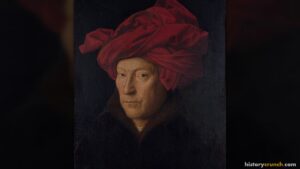
Several technical innovations transformed Renaissance art. The development of linear perspective allowed artists to create the illusion of depth and three-dimensional space on a flat surface. Advances in the understanding of human anatomy, driven in part by the dissection and study of human bodies, allowed artists to represent the human figure with unprecedented accuracy. The use of oil paint, developed and refined in northern Europe by artists such as Jan van Eyck, allowed for richer colors and finer detail than earlier painting techniques.
The most celebrated Renaissance artists included Leonardo da Vinci, Michelangelo, and Raphael, who are often referred to as the three great masters of the High Renaissance. Leonardo da Vinci is best known for paintings such as the Mona Lisa, which is considered one of the most famous paintings in human history. Michelangelo is renowned for his sculpture, including his famous statue of David, and for his painting of the ceiling of the Sistine Chapel in Rome. Raphael was celebrated for his graceful and harmonious compositions. Earlier Renaissance artists such as Donatello and Filippo Brunelleschi were also deeply influential in developing the new artistic and architectural styles of the period. Click on the links to learn more about Renaissance Art and Artists, Leonardo da Vinci, Michelangelo, Raphael, Donatello, Filippo Brunelleschi, Jan van Eyck, the Mona Lisa, and the Sistine Chapel.
HOW DID THE IDEAS OF THE RENAISSANCE SPREAD?
The Renaissance began in Italy and spread gradually to the rest of Europe over the course of the 15th and 16th centuries. Several factors helped carry Renaissance ideas beyond Italy, including trade networks, the movement of scholars and artists across borders, and most importantly the invention of the printing press.
The printing press, developed by Johannes Gutenberg in the 1440s, was one of the most significant inventions in European history. Before the printing press, books had to be copied by hand, which was a slow and expensive process that limited the spread of ideas. The printing press allowed books and pamphlets to be produced quickly and cheaply, making written works available to a much wider audience. This means that ideas that had previously circulated only among a small number of scholars and wealthy patrons could now reach readers across Europe. The spread of humanist scholarship, the writings of Renaissance thinkers, and later the religious texts of the Protestant Reformation were all made possible on a mass scale by the printing press. Click on the links to learn more about How Did the Ideas of the Renaissance Spread and Johannes Gutenberg.
THE PROTESTANT REFORMATION
One of the most significant consequences of the Renaissance was the Protestant Reformation, a religious movement that challenged the authority of the Catholic Church and transformed the religious landscape of Europe. The humanist emphasis on individual reason, the study of original texts, and the questioning of established authority helped create the intellectual climate in which the Reformation grew.
Martin Luther, a German monk and theologian, is most closely associated with the beginning of the Protestant Reformation. In 1517, Luther published his famous Ninety-Five Theses, in which he criticized various practices of the Catholic Church, including the sale of indulgences. Luther’s ideas spread rapidly across Europe, aided by the printing press, and sparked a religious revolution that resulted in the formation of numerous Protestant Christian denominations that broke away from the Catholic Church. The Reformation had profound consequences for European politics, culture, and society that lasted for centuries. Click on the links to learn more about the Protestant Reformation and Martin Luther.
SIGNIFICANCE OF THE RENAISSANCE
The Renaissance was one of the most significant periods in the history of Western civilization. It produced extraordinary achievements in art, literature, science, philosophy, and architecture that continue to be celebrated and studied today. More broadly, the Renaissance transformed how people in Europe thought about themselves and the world around them, shifting the focus from a medieval worldview centered on religious doctrine and authority to a more human-centered approach that valued individual achievement, reason, and the study of the natural world.
The Renaissance also laid the groundwork for many of the major developments that followed in European history. The humanist emphasis on the study of original texts and individual reason contributed directly to the Protestant Reformation, which permanently divided European Christianity. The spirit of inquiry and discovery that characterized the Renaissance helped inspire the Scientific Revolution of the 16th and 17th centuries, in which thinkers such as Copernicus, Galileo, and Newton overturned centuries of accepted knowledge about the physical world. The Age of Exploration, during which European navigators traveled to the Americas, Africa, and Asia, was also deeply connected to the Renaissance spirit of curiosity and ambition. In all, the Renaissance was a foundational period in the development of the modern world, and its legacy continues to be felt in art, science, philosophy, and culture today.