Jan van Eyck was an important painter especially in terms of the Northern Renaissance. He is known for his detailed realism and innovative use of oil paints. His most important works, showcased intricate textures, rich colors, and symbolic elements. Van Eyck’s techniques greatly influenced the development of painting in Europe and helped elevate the status of artists in Northern Europe during the timeframe of the Renaissance.
JAN VAN EYCK (RENAISSANCE ARTIST) – EARLY LIFE
Jan van Eyck is one of the most influential artists of the Renaissance and was particularly important in the spread of the Renaissance in Northern Europe. As such, he is remembered today as an influential artist.
He was supposedly born in Maaseik, Belgium sometime around 1395; however the exact date of his birth is not known. In fact, little is known about much of his early life due to a lack of records from the time. With that said there are reports that he had one sister and at least two brothers – who were also painters. Van Eyck is thought to have received some formal education, but where and how much he received is not documented. Regardless, he knew both Latin and Greek as he used them both in his work. The first record of van Eyck’s existence is in 1422 in the court of John of Bavaria. The records state that van Eyck was paid for being a court painter.
JAN VAN EYCK (RENAISSANCE ARTIST) – PAINTER
In 1425, van Eyck started working as a painter and valet de chambre for the Valois prince, Duke Philip the Good of Burgundy. It is likely that Van Eyck’s education, which was unusual for painters at the time, would have been attractive to Phillip. While working for Philip, van Eyck was commissioned to do a number of paintings which included two portraits of Isabella of Portugal. The portraits of Isabella were commissioned in order to try and win Isabella’s hand in marriage. Van Eyck was also sent on a number of missions on behalf of the prince which likely involved more than painting. Van Eyck was regarded as an exceptional artist by Phillip, which is reflected in how well van Eyck was paid. Van Eyck’s salary was especially large compared to other painters of the time who relied on individual commissions. Having such a large salary meant that Van Eyck had a large amount of artistic freedom, and allowed his technical ability to develop.
JAN VAN EYCK (RENAISSANCE ARTIST) – DEATH AND SIGNIFICANCE
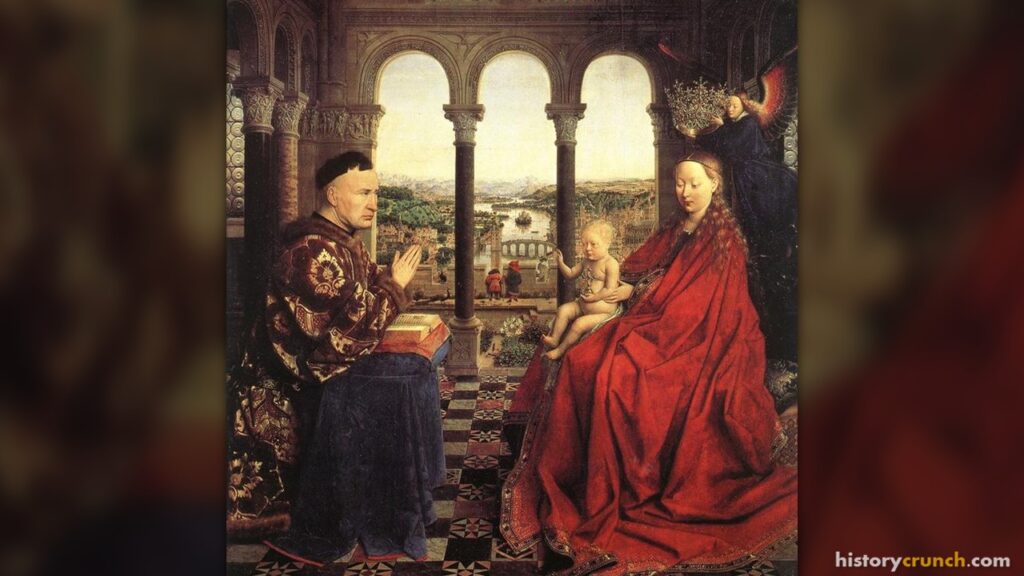
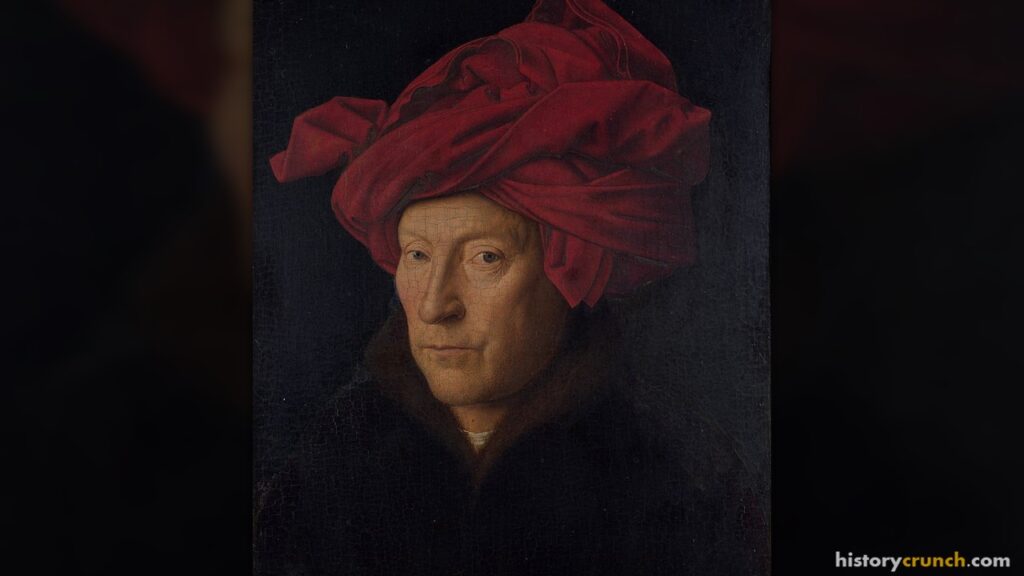
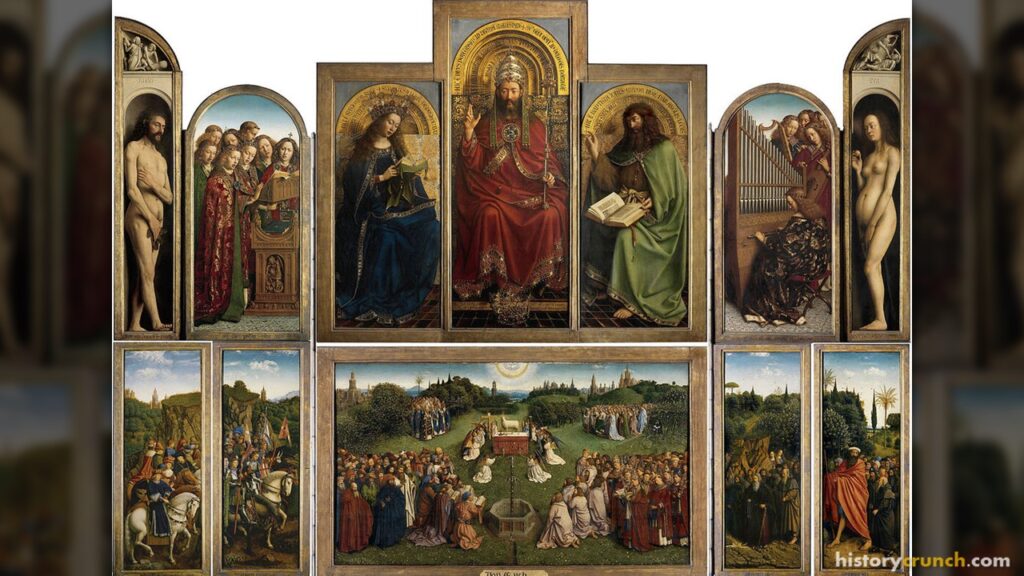
Van Eyck is now considered one of the founders of Early Netherlandish painting and he was considered revolutionary at the time. Across Europe, he was revered, especially as a portrait painter, and as a result in addition to working for Phillip, van Eyck also painted for private clients. One of the most famous pieces is the Ghent Altarpiece which van Eyck painted in around 1424 for Jodocus Vijdts and his wife Elisabeth Borluut. The painting was realistic and faithful to nature in its composition, which was unlike other works of the Early Renaissance. Van Eyck’s highest point of his career is thought to have occurred between 1433 and 1436 because during this time he created a number of famous works which include the portrait of a man, which is thought to be a self portrait, the Madonna with Chancellor Rolin and the Madonna of Canon Georg van der Paele.
Van Eyck died on July 9th, 1441 in Bruges, Belgium. He left behind his wife, Margaret and as a mark of respect, Prince Philip gave her a large amount of money, which would have equaled van Eyck’s annual salary. In one of the first biographies written on van Eyck, he was described as the leading painter of the Renaissance. He was also described as a learned man versed in the classics.