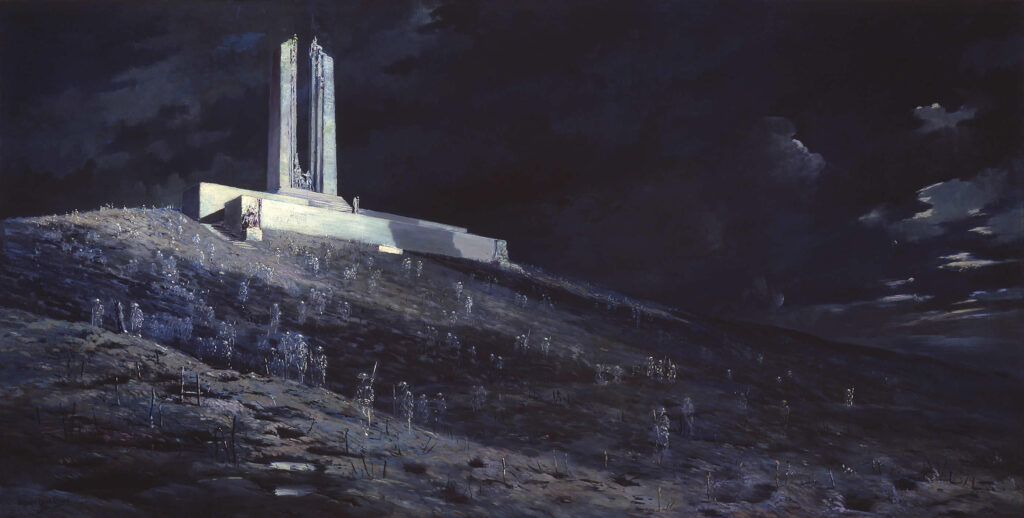
The Battle of Vimy Ridge is a battle that is of particular importance to the history of Canada and its role in World War I. Many Canadians today look back upon the Battle of Vimy Ridge as a defining moment in the country and a time when the country expressed its nationhood separate from that of Great Britain and the British Empire.
WHY WAS CAPTURING VIMY RIDGE IMPORTANT FOR THE ALLIES?
The Battle of Vimy Ridge was fought from April 9th to April 12th in 1917 and was primarily fought between Canadian and German forces. The Canadian forces were assembled together as a single unit for the first time in Canada’s history and ordered to capture the German controlled ridge. Previously in World War I, Canadian forces had been separated from each other and each were attached to different sections of the British forces. The Battle of Vimy Ridge was significant because it was the first time that Canadian forces had been assembled together to fight as a single unified force. It was an important conflict on the Western Front of World War I.
Capturing Vimy Ridge was also important strategically for the overall war. The battle was part of a larger Allied attack on German lines in France and would help in pushing back the German forces. Vimy Ridge is located in northern France and included a high ridge that was strategically important. As a natural high point in the region, Vimy Ridge gave an excellent point from which soldiers could see the landscape and see German troop movements. As well, the high ridge could be used as a place from which artillery guns could be placed to carry out artillery bombardments in the area.
Both France and Britain had tried to dislodge Germany from controlling Vimy Ridge in earlier battles during World War I. However, both struggled and failed to overtake the ridge. As such, in 1917, the German forces still had a strong grasp over the strategically important high point.

WHAT WAS CANADA’S PLAN OF ATTACK AT THE BATTLE OF VIMY RIDGE?
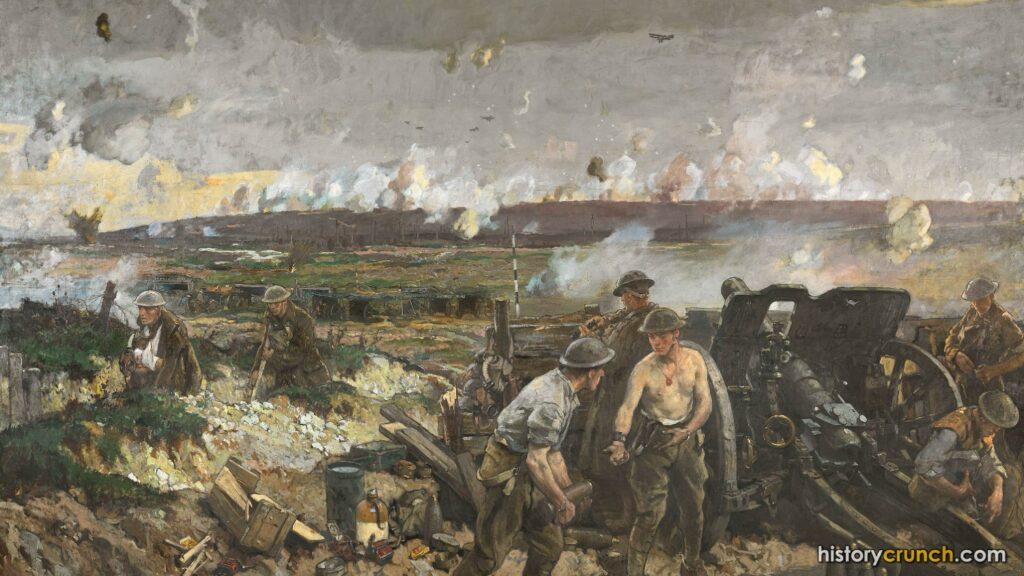
The Canadian troops that carried out the Battle of Vimy Ridge first planned and rehearsed their attack to ensure they were prepared and ready for the battle. They spent the days and weeks before the attack preparing their strategy and plan of attack. The plan was for the Canadian troops to bombard the German held ridge with artillery fire and then to make use of a “creeping barrage” to take over the ridge. A creeping barrage was a strategy in which Canadian artillery fire would creep its way forward, up the ridge as individual soldiers followed close behind. This way, the artillery fire cleared the way forward for the soldiers and made overtaking the ridge much easier for the Canadian forces. The initial artillery attack was massive, and the Canadians shelled the ridge for a week before they began their attack.

WHAT HAPPENED DURING THE BATTLE OF VIMY RIDGE IN WORLD WAR I?
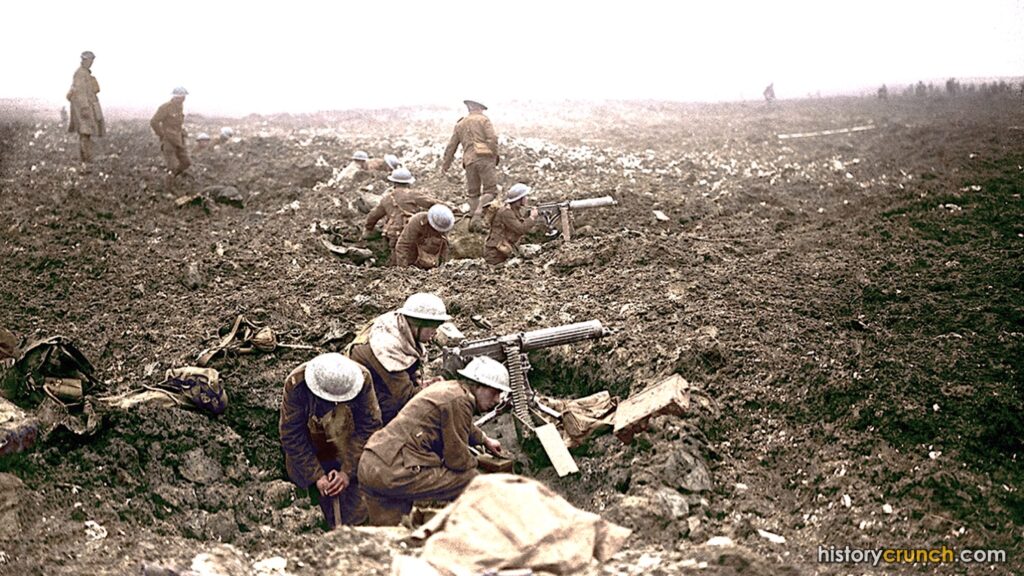
Canadian forces finally stormed the ridge on the morning of April 9th, 1917. Over 15,000 Canadian soldiers attacked Vimy Ridge and next had to withstand German dugouts and machine guns. The attack last for three days as the Canadians pushed their way up the ridge to capture the strategic high points. Although, the Battle of Vimy Ridge was only fought over only 3 days, it was a difficult victory that cost the lives of many Canadian soldiers. In total, the Battle of Vimy Ridge resulted in the death of over 3500 Canadian soldiers and another 7000 were wounded in the battle.
WHY WAS THE BATTLE OF VIMY RIDGE IN WORLD WAR I SIGNIFICANT?
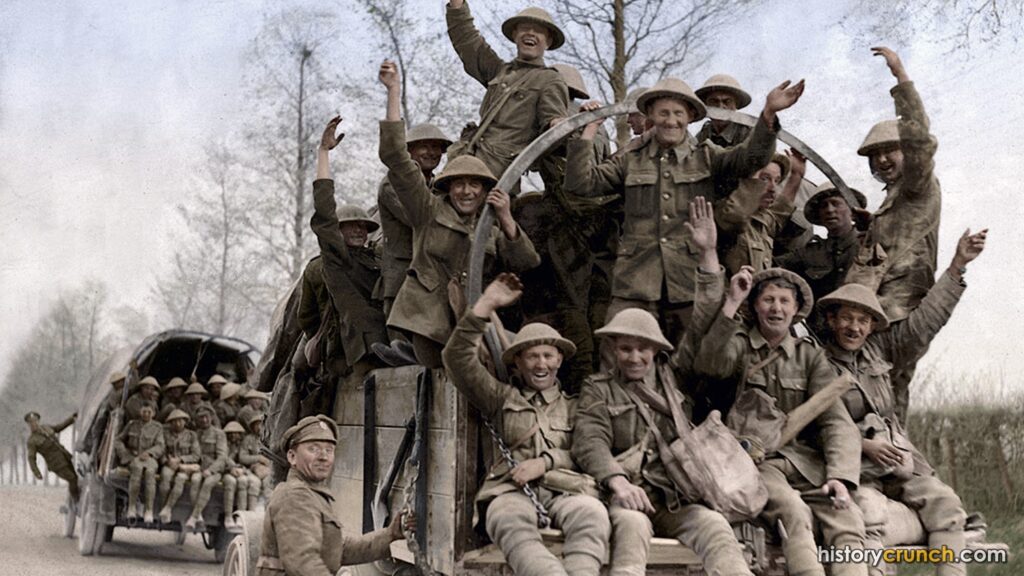
The capture of Vimy Ridge is a symbolically important event in Canadian history. It was the first time that Canadian soldiers were united in battle and those soldiers were able to successfully carry out their strategy. As well, it was a boost to Canada’s sense of nationalism since Canadian troops were able to capture a point that both French and Britain had struggled to capture. At the time, both France and Britain were considered militarily strong, while Canada was viewed as a smaller nation that was still strongly linked to Britain. The Canadian victory at Vimy Ridge in World War I, led many Canadians to believe that they should be considered equals on the world stage with other strong nations.
As well, Canada would use the victory at Vimy Ridge as a reason to request its independence from Britain and the control of the British Empire. At the outbreak of World War I, Canada was immediately drawn into the war because it was viewed as a colony of Britain. With the victory at Vimy Ridge by divisions of all Canadian soldiers, Canada began to view itself as separate from Britain and began to push for independent representation on the world stage. For example, when World War I ended and Germany was forced to accept the terms of the Treaty of Versailles, the Allied Powers all signed the treaty in recognition of the demands placed on Germany.
Canada was initially invited to participate in the signing of the Treaty of Versailles, as Britain determined that it would sign the treaty on behalf of Canada. However, Canada argued that based on its role in the Battle of Vimy Ridge, it should be allowed to sign the Treaty of Versailles for itself. In the end, Canada was allowed to represent itself at the Treaty of Versailles signing and the Treaty of Versailles is the first international document that Canada signed without the representation of Britain. Therefore, for Canada, this was a moment that many now look to as the country’s independence from British control.