Aztec architecture was a central aspect of Aztec culture. In fact, Aztec architecture impacted the daily lives of the Aztec people, since it influenced religious temples, pyramids and Aztec homes. The Aztec Empire was a civilization in central Mexico that thrived in the time before the arrival of European explorers during the Age of Exploration. Throughout its history as a civilization the Aztec Empire expanded across much of central Mexico and other surrounding areas, to become the most dominant and powerful people in the region. Tenochtitlan, the main Aztec city (or altepetl), was the center of this vast empire.
AZTEC ARCHITECTURE – INFLUENCE OF THE TOLTEC
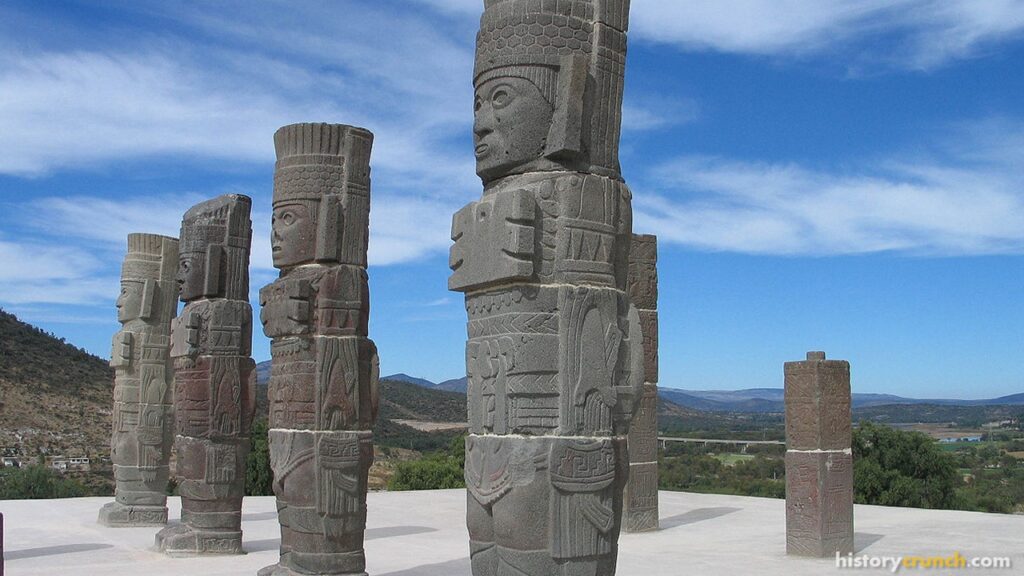
The Aztec were master builders and constructed many different types of structures, such as pyramids, ball courts, plazas, temples, and homes. However, for the Aztec, they considered the Toltec to be a major influence on their own architecture. The Toltec were a Mesoamerican civilization that was located in central Mexico from about 900 CE to 1168 CE. They are an important civilization in the history of Mesoamerican culture because many different later societies in the same area considered the Toltec to be an example of the height of craftsmanship and civilization. For example, the Aztec considered themselves to be the successors to the earlier Toltec. In fact, the Aztec admired the Toltec for many different aspects, including: art, architecture, craftsmanship and culture. Some historians have questioned whether or not the Aztec people were the descendants of the earlier Toltec society, but this suggestion has also been made about other earlier Mesoamerican civilizations, including the Teotihuacan. Regardless, the Toltec language was Nahuatl, which was the same as the Aztec. As well, the Nahuatl word for Toltec, in the Aztec society, came to mean ‘artisan’ in reference to their view that the Toltec were the height of culture, art and design in Mesoamerica.
AZTEC ARCHITECTURE – AZTEC TEMPLES
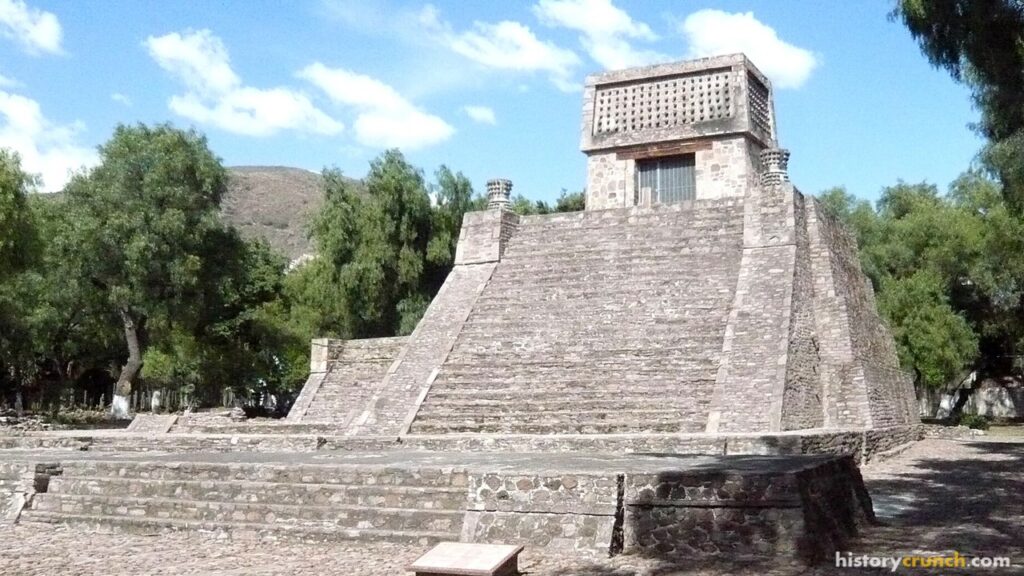
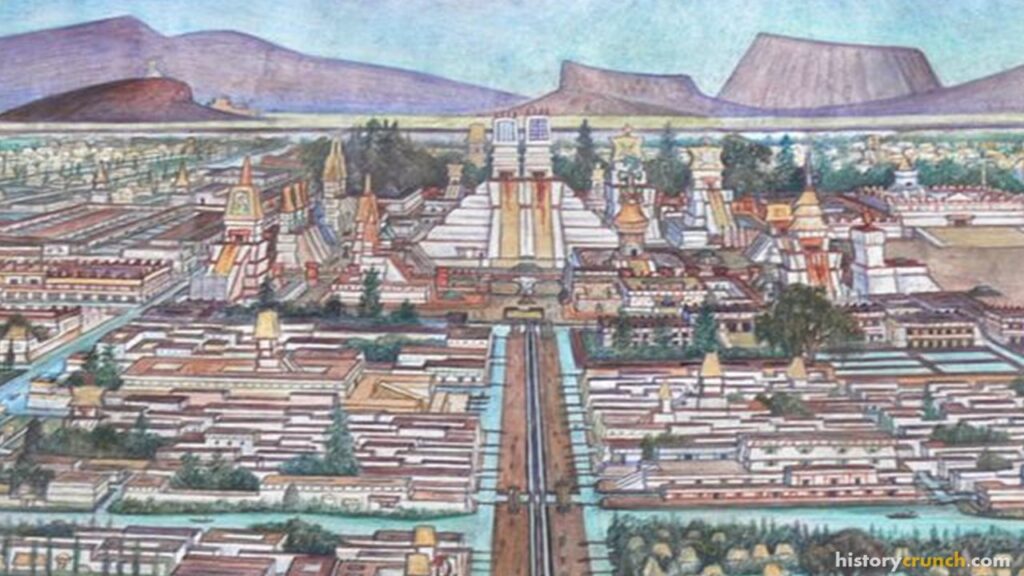
The Aztec Empire is famous for many of its features including the amazing architectural styles that the Aztec people used in the construction of their buildings and cities. In fact, Aztec architecture followed similar principles to other earlier Mesoamerican civilizations, including, the use of a grid system in city building and the construction of large temples in the shape of a pyramid. For instance, the pyramid was a central component of Aztec construction and featured prominently in their own city-state (altepetl) in Tenochtitlan. Templo Mayor is the name of the main temple in the Aztec capital city of Tenochtitlan.
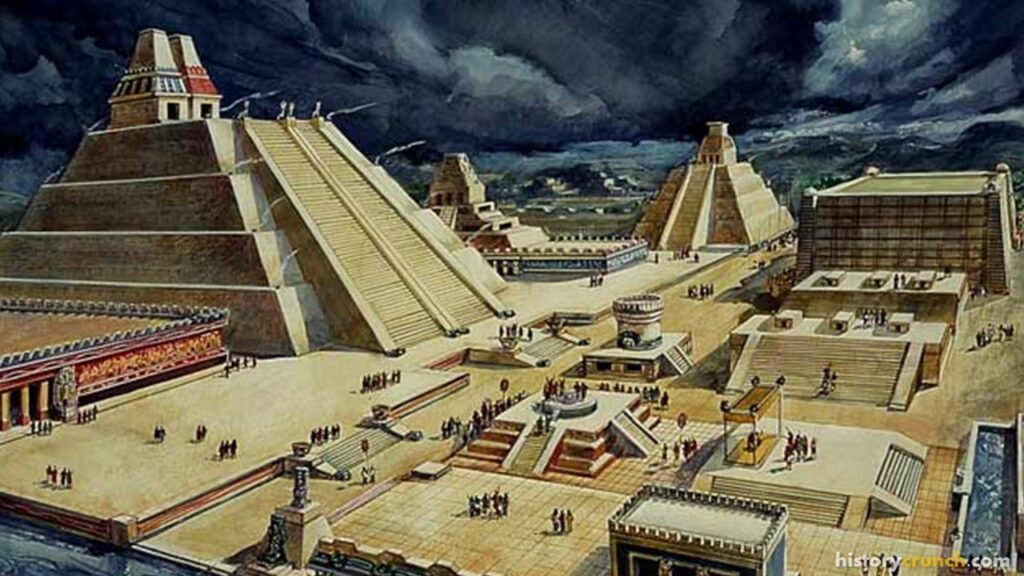
Structurally, the Templo Mayor was a stepped-pyramid with two shrines constructed on top of it and it was located in the center of Tenochtitlan. Unfortunately, very little of the original pyramid remains and most descriptions of the temple come from historical accounts, including those of the Spanish conquistadors who witnessed it during their conquest of the Aztec Empire in 1521. This is because, much of the Templo Mayor and Tenochtitlan were destroyed by the Spanish when they conquered the city and defeated the Aztec Empire. Furthermore, following the destruction of the Tenochtitlan, the Spanish (led by Hernán Cortes) built their own city on the ruins of the former Aztec capital, which is today the modern-day Mexico City.
The Templo Mayor that the Spanish conquistadors witnessed in 1521, was supposedly the seventh and final version of the great temple. Historians believe that the great temple was first built just after the founding of Tenochtitlan in 1325 and then went through many different additions throughout the history of the Aztec. Originally, the temple was quite small and constructed out of earth and wood. Then, successive Aztec leaders, known as huey tlatoani, built onto the temple.
Modern excavations of the ruins of Templo Mayor show that the additions to the temple were literally built on top of the old structure, thus creating many different layers to the temple that show its history with each layer.
The final version of the Templo Mayor (and the one that the Spanish witnessed in 1521) was likely constructed sometime at the end of the 15th century. It was a pyramid with four different levels or terraces and two sets of staircases that reached to the top platform. The temple reached as high as 180 feet (60 meters) and was topped with a large platform. This top platform contained two shrines to two different Aztec gods that played a significant role in the religion of the Aztec. Spanish records report that the pyramid was painted in bright colors and contained artistic reliefs of serpents and Aztec warriors.
The Templo Mayor highlights several key features of Aztec architecture. First, they did not replace large structures such as temples, rather they simply built over top of them and made them bigger and more elaborate. This has been witnessed in several Aztec archaeological sites, but is likely best seen in the ruins found of the Templo Mayor. Second, the Aztec were master craftsmen and were easily able to work with stone top build large and elaborate temples. Third, Aztec culture featured heavily in their architecture, including their religious beliefs, gods, and astronomy. For instance, several images reappear in Aztec temples, including: eagle, serpent, conch shell and sea creatures. These all played important roles in Aztec cultural beliefs and symbolized different aspects of Aztec life.
AZTEC ARCHITECTURE – AZTEC HOMES
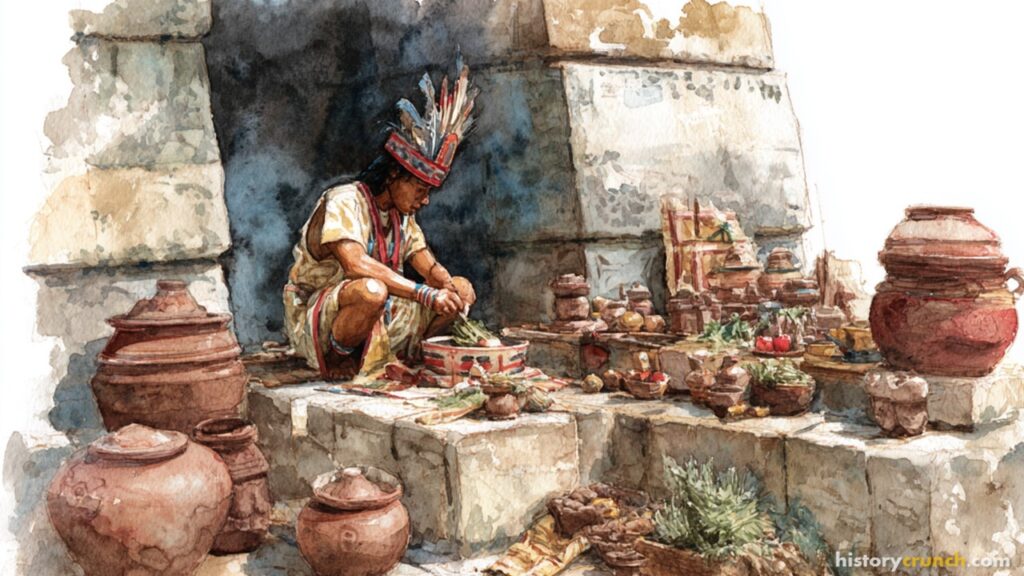
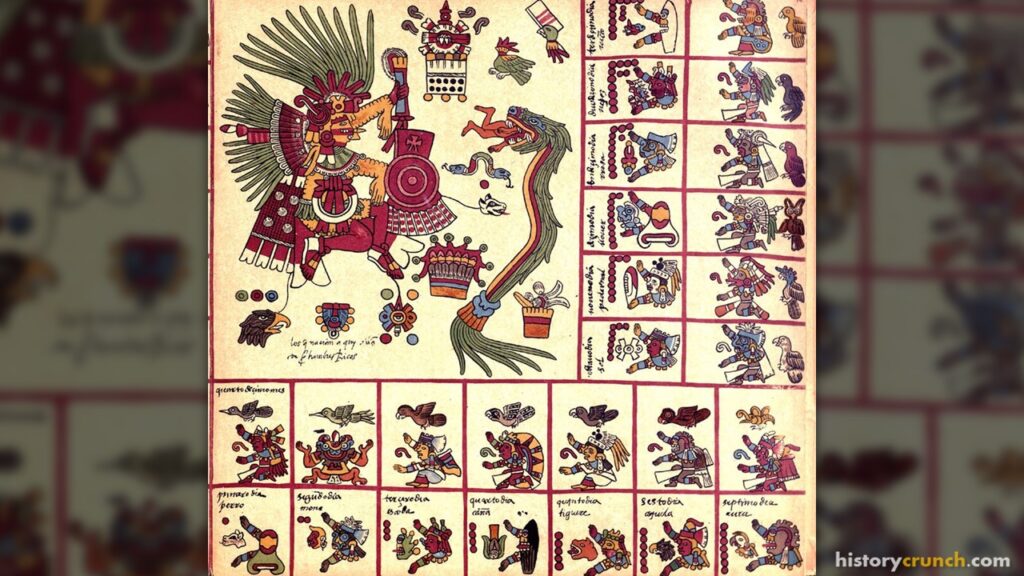
In contrast to the large stone temples, Aztec homes were primarily built from wood logs that were interlinked. They may have also used mud bricks (adobe). The floor of the homes was usually just dirt or may have been made of stone. The roof was usually made from small sticks woven together or a type pf thatch (straw, leaves, grass, etc). Generally, the homes for the middle class (macehualtin) were one single room and the family would sleep in this room at night and have a shrine to honor the gods during the day. With that said, homes for the nobles (pipiltin) were much more elaborate to distinguish their wealth and prestige in society. For instance, the homes of nobles were generally more spacious contained more ornate artwork related to Aztec religion and customs.