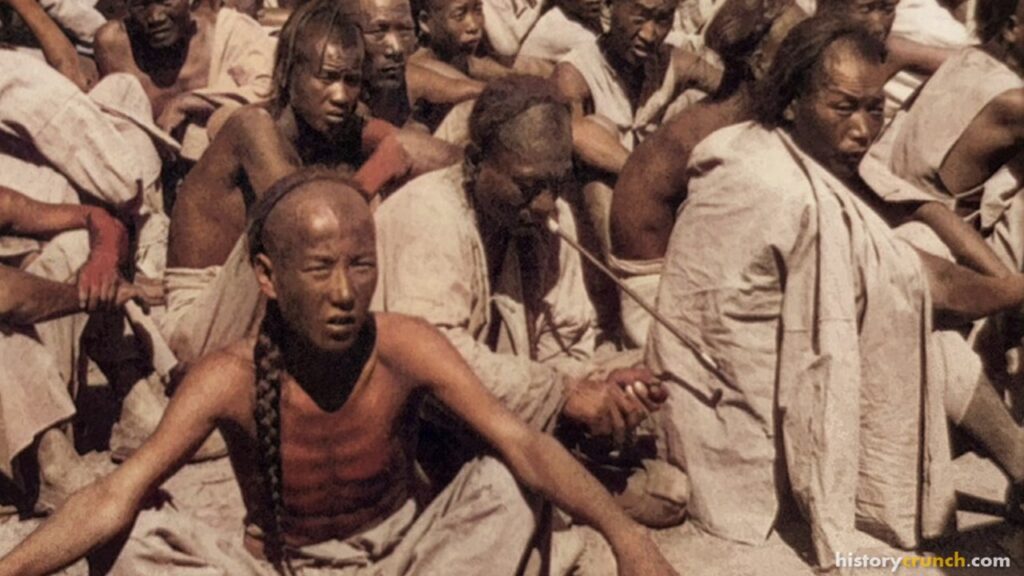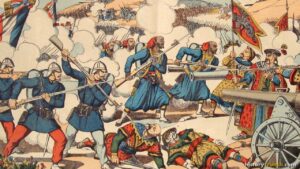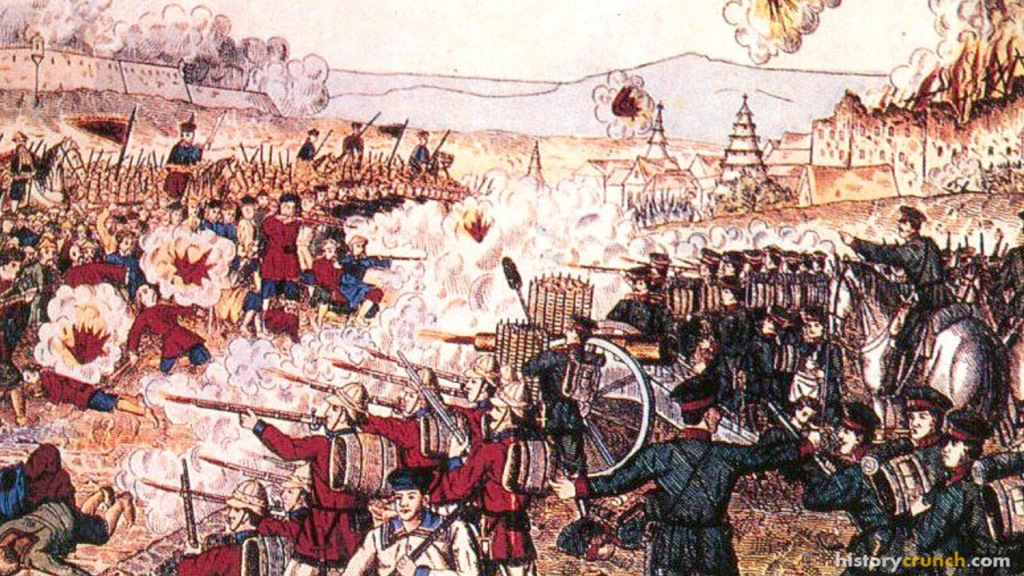
The Boxer Rebellion was an important historical event related to western imperialism in China, and occurred from November 2nd, 1899 to September 7th, 1901. It saw Chinese nationalists, which were known as ‘Boxers’ rise up and fight against western influence in China. In fact, the Boxers fought to end western imperialism in China, as well as bring a stop to the spread of Christian missionaries. As a result, the Boxer Rebellion is a significant event in the timeframe of western imperialism in China and occurred during the end stages of the Qing Dynasty.
CAUSES OF THE BOXER REBELLION
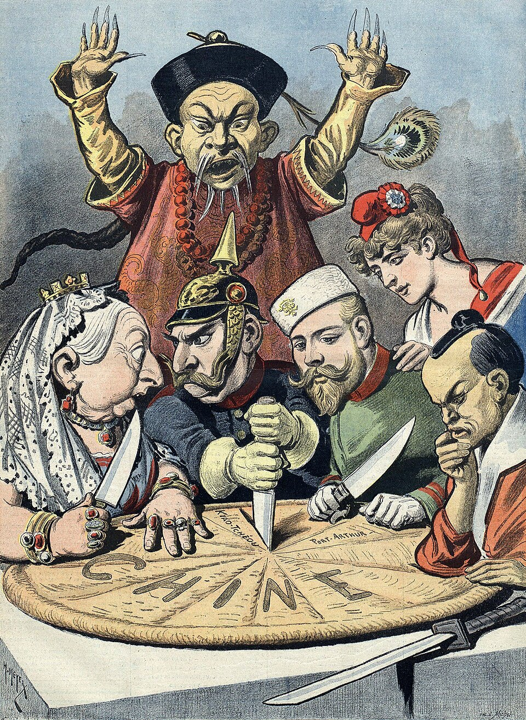
The Boxer Rebellion was caused by several factors, including: western expansion in China, growing Chinese views on anti-imperialism and poor weather conditions. The first main cause of the Boxer Rebellion was the expansion of the western powers into China throughout the 19th century. The major European powers (Britain, France, Germany) expanded their vast empires across the world throughout the 19th century in an event that historians refer to as the Age of Imperialism. During this time, the western powers imperialized large sections of Africa and Asia, including China. For instance, by the time of the Boxer Rebellion, the following nations all had major ‘spheres of influence’ in China: Britain, France, Germany, Japan and Russia. These spheres of influence were established through a series of conflicts that included the First Opium War, Second Opium War and First Sino-Japanese War. Each of these conflicts led to the western powers gaining more influence over China, especially in relation to trade. As such, by the end of the 19th century, much of China was under the influence of foreign nations.
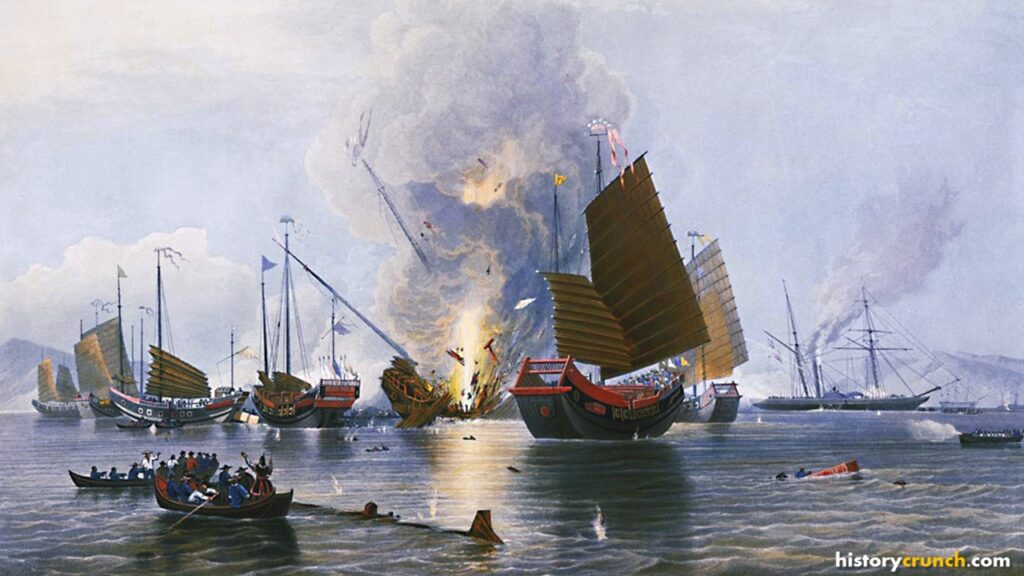
This situation created a deep seed of anger among some in China, and led to a rise of anti-imperialism views across the nation. More specifically, some people in China resented the influence of the western powers and especially the Christian missionaries. In fact, there were several prominent attacks by Chinese nationalists against foreign Christian missionaries in the last few years of the 19th century. As such, the tension caused by western influence in the region was one of the main factors that led to the crisis that resulted in the Boxer Rebellion.
In fact, the term ‘boxer’ was first used by Christian missionaries in reference to the highly trained, young, Chinese men who practiced martial arts. The missionaries used the term ‘boxer’ due to Chinese martial arts being referred to as ‘Chinese boxing’. In reality, this group of Chinese nationalists referred to themselves as ‘The Righteous and Harmonious Fists‘ or ‘Yìhéquán’. The Boxers first arose in regions of northern China were civil unrest had been commonplace. The young Chinese men who made up the ranks of the Yìhéquán were especially angry with foreign influence in their country and sought to fight back against Christian and western intrusion. As a result, this led to the outbreak of the Boxer Rebellion, as the group of Chinese nationalists became more organized in their efforts.
The last main cause of the Boxer Rebellion was the weather conditions that occurred in the years immediately before the start of the Boxer Rebellion in 1899. More specifically, the Shandong province in northeastern China, suffered a terrible drought and subsequent flood in 1897 and 1898. The conditions forced poor farmers from their land and created a crisis that increased anger and frustrations among many in the region. Some of this anger was directed at the foreign nations that had imperialized China in the 19th century, which led to the Boxer Rebellion.
MAJOR EVENTS OF THE BOXER REBELLION
As stated above, the Boxer Rebellion was an uprising of Chinese nationalists who were angry at foreign influence in their country. In fact, the events of the Boxer Rebellion were carried out by a group called ‘The Righteous and Harmonious Fists’, which westerners referred to as ‘boxers’ due to the type of movements and martial arts that they practiced. Furthermore, the Boxers believed that they had a supernatural ability to withstand foreign attacks and used their beliefs, and physical abilities to carry out a series of attacks against westerns and Christians throughout 1900. These attacks made up the basis of the Boxer Rebellion.
More specifically, the Boxers began their attacks in northern China (the Shandong province in northeastern China) in early 1900. However, the Boxers soon made their way to the city of Peking (modern Beijing) with the goal of “Support the Qing government and exterminate the foreigners.” The arrival of the Boxers caused foreign nationals and Chinese Christians to run and seek refuge in the Legation Quarter of Peking, which was a region where foreign nationals and diplomats lived. The Boxer attack on Peking and its foreign populations lasted for 55 days from June 20th to August 14th in 1900. For its part, the Qing Dynasty, which was led by the Empress Dowager Cixi, sided with the Boxers. For instance, she famously issued an Imperial Decree declaring war on the foreign powers.
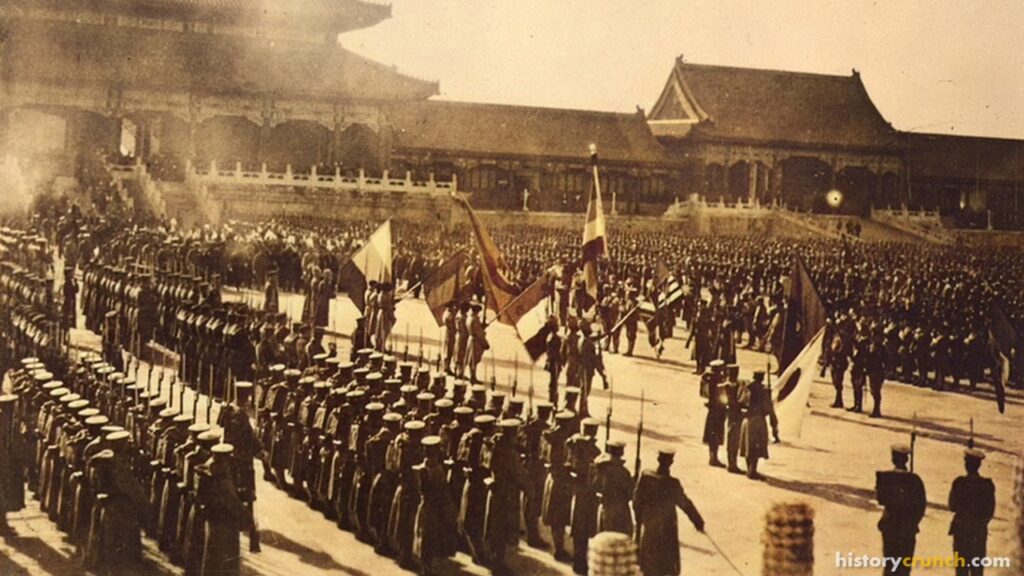
The attack on the foreigners in Peking led to the creation of the Eight Nation Alliance, which was a force of approximately 45,000 troops from eight powerful western nations. For instance, each of the following participated in repelling the Boxer Rebellion and attack on Peking: Germany, Japan, Russia, Britain, France, the United States, Italy and Austria-Hungary. After fighting against and defeating the Chinese Imperial Army, the forces of the Eight Nation Alliance made their way to the city of Peking. The forces of the Eight Nation Alliance arrived on August 14th and put an end to the Siege of the International Legations in the Chinese capital. The foreigners suffered terribly during the siege and most barely survived the attacks during the Boxer Rebellion. For instance, during the Boxer Rebellion there were many deaths reported, including 136 missionaries and 47 Catholic priests and nuns. As well, it is estimated that as many 33,000 Chinese Christians were killed in the assault. Regardless, with the arrival of the foreign armies, the Boxer Rebellion ended. In fact, Empress Dowager Cixi and her government fled on August 15th.
END & SIGNIFICANCE OF THE BOXER REBELLION
The Boxer Rebellion ended formally on September 7, 1901 with the signing of the Boxer Protocol. The Boxer Protocol was an agreement between the Qing Empire of China and the Eight Nation Alliance. It contained many clauses, but the most significant included provisions for punishment against China and the Boxers, as well as protections for the foreign nations going forward. As part of the agreement, the Qing government was to pay 450 million taels (Chinese system of measurement) of silver to the countries of the Eight Nation Alliance over a period of 39 years. At the time, this was equivalent to around $330 million USD. As well, the Boxer Protocol gave the foreign powers the ability to place their forces in Peking on a continuous basis. Also, it called for the punishment (including execution) of anyone in the Chinese government or Boxer movement that supported the Boxer Rebellion.
In the end, the Boxer Rebellion was a significant event in the history of China. It highlighted the pressures that the country was under at the time, due to the tensions created by foreign influence and western imperialism. As such, historians consider the Boxer Rebellion important to the history of the Age of Imperialism.