Alexander Graham Bell: A Detailed Biography
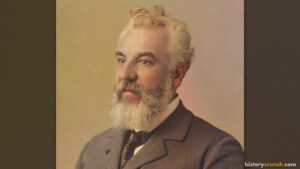
Alexander Graham Bell was an inventor, scientist, and engineer who is best known for inventing the first practical telephone.

Alexander Graham Bell was an inventor, scientist, and engineer who is best known for inventing the first practical telephone.

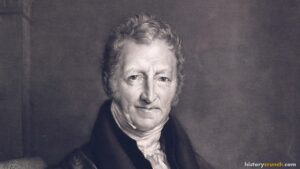
Thomas Malthus was an English economist and demographer known for his theory that population growth would inevitably outpace food production, leading to widespread famine and societal collapse, as outlined in his work ‘An Essay on the Principle of Population’.

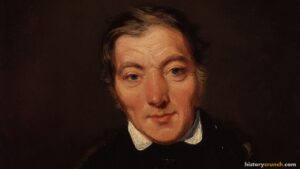
Robert Owen was a social reformer and industrialist known for his pioneering efforts in improving working conditions and promoting cooperative communities, particularly through his work at the New Lanark mills in Scotland. As such, historians soldier him important to the Industrial Revolution and the Utopian Socialism movement.

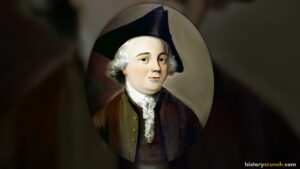
John Kay was an English inventor who significantly advanced the textile industry with his invention of the flying shuttle in 1733, which greatly sped up the weaving process and was a key development in the Industrial Revolution.

Jethro Tull was an English agricultural pioneer who revolutionized farming methods with his invention of the seed drill in 1701, significantly improving planting efficiency and crop yields. Historians consider his contributions important to the British Agricultural Revolution and the Industrial Revolution.

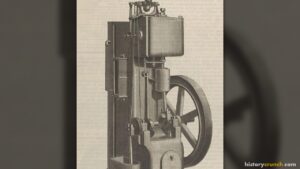
The invention of the steam engine revolutionized industry and transportation, providing a powerful and efficient source of mechanical energy that propelled the Industrial Revolution.

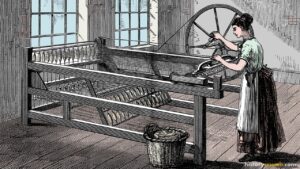
James Hargreaves was an English weaver, carpenter, and inventor who developed the spinning jenny in 1764, a multi-spindle spinning frame that significantly increased yarn production and became a key invention during the early Industrial Revolution.

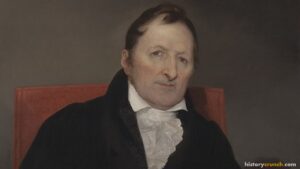
Eli Whitney was an American inventor best known for inventing the cotton gin in 1793, a device that dramatically increased the efficiency of cotton harvesting and profoundly impacted the agricultural economy of the United States.

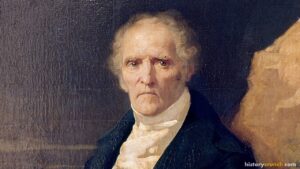
Charles Fourier was a French philosopher and social theorist known for his pioneering ideas on utopian socialism and his vision of self-sustaining communities.

Textile manufacturing in the Industrial Revolution underwent a dramatic transformation with the introduction of mechanized equipment like the spinning jenny, power loom, and cotton gin, significantly increasing production efficiency and output.