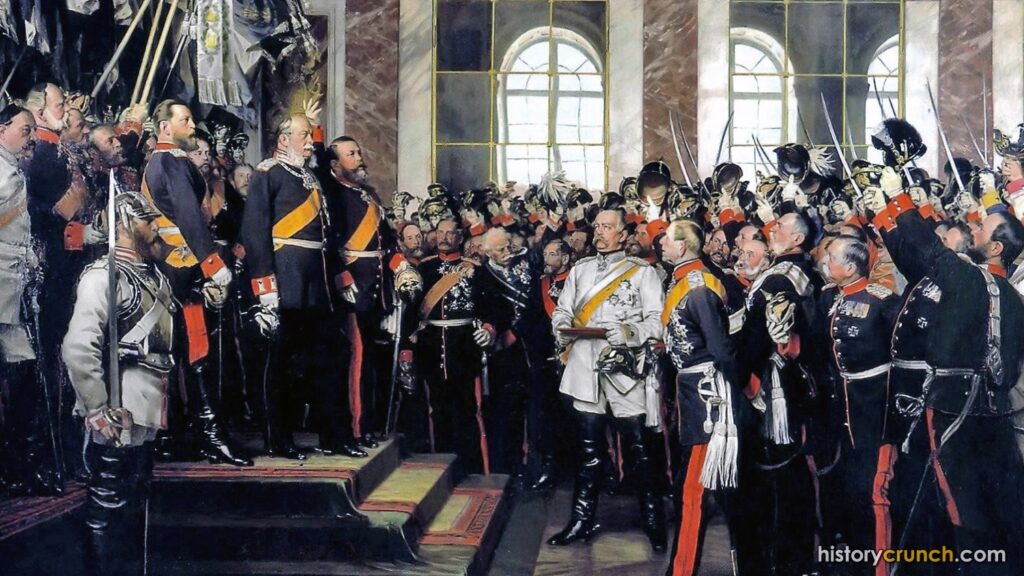
Historians have identified several causes of the Age of Imperialism, which led these power nations to dominate the far reaches of the planet. As such, the five main causes or motives of the Age of Imperialism are: Economic, Colonization, Religion, Ethnocentrism, and Prestige. The Age of Imperialism was a time period from the mid-18th century until the early part of the 20th century, which saw the major European nations (as well as the United States, Russia and Japan) expand their influence throughout several regions of Africa and Asia. In fact, major events associated with the Age of Imperialism include: Scramble for Africa, British Imperialism in India and Imperialism in China.
ECONOMIC CAUSES OF THE AGE OF IMPERIALISM
One of the most significant factors of the Age of Imperialism was the economic benefits that it created for the nations that carried out imperialistic campaigns. For example, the powerful European nations of the time were seeking new territories such that they could gain access to new resources. This was especially important with the beginning of the Industrial Revolution in the late 18th century and early 19th century. For instance, the emergence of the factory system in the Industrial Revolution meant that the European nations needed large amounts of raw materials in order to process through their factories.

More specifically, Britain was the first country to industrialize, and became the most dominant country in the timeframe of the Age of Imperialism. In fact, Britain established colonies all over the world and had the largest empire during the Age of Imperialism. Colonies such as India and South Africa were used to gather large amount of raw materials to feed the British factories. These included resources such as gold, rubber, cotton, etc. Therefore, historians consider the economic benefits of imperialism as a major motive or cause of sparking the Age of Imperialism. In fact, the economic benefits of imperialism sparked a competition between the rival imperialistic nations, which led to a more widespread colonization during the 19th and 20th centuries.
The competitive nature of the Age of Imperialism can best be seen in the Scramble for Africa, which occurred from 1870 until 1914. During these years, almost all of Africa came under the control of the major European powers, including: Britain, France, Germany, Belgium, Italy, Portugal and Spain. The Scramble for Africa unfolded as a series of major events that eventually saw the African continent colonized and then divided by the major European powers.

COLONIZATION CAUSES OF THE AGE OF IMPERIALISM
The second important aspect that led to the rise of imperialism in the 19th century was the need for European nations to resettle parts of their population to new regions. At the time, Europe had experienced a period of prolonged population growth, and many feared that European populations were reaching unsustainable levels. For example, during the 18th century, the overall population of Europe doubled to nearly 200 million. It more than doubled again in the 19th century, due to advances in healthcare, sanitation and education levels. In fact, the events of the Industrial Revolution and Agricultural Revolution led to a major population boom throughout Europe. This was due, in part, to increased food production, which caused Europe to support larger populations.
However, the larger populations across Europe put pressure on the different European governments, and led to some arguing that Europe was facing an overpopulation crisis. As such, governments in Europe wanted to use the newly discovered lands from the Age of Exploration to colonize their surplus populations. This was especially evident in the colonies of North America and Australia. In fact, millions of European settlers migrated, either by choice or forced, to the New World colonies between the 16th and 19th centuries. Therefore, historians consider the need for colonization as an important cause to the overall Age of Imperialism that occurred throughout the 18th and the 19th centuries.
RELIGIOUS CAUSES OF THE AGE OF IMPERIALISM
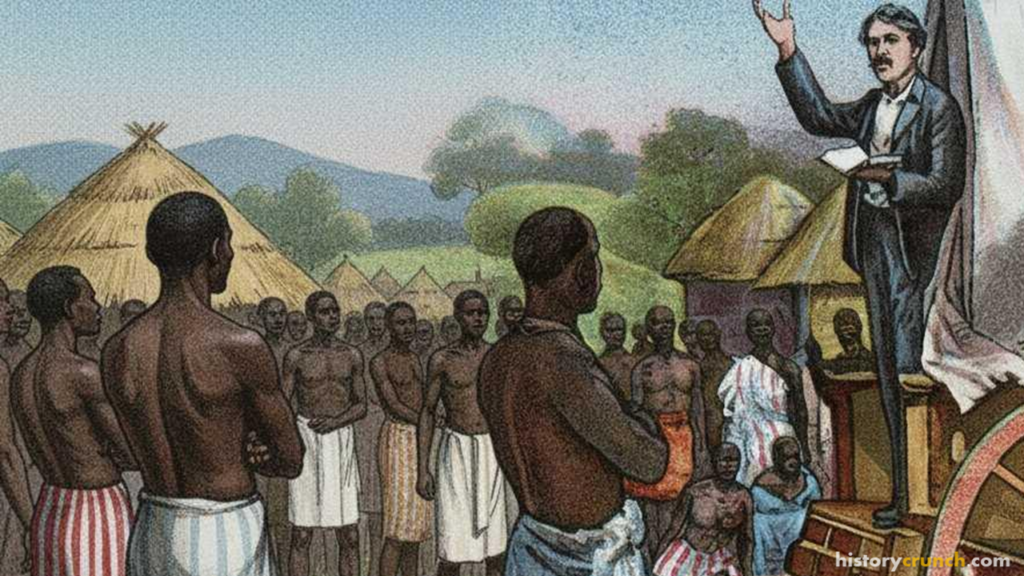
The third significant cause of the Age of Imperialism was the spread of Christianity into imperialized territories. As the major European powers spread their empires throughout the world, they also spread many of their beliefs, customs and religious practices. In fact, European Christian missionaries were an important aspect of the Age of Imperialism and participated in imperialistic campaigns throughout all regions that the European powers colonized. For example, one of the most famous missionaries from the time of the Age of Imperialism was David Livingstone.
David Livingstone is one of the most famous British figures from the 19th century and played a significant role in early efforts of European exploration in Africa. For example, he was a Christian missionary and travelled extensively throughout the African continent in the timeframe of the Age of Imperialism. Historians compare his actions with other famous figures, such as Henry Morton Stanley, and consider him an influential person in the outbreak of the Scramble for Africa in the 19th century. Therefore, this shows that the European powers were propelled by religious conviction and the hope of ‘Christianizing’ as much of the world as possible. For this reason, historians consider missionary work an important cause of the Age of Imperialism.
ETHNOCENTRIC CAUSES OF THE AGE OF IMPERIALISM
The fourth major cause of the Age of Imperialism was the ethnocentric beliefs held by the powerful European nations of the time. Ethnocentrism is the idea of judging other ethnicities or cultures based upon your own ethnicity or culture. While this comparison doesn’t necessarily need to be negative in nature, ‘ethnocentrism’ is often associated with aspects of racism and prejudice. For example, when people are being ethnocentric, they are sometimes expressing the view that another ethnicity or culture is inferior. As such, the concept of ethnocentrism is often associated with historical events, which best exemplify this, including the Age of Imperialism. During this time, certain groups judged others they viewed as inferior.
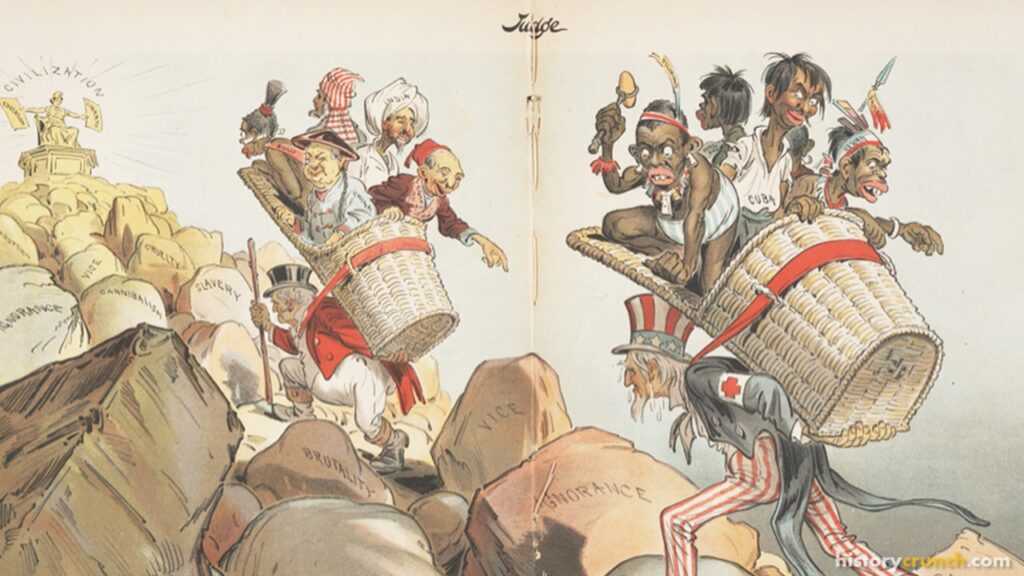
As Europeans travelled the globe and colonized different regions, they came into contact with all sorts of different indigenous people. As such, European beliefs about their own supposed racial superiority helped inform their interactions with the people they encountered, including native Africans. Their Eurocentric beliefs were justified by European governments due to a concept called Social Darwinism. In short, Social Darwinism is the idea that some ethnic groups or races are superior to others and therefore more ‘fit’ to rule over those that are less ‘fit’.
Social Darwinism was particularly popular in the early 1870s, when Europeans were carrying out their massive imperialistic campaigns as part of the Age of Imperialism. The beliefs of ethnocentrism and Social Darwinism can be seen in a famous poem by Rudyard Kipling called ‘The White Man’s Burden’. In the poem, Kipling calls on Europe to ‘send forth the best ye breed’ to ‘take up the white man’s burden’. In general, Kipling is promoting the idea that people of European descent are biologically more superior to other people from around the world, and the ‘burden’ of the white man is to ‘fix’ the uncivilized indigenous peoples. As a result, the beliefs of ethnocentrism led to the events of the Scramble for Africa in 1870 because the views of superiority on the part of the Europeans empowered them to dominate the people they encountered.

PRESTIGE CAUSES OF THE AGE OF IMPERIALISM
The final cause of the Age of Imperialism was the competitive nature of the major western nations and their need to gain prestige over each other. The term prestige relates to how each of the European nations viewed themselves or their reputation in relation to each other. For instance, the European nations of the late 19th century and early 20th century were competitive and had rivalries that existed from the previous centuries. Europe has a long history of wars and conflicts between its major nations, and this was still true in the 19th century. In fact, nationalism became a central motivating factor among the European nations in the 19th century and pushed them to expand their empires of control across the world.
Furthermore, the European nations experienced a period of prolonged rivalry through the Age of Exploration, which occurred from the 15th century until the 17th century. By the time of the Age of Imperialism, these nations were still politically and economically competitive with each other, as they each raced to capture as much territory as they could. This sense of rivalry was so intense that it eventually led to the outbreak of World War I in 1914. As such, historians considered the rivalries that existed between the European nations in the 19th century as a major factor in the Age of Imperialism.