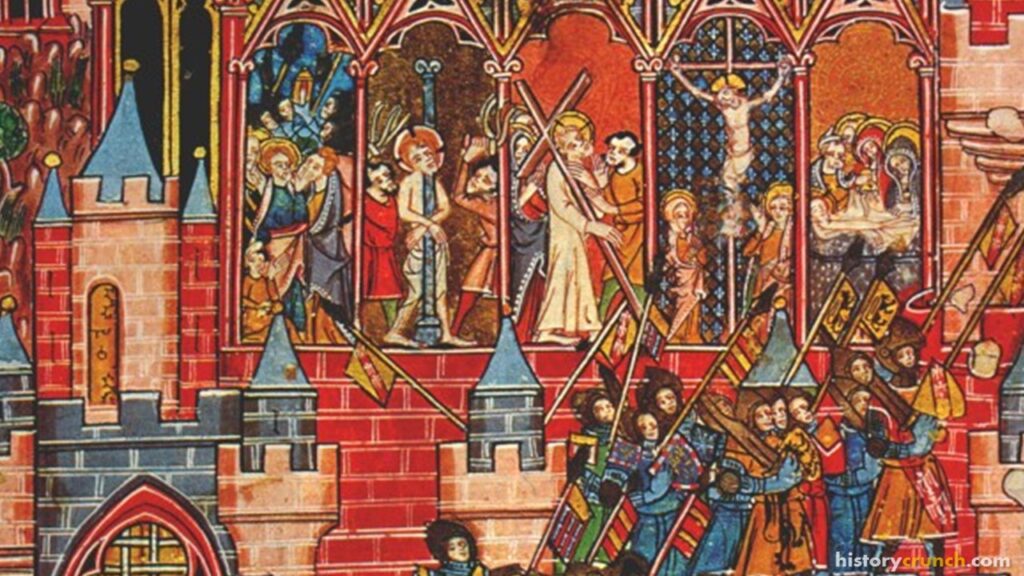
The causes of the crusades were centered mostly around the religious motivations of European Christians. For instance, European Christians sought to reclaim the Holy Land from Muslim control and secure safe pilgrimage routes. Political and economic factors also played a role, as European nobles sought land, wealth, and power through military campaigns. Additionally, the Pope aimed to unite Christian Europe under his leadership and reduce internal conflicts by directing aggression outward.
As such, the crusades were a vitally important event to European and Middle Eastern History. They were centered on a clash between different religions and helped transform Europe and the Middle East during the years of the Middle Ages. As well, many historians consider the effects of the crusades as an important event in the emergence of the Renaissance in Europe a few centuries later.
WHAT WERE THE CRUSADES?
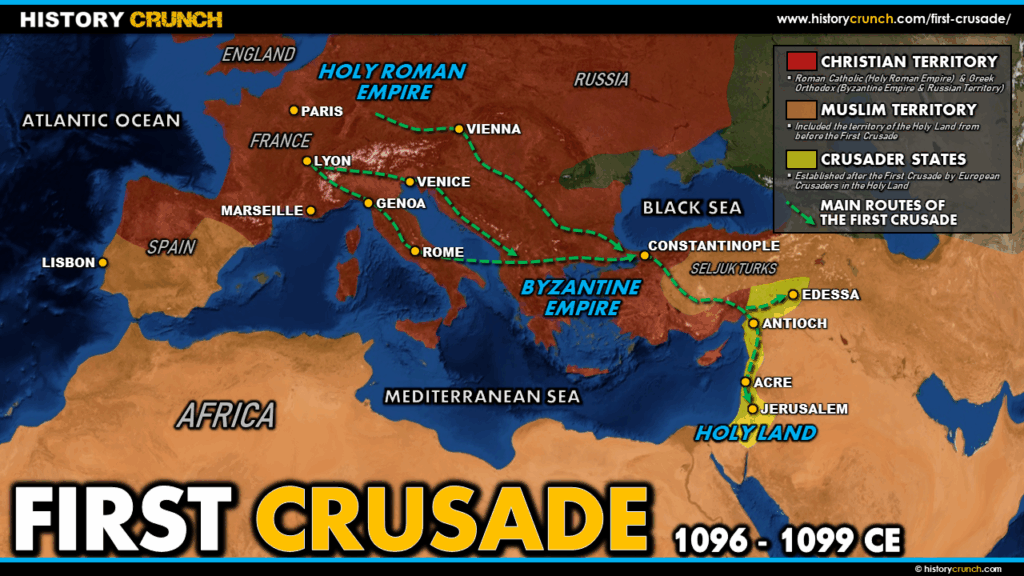
The Crusades are one of the most significant events in the history of Europe and the Middle East. They were a series of religious wars carried out by Christian crusaders from Europe during the timeframe of the Middle Ages. Beginning in 1095 CE, the crusades saw European knights and noblemen travel to the Middle East in an attempt to capture the Holy Land away from Muslim people that had controlled the region for the previous centuries. The term crusade means ‘cross’. Therefore, the Europeans that became crusaders viewed themselves as ‘taking up the cross’. In fact, many of the crusaders wore crosses on their clothing and armor as they made their pilgrimage to the Holy Land. There were nine main crusades.
CAUSES OF THE CRUSADES – POPE URBAN II
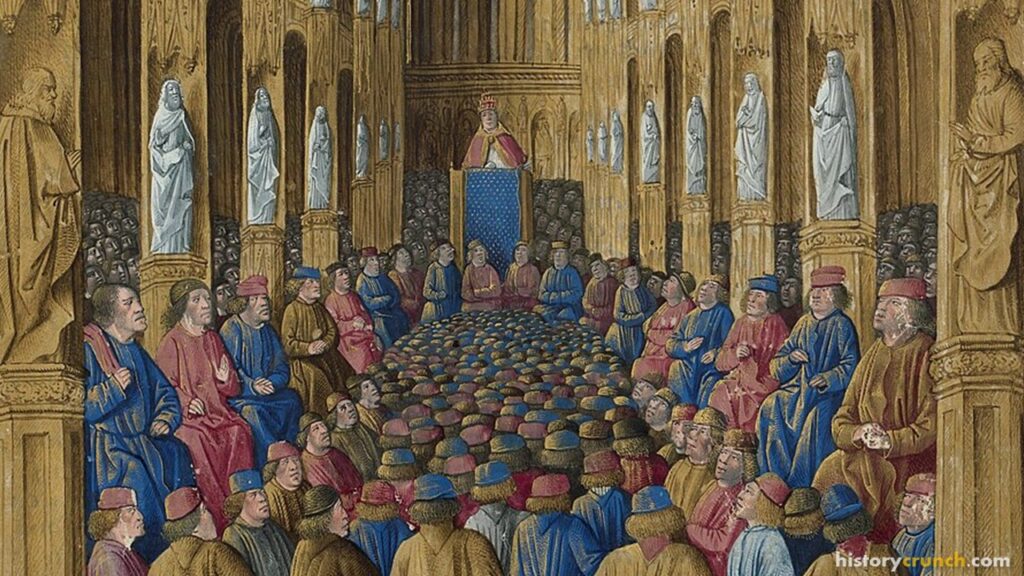
On November 27th 1095 CE, Pope Urban II called for a crusade to the Holy Land as part of a sermon at the Council of Clermont. In the speech, Pope Urban II argued for many different things, but one particular passage called for Europeans to assist the Byzantine Empire in the battle against Muslim civilizations to the east.
“Freshly quickened by the divine correction, you must apply the strength of your righteousness to another matter which concerns you as well as God. For your brethren who live in the east are in urgent need of your help, and you must hasten to give them the aid which has often been promised them. For, as the most of you have heard, the Turks and Arabs have attacked them and have conquered the territory of Romania [the Greek empire] as far west as the shore of the Mediterranean and the Hellespont, which is called the Arm of St. George. They have occupied more and more of the lands of those Christians, and have overcome them in seven battles. They have killed and captured many, and have destroyed the churches and devastated the empire. If you permit them to continue thus for awhile with impunity, the faithful of God will be much more widely attacked by them. On this account I, or rather the Lord, beseech you as Christ’s heralds to publish this everywhere and to persuade all people of whatever rank, foot-soldiers and knights, poor and rich, to carry aid promptly to those Christians and to destroy that vile race from the lands of our friends.”
CAUSES OF THE CRUSADES – MAIN CAUSES
Historians consider this speech to be the event that sparked the first crusade and began the movement of European Christians into the Middle East. There were several key reasons for the pope to call for the crusades. First, the Byzantine Empire (which was the remains of the former Roman Empire) was under attack from Muslim Civilization to the east. Since, the Byzantine Empire was centered in Eastern Europe and parts of the Middle East it was in direct contact with other eastern civilizations and they often clashed.
Second, the Roman Catholic Church wanted to secure and protect Christian churches and holy sites in the region and sought soldiers to help.
Third, Islam emerged in the 7th century in the Arabian Peninsula and quickly spread to surrounding areas, such as: Northern Africa, the Middle East and Europe. The Roman Catholic Church felt that Christianity was under attack from the spread of Islam and the crusades represented an attempt to stop it from spreading into European strongholds.
Fourth, the city of Jerusalem, which was the center of the main conflict of the crusades, was considered to be important territory for Christian faith (and also Muslim and Jewish faith). As a result, many Christians wanted it ‘freed’ from Muslim control and sought to gain control over the area for religious and territorial reasons.
Fifth, Europe had a long and bloody history that saw kingdoms and noblemen attack each other. Pope Urban II’s call for a crusade was an attempt to end aggression between European kingdoms and instead direct the violence towards Muslin-held areas in the Middle East. In general, the main causes of the crusades combined and led to the several different waves of the crusades that followed. However, Pope Urban II’s Council of Clermont speech is considered to be the spark that inspired many to take up the mission.