Why Did Europeans Fight in the Crusades?: A Detailed Summary

Why Did Europeans Fight in the Crusades
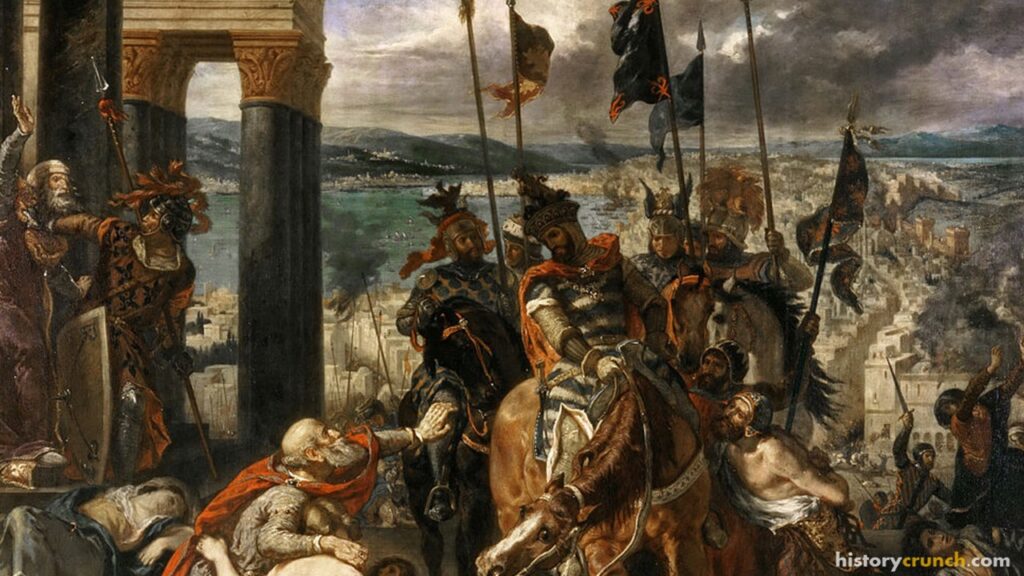
'The Entry of the Crusaders into Constantinople' by Eugène Delacroix in 1840. Related to the events of the Fourth Crusade.
Why did Europeans fight in the crusades? Historians have developed several main reasons for why Europeans chose to fight in the crusades. This article details and explain the main reasons.

Table of Contents

Europeans fought in the Crusades for a mix of religious, economic, and social reasons. Many were motivated by the promise of spiritual rewards, such as forgiveness of sins and guaranteed entry into heaven. Others joined for adventure, wealth, land, or to gain status and escape difficult conditions at home.

WHAT WERE THE CRUSADES?

The Crusades are one of the most significant events in the history of Europe and the Middle East.  They were a series of religious wars carried out by Christian crusaders from Europe during the timeframe of the Middle Ages.  Beginning in 1095 CE, the crusades saw European knights and noblemen travel to the Middle East in an attempt to capture the Holy Land away from Muslim people that had controlled the region for the previous centuries.  The term crusade means ‘cross’.  Therefore, the Europeans that became crusaders viewed themselves as ‘taking up the cross’.  In fact, many of the crusaders wore crosses on their clothing and armor as they made their pilgrimage to the Holy Land. In total, there were nine main crusades.
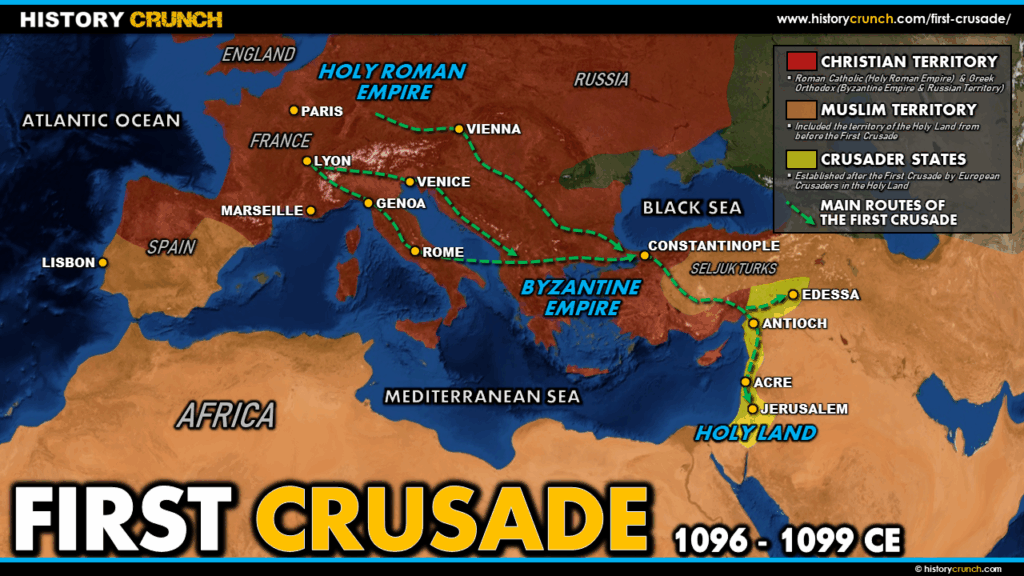
First Crusade Map
First Crusade Map created by History Crunch

WHY DID EUROPEANS FIGHT IN THE CRUSADES?

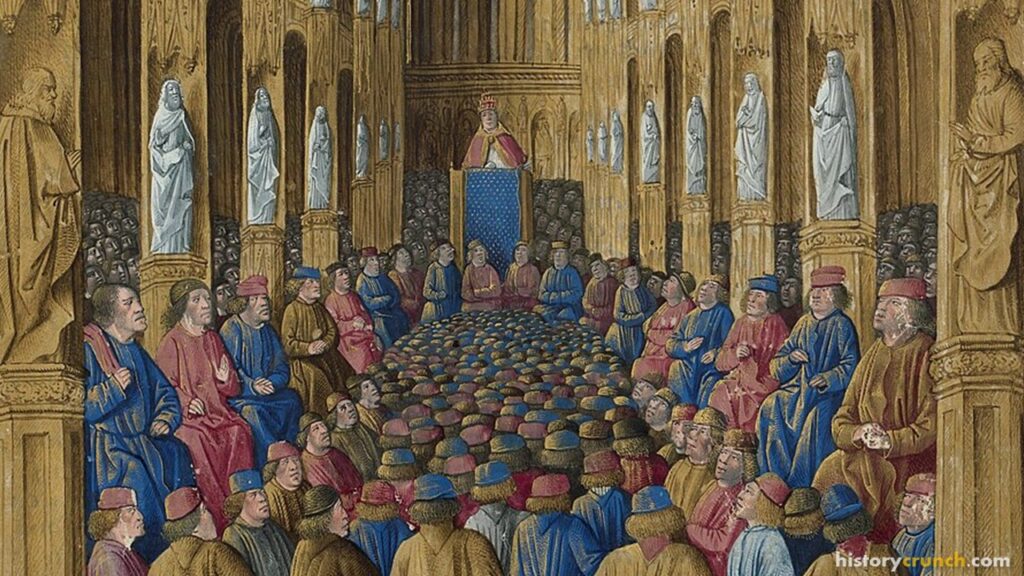
The European crusaders participated in the crusades for several key reasons.  First and foremost was the religious faith of the participants.  They were devout Catholics and wanted to be faithful to the church.  When Pope Urban II called on Europeans to free the Holy Land from Muslim control in 1095, thousands of European Christians took up the mission.  At the time, it was not common for people to question the church or religious faith and as a result many joined the crusades in order to carry out their religious duty.
Causes of the Crusades
‘Pope Urban II at the Council of Clermont’ by Jean Colombe. (1474)

The second reason for European participation in the crusades was that they believed that by participating in the fight they could be forgiven for their previous sins.  In fact, the Pope promised forgiveness for past sins and as a result many of the first crusaders believed that they would ascend to heaven soon after capturing Jerusalem.

Third, the crusades were a convenient distraction for many peasants from the harshness of daily life under feudalism.  Under feudalism, peasants worked or farmed tirelessly and their taxes were used to pay for most activities in society.  The mission of the crusades offered the average peasant an escape from this reality and allowed them the ability to fight shoulder-to-shoulder with others towards a common goal.

Fourth, the crusades gave those participating an opportunity to go on an adventure to a faraway land.  In the time of the Middle Ages, most people were born, lived and died in the same relative area.  The crusades offered people the ability to travel to a distant land and interact with other people.  Many Europeans enjoyed the adventure of the crusades.

Fifth, many of the nobility and peasants from Europe participated in the crusades because they believed that they could obtain fortune for themselves in the wealthy Middle Eastern civilizations.

In conclusion, the crusades were a vitally important event to European and Middle Eastern History.  They were centered on a clash between different religions and helped transform Europe and the Middle East during the years of the Middle Ages.  As well, many historians consider the effects of the crusades as an important event in the emergence of the Renaissance in Europe a few centuries later.
How Did the Crusades End
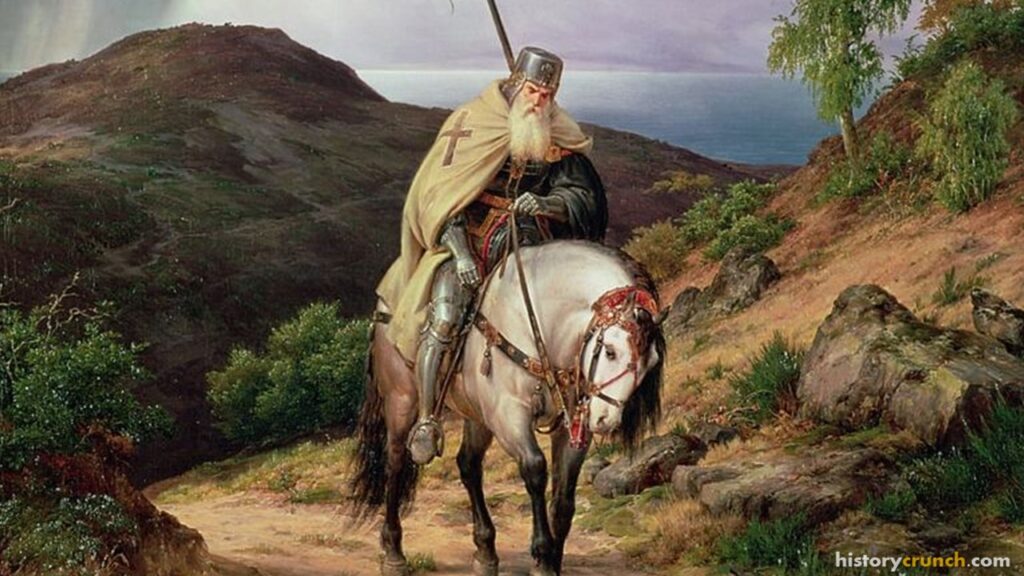
‘The Return of the Crusader’ by Karl Friedrich Lessing (1835)
Facebook
X
Reddit
Pinterest
LinkedIn

We strive to produce educational content that is accurate, engaging and appropriate for all learners. If you notice any issues with our content, please contact us and let us know!

AUTHOR INFORMATION
Picture of Elias Beck

Elias Beck

I'm a passionate history and geography teacher with over 15 years of experience working with students in the middle and high school years. I have an Education Degree with a focus in World History. I have been writing articles for History Crunch since 2015 and love the challenge of creating historical content for young learners!

Government in the Middle Ages: A Detailed Summary

Government in the Middle Ages was dominated by feudalism, the power of the monarchy and the influence of the Catholic Church, and produced important political developments that shaped the modern world. This article details the history and significance of government in the Middle Ages.

Holy Roman Empire in the Middle Ages: A Detailed Summary

The Holy Roman Empire in the Middle Ages was one of the most important political entities of the medieval period, playing a central role in the religious and political history of Europe. This article details the history and significance of the Holy Roman Empire in the Middle Ages.

Crusader States Map
Maps

Crusader States Map

This Crusader States map was created by History Crunch to help students and teachers understand the geographic location of the Christian kingdoms established by European crusaders in the Holy Land following the First Crusade. It shows the four main Crusader States in the eastern Mediterranean region. Designed for students in grades 5 to 12.

Hereditary Rule: A Detailed Summary

Hereditary rule was a system of government in which political power was passed down through a royal family from one generation to the next. This article details the history and significance of hereditary rule.

Battle of Agincourt: A Detailed Summary

The Battle of Agincourt was a decisive English victory over the French that took place on October 25th, 1415, during the Hundred Years War. Despite being vastly outnumbered, the English army under King Henry V defeated a much larger French force near the village of Agincourt in northern France. This article details the history and significance of the Battle of Agincourt.

Second Crusade Map
Maps

Second Crusade Map

This Second Crusade map was created by History Crunch to help students and teachers understand the geographic route of the Second Crusade from Europe to the Holy Land between 1147 and 1149 CE. It shows the paths taken by the French and German armies as they traveled toward the Middle East and the key locations involved in this ultimately unsuccessful campaign. Designed for students in grades 5 to 12.