The Cottage Industry in the Industrial Revolution refers to small-scale, home-based manufacturing. It was the main method of production before the emergence of industrialization and the Industrial Revolution. However, the rise of factories and mechanization impacted these traditional modes of production and led to the ‘factory system’.
WHAT ARE COTTAGE INDUSTRIES?
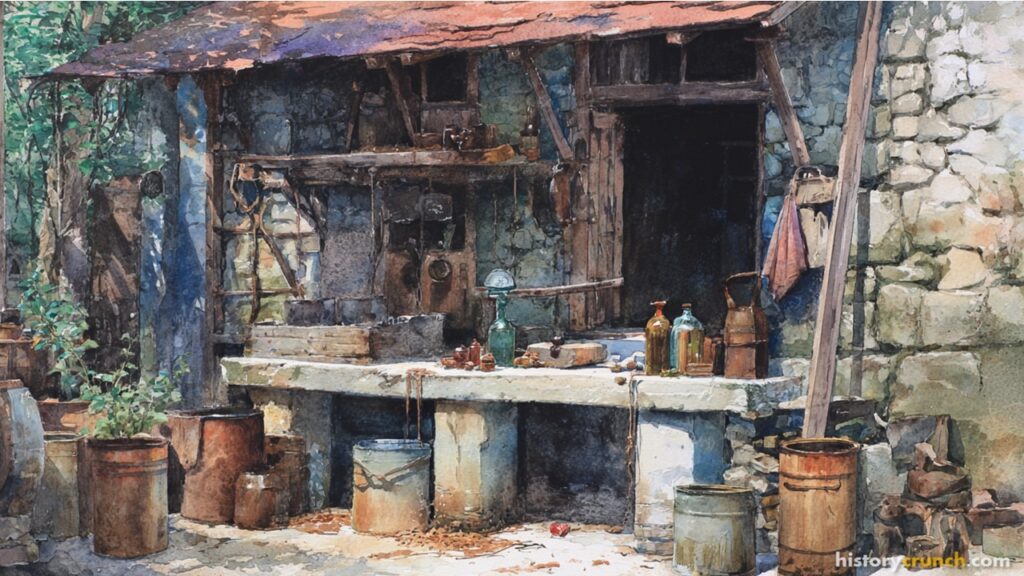
Cottage industries refer to small-scale manufacturing activities carried out in homes or small workshops. These industries were common before the Industrial Revolution and were characterized by the use of simple tools and manual labor. Families or small groups produced goods like textiles, pottery, and other household items. This system allowed individuals to work at their own pace, often combining manufacturing with agricultural activities to supplement their income.
Before the Industrial Revolution, cottage industries were the backbone of local economies. They provided employment and income for many families, especially in rural areas. The production process was often collaborative, involving family members and sometimes neighbors. Goods produced in cottage industries were sold in local markets or to merchants who distributed them more widely.
IMPACT OF THE INDUSTRIAL REVOLUTION ON THE COTTAGE INDUSTRY
The events of the Industrial Revolution brought about dramatic changes in manufacturing. In fact, the introduction of machinery and the establishment of large factories revolutionized production processes, making them more efficient and cost-effective. The main developments that impacted cottage industries included: mechanization, the factory system, urbanization and economic changes.
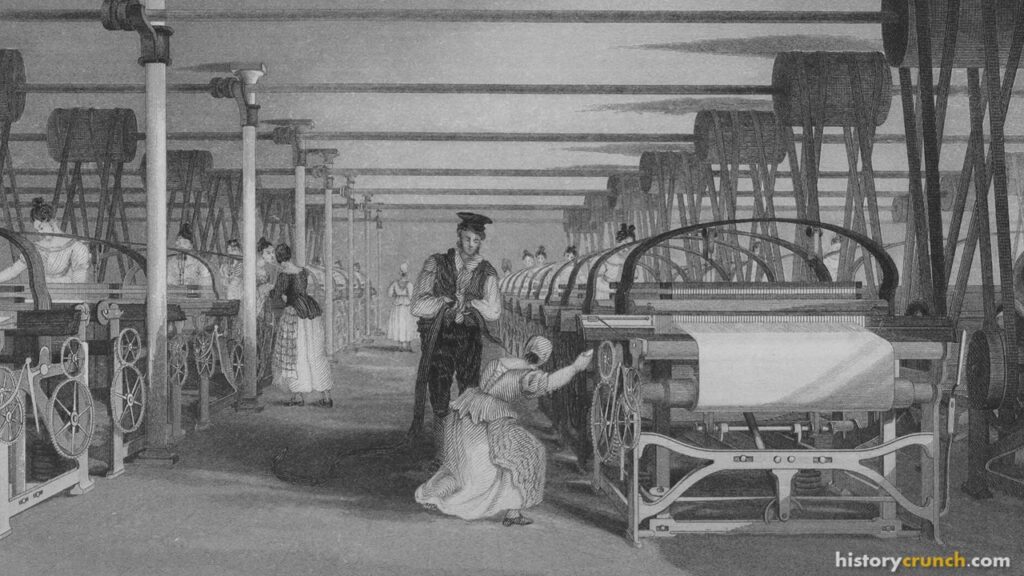
In terms of mechanization, the invention of machines like the spinning jenny, the power loom, and the steam engine drastically increased production capacity. These machines could produce goods faster and in larger quantities than manual labor, reducing the cost of production and making factory-produced items more affordable.
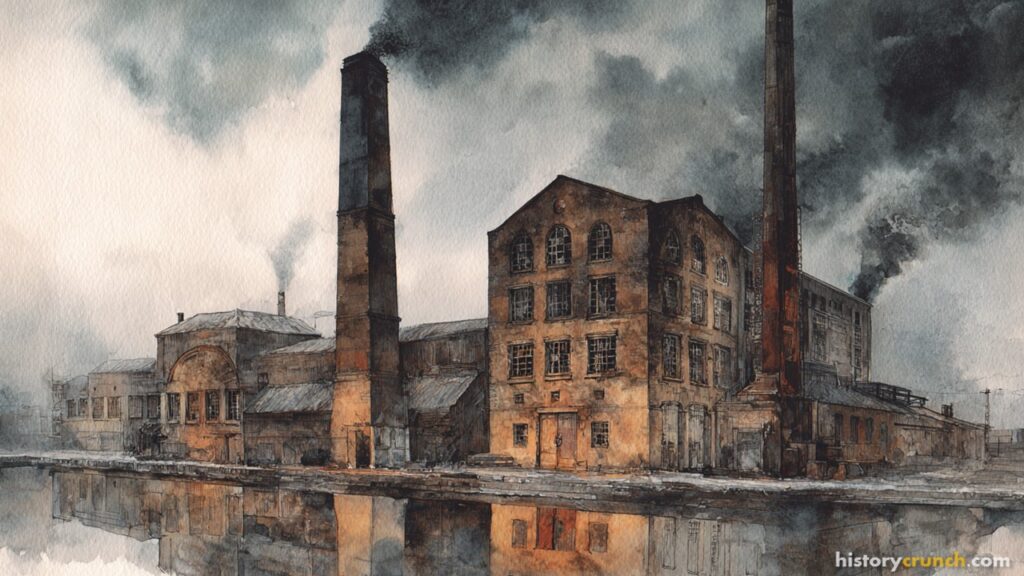
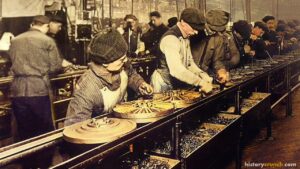
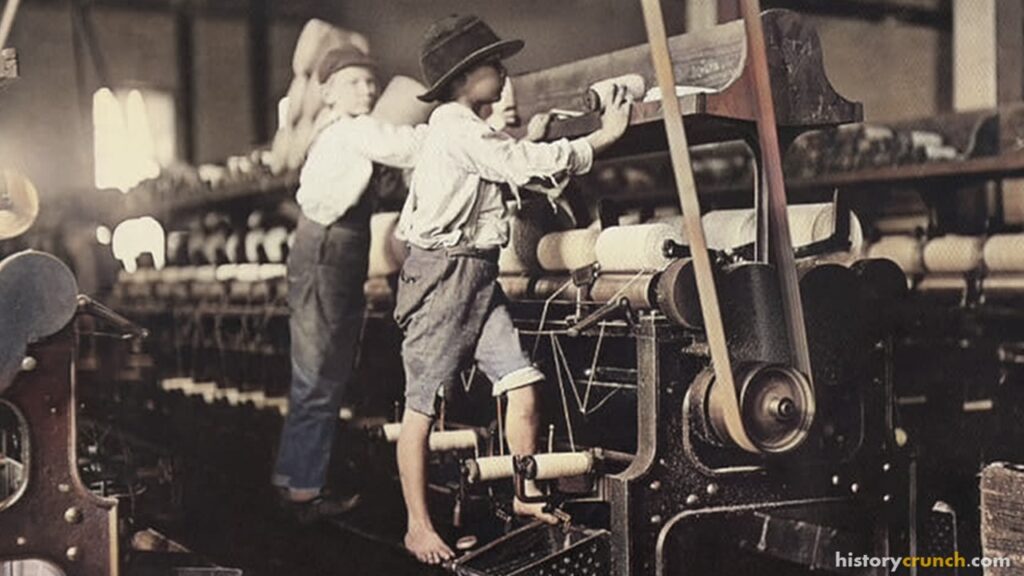
Next, the factory system centralized production in large facilities where numerous workers operated machinery under one roof. This system replaced the decentralized, home-based cottage industries. The growth of factories led to urbanization as people moved from rural areas to cities in search of employment. This migration resulted in the decline of cottage industries, as fewer people remained in rural areas to continue traditional home-based production.
Finally, cottage industries struggled to compete with the lower prices and higher efficiency of factory-made goods. The efficiency of factories made it difficult for small-scale producers to match prices, leading to a decline in demand for cottage industry products.
TEXTILE MANUFACTURING IN BRITAIN AS AN EXAMPLE
Before the Industrial Revolution, textile production was a major cottage industry in Britain. Families spun yarn and wove cloth in their homes, a process that was labor-intensive and time-consuming. However, the emergence of machines like the spinning jenny and the power loom revolutionized textile production, shifting it to factories. This transition led to the decline of home-based textile manufacturing but also caused the growth of a powerful textile industry that drove Britain’s economic expansion.
COTTAGE INDUSTRY IN THE INDUSTRIAL REVOLUTION – SUMMARY
The transition from cottage industries to factory-based production during the Industrial Revolution marked a significant turning point in economic and social history. While industrialization brought about greater efficiency and economic growth, it also led to the decline of traditional home-based manufacturing. Cottage industries struggled to compete with the scale and cost-effectiveness of factories, resulting in significant social and economic changes.