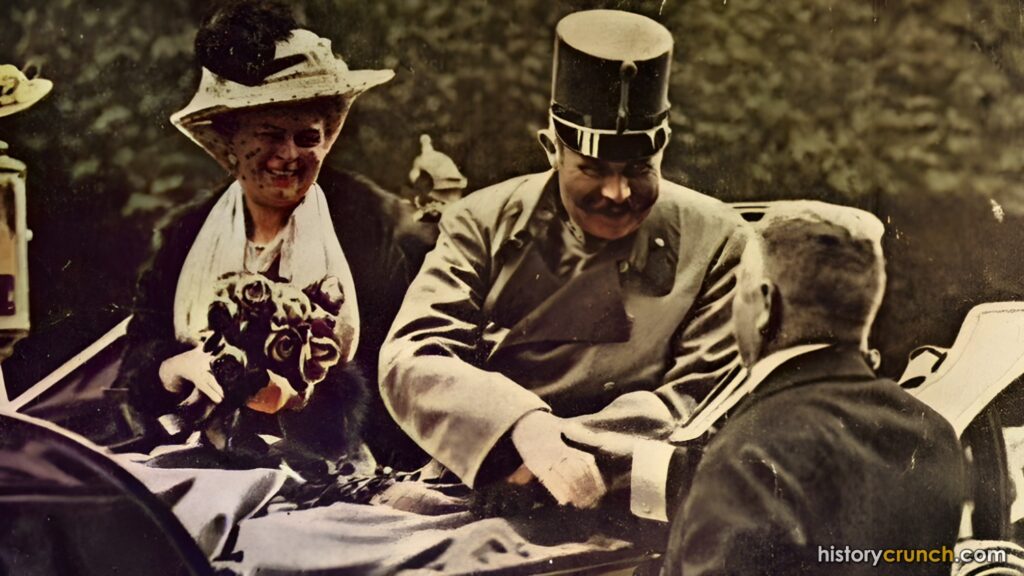
Franz Ferdinand was the Archduke of Austria in the late 19th and early 20th century. He was assassinated by Gavrilo Princip on June 28th in 1914. His assassination was one of the most significant events of the 20th century, because historians consider it to be the event that sparked World War I.
FRANZ FERDINAND’S EARLY LIFE
Franz Ferdinand was born on December 18th, 1863 in Graz, Austria. His uncle, Franz Joseph, was the Emperor of Austria and ruled over the Austro-Hungarian Empire. Franz Ferdinand’s father was Archduke Karl Ludwig and was the younger brother of Franz Joseph. In 1889, Franz Joseph’s only son, Rudolf, committed suicide. With this event, Karl Ludwig became the next in line to take over the Austrian throne. However, Karl died seven years later in 1896 from typhoid fever. Thus, Franz Ferdinand became the heir to the Austrian throne, and was groomed to replace his uncle upon his death.
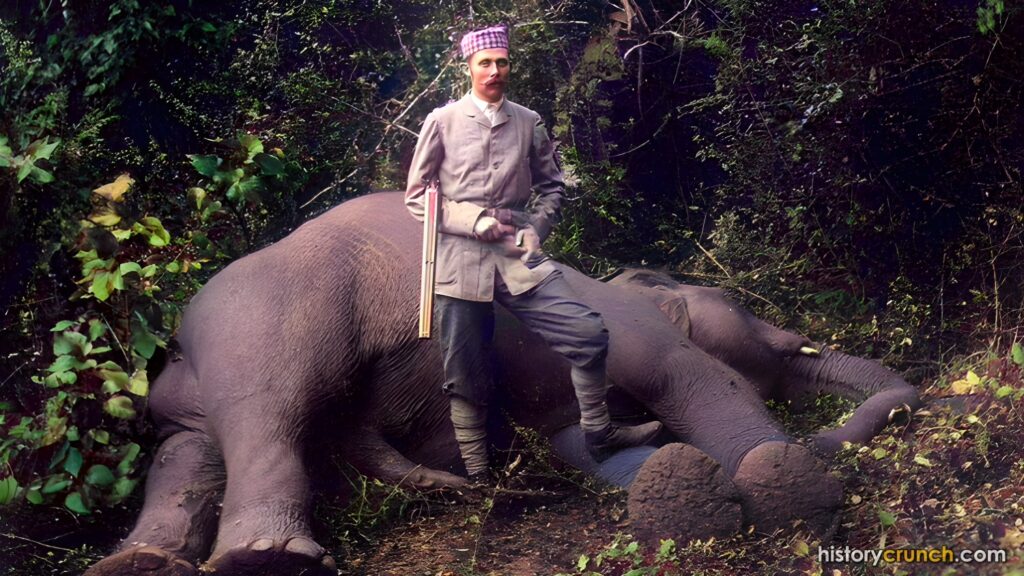
As a young man, he was educated in military training and held several ranks in the Austro-Hungarian Army. Of course, his position as the heir made him an influential figure in the military and allowed him to quickly rank into higher positions. He also travelled extensively throughout his twenties, including a voyage that took him around the world. As well, Franz Ferdinand enjoyed hunting and used his travels to carry out hunting trips for exotic animals. It has been reported that he killed as many as 300,000 animals in his hunting career.
On July 1st in 1900, Franz Ferdinand married Sophie Chotek. The marriage was not fully supported within the royal establishment of Austria due to Sophie coming from a lesser family. With being heir to the throne it was expected that Franz Ferdinand would marry a woman from a noble family. However, Franz Ferdinand was in love with Sophie and decided to marry anyways. Together, the couple had four children.

Politically, Franz Ferdinand differed from his uncle, Franz Joseph, in that Ferdinand was much more liberal. For instance, Ferdinand supported some freedoms for the different ethnic groups that existed in the Austro-Hungarian Empire. At the time of the early 20th century, Austria-Hungary was a diverse empire that stretched across large sections of central and eastern Europe. This ethnic diversity was a challenge for the empire because the growth of nationalism in the 1800s caused many in Europe to seek independence. As such, the Austro-Hungarian Empire was experiencing a great deal of tensions in the first years of the 20th century. This was especially true in the southern regions of the empire, which included Bosnia and Herzegovina. Both had been annexed by Austria-Hungary in the Bosnian Crisis of 1908. However, many Serbs living in the Balkans, which is a term for the southeastern section of Europe, resented Austria’s takeover. This created increased tensions between Austria-Hungary and the people of the Balkans. Understanding this is important, because it ultimately led to the events of the assassination of Franz Ferdinand.

ASSASSINATION OF FRANZ FERDINAND
As stated above, the assassination of Franz Ferdinand was one of the most important events of the 20th century. Historians consider it to be one of the major causes of World War I and sent Europe into one of the most brutal conflicts of its history.
Ferdinand and his wife Sophie were assassinated on June 28th, 1914 in Sarajevo, the capital of the Austro-Hungarian province of Bosnia and Herzegovina while there on a visit to inspect the military forces. The assassin was Gavrilo Princip. Just nineteen years old at the time, Princip was a member of the Black Hand. The Black Hand was a Serbian nationalist organization that existed in the early part of the 20th century. The Black Hand was first created in August of 1901, by members of the Royal Serbian Army. It was a secret society that worked to promote Serbian nationalism.

Upon first arriving in Sarajevo, Franz and Sophie made their way through the city in a motorcade. Members of the Black Hand had pre-planned their assassination of the archduke in anticipation of his visit to Sarajevo. As the archduke’s motorcade made its trip a member of the Black Hand attempted to assassinate the couple with a bomb that was thrown at the couple’s car. The bomb missed Franz and Sophie and injured members of the car behind them when it exploded. After a short rest at the Governor’s house in Sarajevo, Franz decided to visit the people injured by the earlier bombing by going to the hospital. The drivers of the motorcade were not made aware of the change in plans and as a result the drivers took the wrong route. By the time the error had been discovered the drivers had to turn around and began to slowly back up down a street in the center of Sarajevo.
By coincidence, Gavrilo Princip was on the street at that time and noticing his opportunity he approached the cars and fatally shot both Franz and Sophie with his pistol. Franz and Sophie were dead and the members of the Black Hand that carried out the attack were rounded up and arrested.