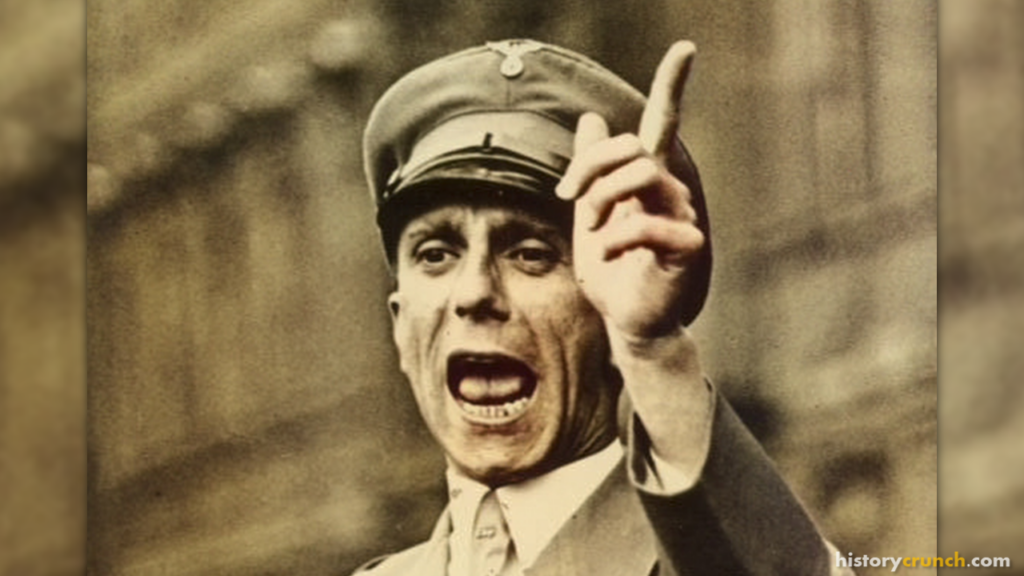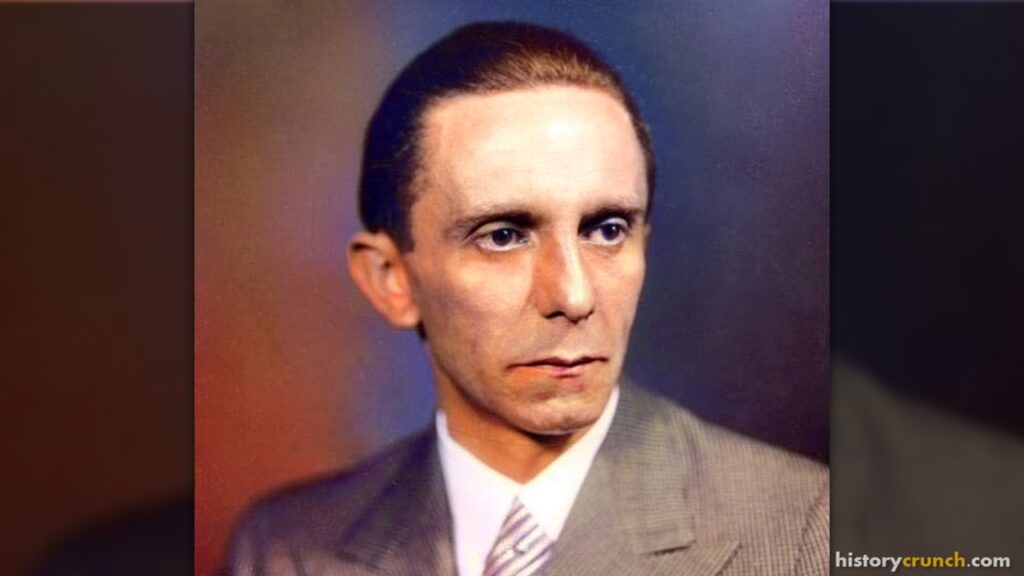
Joseph Goebbels was the Minister of Propaganda in Nazi Germany and one of Adolf Hitler’s closest and most devoted followers. He played a central role in spreading Nazi ideology through mass media, including newspapers, films, and radio broadcasts. Goebbels was skilled in manipulating public opinion, using propaganda to incite hatred against Jewish people and rally support for the Nazi regime. As such, Goebbels is considered to be a significant figure in the events of World War II and the Holocaust.
JOSEPH GOEBBELS – EARLY LIFE
Joseph Goebbels was born on October 29th, 1897 in Rheydt, Germany. His right foot was deformed from birth due to a congenital defect, and as a result, walked with a limp. As such, he required a leg brace and special shoe to accommodate this limp throughout his life. He was highly educated and performed well in school even from an early age. For example, he studied history and literature at several universities including: Bonn, Würzburg, Freiburg, and Munich. Eventually in 1921, he received his PhD in 19th century romantic literature.
Over the next several years he held a range of jobs, such as: tutor, journalist, and bank clerk. His goal was to become a published author but struggled to sell his writing to publishers. As well, he kept in a journal which he wrote in on a near daily basis. The journal entries in the mid-1920s show his growing anti-Semitism and that he had begun reading works of a political nature. For example, he read books that expressed support in the extreme-right movement that was prevalent in Germany at the time, as well as famous socialist authors including Karl Marx and Friedrich Engels. The first time he showed an interest in the Nazi movement was with the arrest and imprisonment of Adolf Hitler in 1924 following Hitler’s failed Beer Hall Putsch.
JOSEPH GOEBBELS – NAZI PARTY
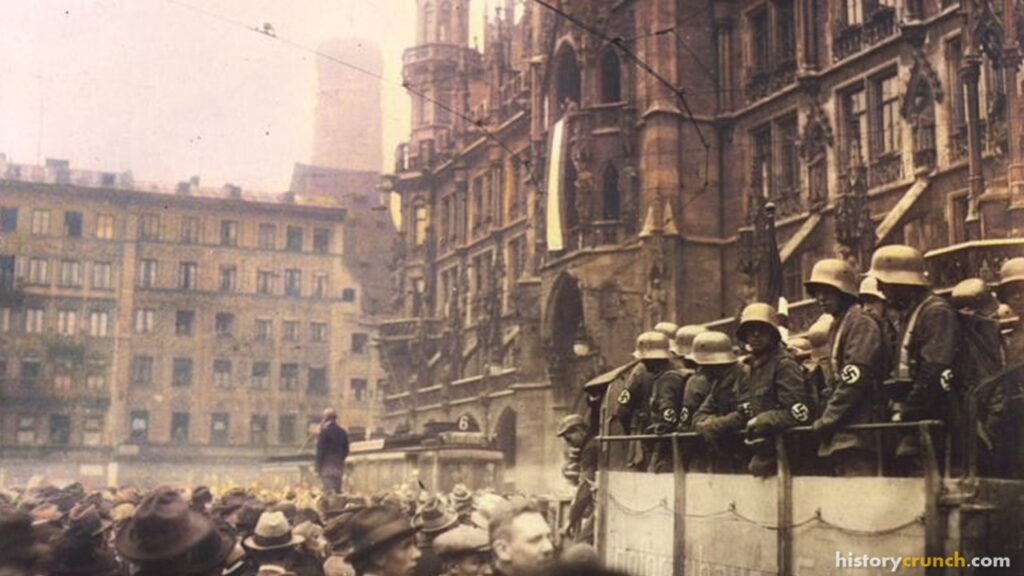
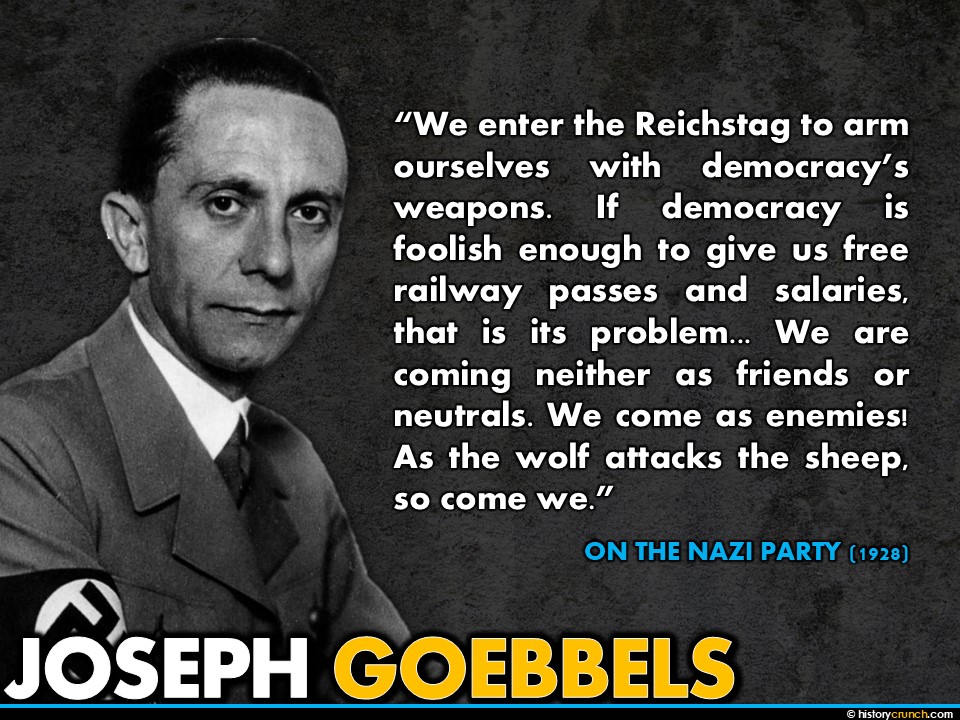
At the time, Hitler was attempting to rise to power in Germany. The Beer Hall Putsch saw Hitler and his SA forces attempt to carry out a coup d’état, or violent overthrow of the Weimar Republic which was the name for the democratic government. Goebbels joined the Nazi Party in 1924 when Hitler was released following his imprisonment, because he was drawn to Hitler’s charisma and ideas for the future of Germany. At first, Goebbels worked for a weekly Nazi newspaper but soon became known for his public speaking skills. As a result, he became a popular figure in Nazi rallies throughout the 1920s. In fact his public speeches impressed Hitler to such an extent that Goebbels became a prominent person in Hitler’s inner circle and the Nazi Party.
Throughout the remainder of the 1920s Goebbels organized the efforts of the Nazi Party through Nazi-controlled newspapers and rallies. His newspapers were known for their anti-Semitism and call for extreme German nationalism in the form of support for Adolf Hitler and the Nazi Party. Similarly, at the rallies, he endorsed violence against the enemies of the Nazis, which include: Jewish people and the Communist Party of Germany. Goebbels actions helped promote the Nazi Party in Germany and eventually led to the Nazi Party gaining majority control in the German Reichstag. As a result, Hitler was appointed Chancellor of Germany in 1933 and the party began taking steps to centralize power in Hitler. On the night of appointment to Chancellor, Goebbels organized a torch-lit parade of tens of thousands of SA soldiers.
JOSEPH GOEBBELS – MINISTER OF PROPAGANDA
In March of that year, Hitler appointed Goebbels as the Minister of Propaganda of Germany. His goal was to increase support for the Nazi Party within Germany and to give the impression to other countries that Hitler enjoyed complete support of the country. Throughout 1933 the Nazis, with Goebbels’ assistance, began carrying out their goals in a variety of ways, including: removing Jewish people from the civil service and law offices, promoting a boycott of Jewish businesses and carrying out book burning rallies for books deemed against the Nazi ideology.
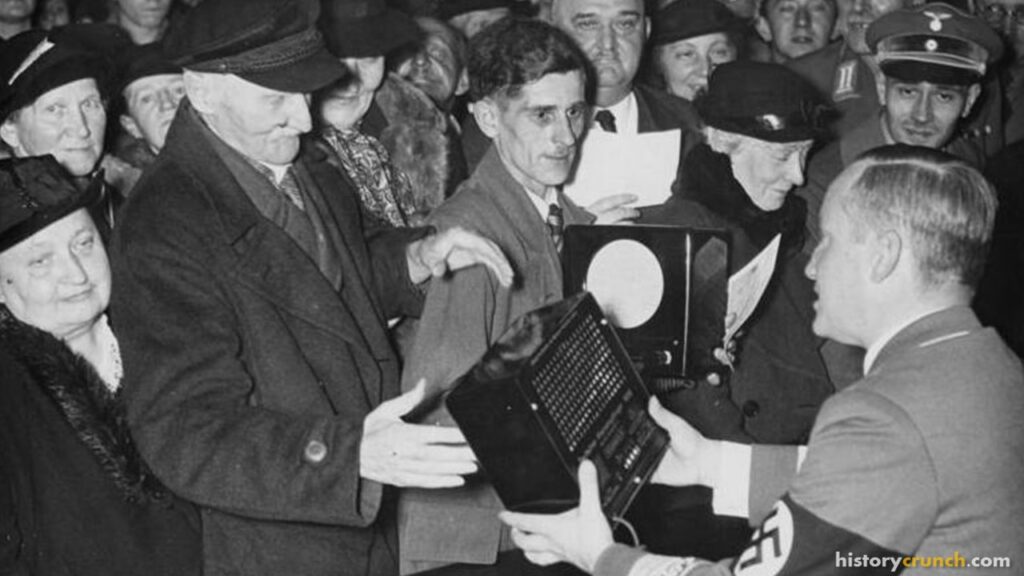
One of Goebbels’ greatest achievements as the Minister of Propaganda, was his work to promote the relatively new technology of the radio for the Nazi Party’s benefit. First, he and other prominent Nazis gained control of the radio stations across Germany and turned them into agents for the Nazi Party. Next, he had a small and inexpensive radio produced and distributed throughout Germany. By 1938, nearly 10 million of these radios had been produced and were in the homes of German people. This was important as it allowed the Nazi Party and Adolf Hitler complete control over the messages that the German people could receive. In fact, foreign radio broadcasts were eventually outlawed.
Goebbels’ influence increased during the years of World War II. His ministry was in charge of producing posters, films and radio addresses related to the themes of Nazism and the overall German war effort. The major themes that Nazi propaganda undertook at this time were based on anti-Semitism, anti-Communism, extreme German nationalism and pro-war. Furthermore, Goebbels was also in charge of all forms of media in countries that the Nazis conquered as part of the war. As a result, he was able to manipulate public opinion of the war effort.
By 1944, World War II was going terribly for the Nazi’s. For instance, the Nazi’s had suffered a critical defeat against the Soviet Union at the Battle of Stalingrad and the other Allied nations had opened a second front in Europe with the Normandy Invasion. As such, many of Hitler’s top advisers, including Goebbels, began arguing for him to take measures to implement total war, meaning that all of German society would be tasked with aiding in the German war effort. The goal was to close some German businesses that were not considered essential to the war effort and to conscript more men into the Germany Army. As a result of this pressure, Hitler appointed Goebbels as Reich Plenipotentiary for Total War on July 23rd in 1944. He was tasked with increasing the number of soldiers in the German Army and the number of weapons produced in German factories. While Goebbels’ efforts did improve the situation for Germany, it did not stop the advances of the Allies and by early 1945 the Nazis were near defeat.
JOSEPH GOEBBELS – DEATH
As the war neared its end, Goebbels moved his wife and six children into the bunkers built by the Nazis under Berlin. It was here that Hitler committed suicide on April 30th, 1945 as the Soviet Army surrounded and invaded the German capital. Before his death, Hitler had appointed Goebbels as his replacement and, as such, Goebbels became the new Chancellor of Germany on April 30th. He only held the position for one day, because on May 1st, he and his wife committed suicide after killing their own children with cyanide capsules.
Today, Goebbels is remembered for his extreme anti-Semitism and the role he played in events such as the Holocaust and World War II.