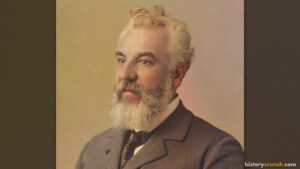
Klemens von Metternich served as Austria’s Foreign Minister from 1809 and later as Chancellor from 1821, holding the dominant position in European diplomacy from the fall of Napoleon in 1814 until the revolutions of 1848 forced him from power. He was the chief architect of the Congress of Vienna settlement, the principal organizer of the Concert of Europe, and the most determined and effective champion of political conservatism in the post-Napoleonic world. His primary goals throughout his long career were the preservation of the balance of power in Europe, the suppression of nationalism and liberalism, and the maintenance of Austrian influence in the German-speaking world and beyond. He earned the nickname the Coachman of Europe for his ability to manage and direct the complex diplomatic relations of the major European powers, and the period from 1815 to 1848 is often referred to by historians as the Age of Metternich in recognition of his dominance over European affairs.
Early Life of Klemens von Metternich
Klemens Wenzel Nepomuk Lothar von Metternich was born on May 15th, 1773, in Coblenz, in the small German ecclesiastical state of Trier. His father, Franz Georg Karl von Metternich, was an Austrian diplomat serving in the Rhenish principalities of the Holy Roman Empire, and the young Metternich grew up in the western German-speaking world rather than in Austria itself. The family was of old Rhenish noble stock, and Metternich’s upbringing gave him an unusually wide exposure to the diplomatic culture of the late 18th century. He developed fluent French and an early understanding of the practical workings of European diplomacy.
Metternich studied at the University of Strasbourg from 1788, where he received a thorough education in law and diplomacy. He witnessed the early stages of the French Revolution at first hand during his time in Strasbourg, and the experience of revolutionary chaos profoundly shaped his political worldview, giving him a deep and lifelong hostility to revolutionary politics and the ideas of popular sovereignty and nationalism that drove them. He subsequently studied at the University of Mainz before joining his family in Vienna in 1794, where the French Revolutionary Wars had displaced the Metternich family from their Rhenish estates.
In September of 1795, Metternich made a marriage that transformed his social and political position. He married Countess Eleonore von Kaunitz, the granddaughter of Prince Wenzel Anton von Kaunitz, the great Austrian state chancellor who had dominated Habsburg diplomacy for decades. The marriage gave Metternich immediate access to the highest circles of Austrian society and politics and provided the social connections he needed to advance his diplomatic career rapidly.
Klemens von Metternich – Early Diplomatic Career
Metternich’s diplomatic career advanced quickly through a series of increasingly important postings. He represented Austria at the Congress of Rastatt from 1797 to 1799, where he gained valuable experience in multilateral diplomacy. He was then appointed Austrian minister to the Saxon court at Dresden in 1801, where he formed an important friendship with Friedrich von Gentz, the German publicist and diplomat who would become his closest intellectual collaborator. He moved to Berlin in 1803 as Austrian minister to the Prussian court, where he attempted without success to draw Prussia into firmer opposition to Napoleon Bonaparte.
The posting that proved most formative for Metternich’s career was his appointment as Austrian ambassador to France in 1806, at Napoleon’s own personal request. Metternich arrived in Paris in August of 1806 and spent the next three years at the very center of Napoleonic power, observing Napoleon at close quarters, studying his methods and character, and developing a thorough understanding of the strengths and weaknesses of the French imperial system. He was charming and socially skilled, moving easily in Parisian society and using his personal connections to gather information and maintain Austrian interests in extremely difficult circumstances. His time in Paris convinced him that Napoleon was formidable but not invincible, that his empire was more fragile than it appeared, and that the right strategy for Austria was patience, waiting for the moment when Napoleon’s overextension would create an opportunity.
When Austria launched its attack on France in April of 1809, hoping to exploit Napoleon’s difficulties in Spain, Metternich was expelled from Paris. The attack proved premature. Napoleon defeated Austria decisively at the Battle of Wagram in July of 1809 and imposed harsh terms. In October of 1809, Metternich was appointed Foreign Minister and Chancellor of the Austrian Empire, taking over from Johann Philipp von Stadion. His first task was to sign the unfavorable Peace of Vienna, but his broader strategy for the years that followed was one of calculated temporization, maintaining apparent friendship with Napoleon while waiting for the right moment to strike.
Klemens von Metternich – Dealings with Napoleon
As Foreign Minister, Metternich pursued a careful dual strategy toward Napoleon in the years from 1809 to 1813. On the surface he maintained cooperation with France, cementing a temporary alliance by arranging the marriage of Napoleon to the Austrian Archduchess Marie Louise, daughter of Emperor Francis I, in 1810 after Napoleon’s divorce from Josephine. This diplomatic masterstroke served multiple purposes: it gave Napoleon the dynastic legitimacy he craved, it gave Austria a degree of protection from further French aggression, and it gave Metternich time to rebuild Austrian military strength after the defeats of the previous years.
Behind the scenes, Metternich was carefully preparing for the moment when Austria could turn against Napoleon. He watched the Russian campaign of 1812 with great attention and recognized that its catastrophic outcome had fundamentally changed the balance of power. When the War of the Sixth Coalition began in 1813, Metternich initially attempted to position Austria as a mediator, offering Napoleon generous peace terms at the Congress of Prague in the summer of 1813 that would have allowed France to retain significant territory. Napoleon rejected the terms, apparently unable to bring himself to accept any settlement that acknowledged the limits of his power. The rejection drove Austria firmly into the coalition, and Metternich declared war on France in August of 1813.
It was Metternich who devised the Trachenberg Plan, the coalition strategy of avoiding direct battle with Napoleon himself while attacking the forces of his subordinate marshals, that proved so effective in the 1813 campaign. The Battle of Leipzig in October of 1813, which ended in Napoleon’s decisive defeat and the collapse of French power in Germany, was in large part the product of Metternich’s patient strategic planning over the previous four years.
Klemens von Metternich – The Congress of Vienna
Metternich’s greatest achievement was his leadership of the Congress of Vienna, which met from September of 1814 to June of 1815. The Congress was held in Vienna at his insistence, a deliberate choice that gave Austria the prestige of hosting the most important diplomatic gathering in European history and gave Metternich himself an unmatched position at its center. He chaired the proceedings and proved a masterful organizer of the complex multilateral negotiations, managing the competing interests and personalities of the major powers with extraordinary skill.
The Congress faced several major challenges that threatened to derail it entirely, most notably the conflict between Russia and the other powers over Poland. Tsar Alexander I demanded that most of the former Duchy of Warsaw be reconstituted as a Kingdom of Poland under Russian protection, which Metternich regarded as an unacceptable extension of Russian power into Central Europe. The dispute brought the Congress to the verge of collapse in January of 1815, but was eventually resolved through a compromise that gave Russia most of what it wanted while preserving the framework of the broader settlement.
The settlement Metternich helped create was based on three interconnected principles. The first was the restoration of legitimate monarchies across Europe, reversing the dynastic changes Napoleon had imposed. The second was the creation of a balance of power that prevented any single state from dominating the continent. The third was the establishment of mechanisms for great power cooperation to maintain this balance and suppress revolutionary movements. He was particularly pleased with the creation of the German Confederation, a loose association of German states that replaced the Holy Roman Empire and within which Austrian influence could be maintained without the complications of direct imperial rule.
Klemens von Metternich – The Age of Metternich
The period from 1815 to 1848 is often called the Age of Metternich, and with good reason. As the dominant figure in European diplomacy, Metternich worked continuously to maintain the conservative order established at Vienna against the growing pressures of nationalism and liberalism. He was the driving force behind the Congress System, the series of great power congresses held at Aix-la-Chapelle in 1818, Troppau in 1820, Laibach in 1821, and Verona in 1822, which authorized intervention to suppress liberal revolutions in Naples, Spain, and elsewhere.
Within Austria, Metternich maintained a system of strict censorship and police surveillance designed to prevent the spread of liberal and nationalist ideas. He was deeply suspicious of nationalist movements in Germany, Italy, and Hungary, recognizing that they represented existential threats to the multinational Habsburg Empire. The Carlsbad Decrees of 1819, which imposed censorship and restricted academic freedom across the German Confederation in response to liberal agitation, were largely his work.
Metternich was named State Chancellor of the Austrian Empire in 1821, adding this formal title to his practical dominance of Austrian foreign policy. He continued to serve as the central figure in European diplomacy through the 1820s and 1830s, though the Concert of Europe gradually became less coherent as the major powers diverged over how aggressively to suppress liberal movements, with Britain increasingly unwilling to endorse Austrian-style intervention in the internal affairs of other states.
Later Years and Death of Klemens von Metternich
The revolutionary upheavals of 1848 brought Metternich’s long career to an abrupt end. In March of 1848, revolutions broke out simultaneously across Europe, including in Vienna itself, where crowds demanded liberal reforms and the dismissal of Metternich. Rather than allow others to suffer in his defense, he resigned on March 13th, 1848, and fled Vienna in disguise. He spent his exile first in England and then in Brussels, watching from afar as the revolutions of 1848 were gradually suppressed.
He returned to Vienna in 1851 and spent his final years at his palace on the Rennweg, receiving visitors, corresponding widely, and writing his memoirs. He remained intellectually active and politically engaged until near the end of his life, maintaining to the last his conviction that the principles he had spent his career defending were correct. He died in Vienna on June 11th, 1859, at the remarkable age of 86, having outlived Napoleon, Wellington, and most of the other great figures of his era. His reputed last words expressed the philosophy that had guided his entire career: I was a rock of order.
Significance of Klemens von Metternich
The significance of Klemens von Metternich in the history of the Napoleonic Era and of 19th-century European diplomacy is considerable. He was above all responsible for transforming the defeat of Napoleon into a durable post-war settlement through the Congress of Vienna and the Concert of Europe. No single figure did more to shape the international order that governed European politics from 1815 to the outbreak of World War I in 1914, an order that, whatever its limitations, succeeded in preventing another general European war for a full century.
His conservative political philosophy and his insistence on the balance of power as the foundation of European stability proved more durable than many of his contemporaries expected. His ideas influenced later diplomatic thinkers including Henry Kissinger, who wrote his doctoral dissertation on Metternich and acknowledged him as a formative influence on his own thinking about international relations. As such, Klemens von Metternich stands as one of the most consequential and influential statesmen in the history of the modern world.