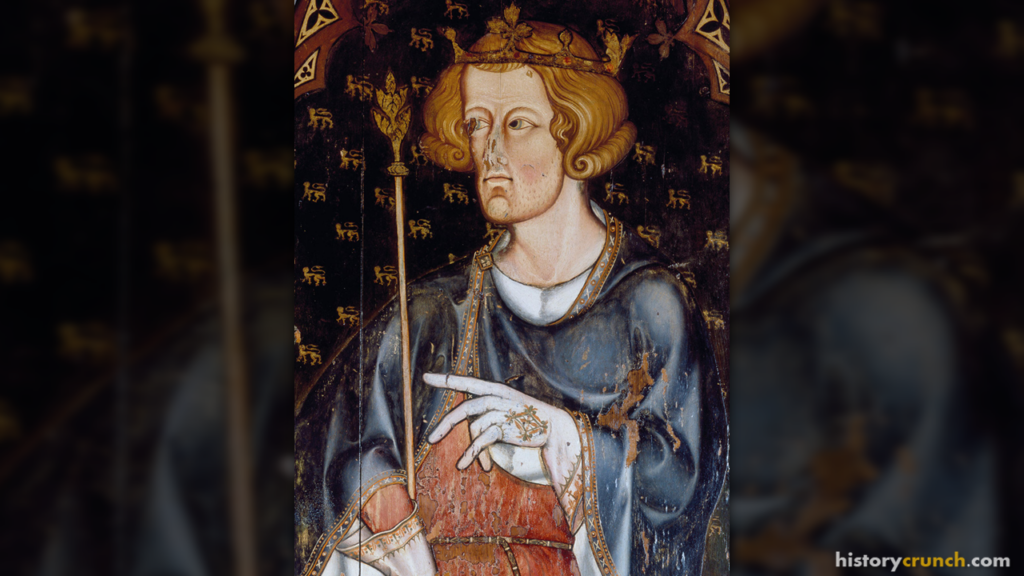
The Ninth Crusade, led by Lord Edward of England (later King Edward I) in 1271 CE, was the final major Crusader effort in the Holy Land. Although he achieved some minor victories and negotiated truces, the campaign lacked strong support and failed to make lasting gains. The Ninth Crusade ended in 1272, marking the gradual end of the Crusader presence in the region.
WHAT WERE THE CRUSADES?
The Crusades are one of the most significant events in the history of Europe and the Middle East. They were a series of religious wars carried out by Christian crusaders from Europe during the timeframe of the Middle Ages. Beginning in 1095 CE, the Crusades saw European knights and noblemen travel to the Middle East in an attempt to capture the Holy Land away from Muslim people that had controlled the region for the previous centuries. The term crusade means ‘cross’. Therefore, the Europeans that became crusaders viewed themselves as ‘taking up the cross’. In fact, many of the crusaders wore crosses on their clothing and armor as they made their pilgrimage to the Holy Land. This article details the events of the Eighth Crusade. Click here to read more information about the other major Crusades.
NINTH CRUSADE – WHEN AND WHY DID IT OCCUR?
The Ninth Crusade took place from 1271 until 1272 CE and was one of the last major events in the history of the Crusades, which was a significant event in the Middle Ages. In general, the Ninth Crusade was a continuation of the Eighth Crusade, as the Ninth Crusade occurred immediately following the Eighth.
The Eighth Crusade took place in 1270 CE and saw King Louis IX of France lead an army of crusaders from Europe to Tunis. The goal of Louis IX in the Eighth Crusade was to attack the city of Tunis, which is located in Northern Africa and is the capital city of the modern country of Tunisia. However, the Eighth Crusade was a massive failure and did not result in any gains for the European crusaders. As well, the Eighth Crusade effectively ended with the death of King Louis IX from dysentery.
NINTH CRUSADE – MAJOR EVENTS
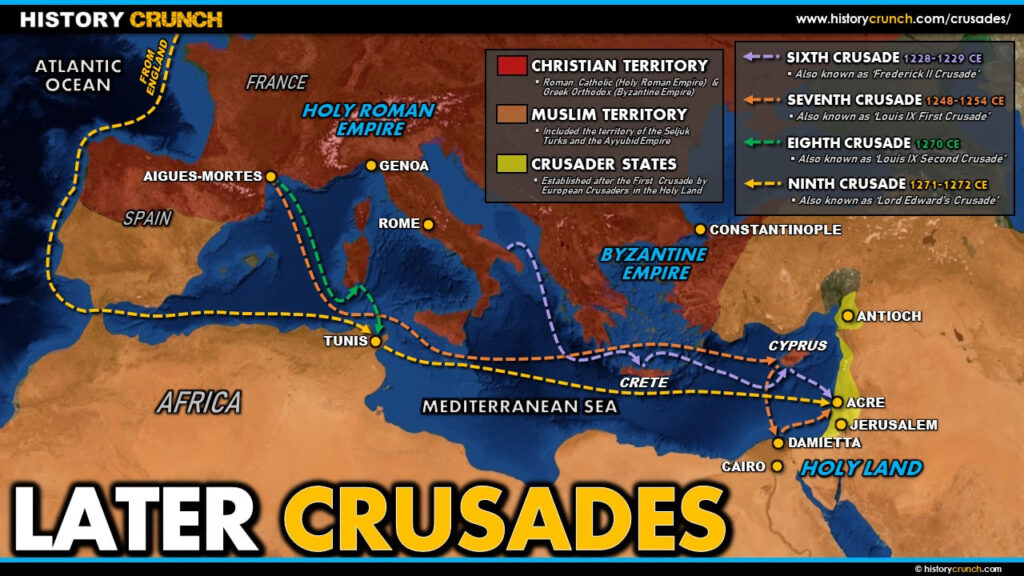
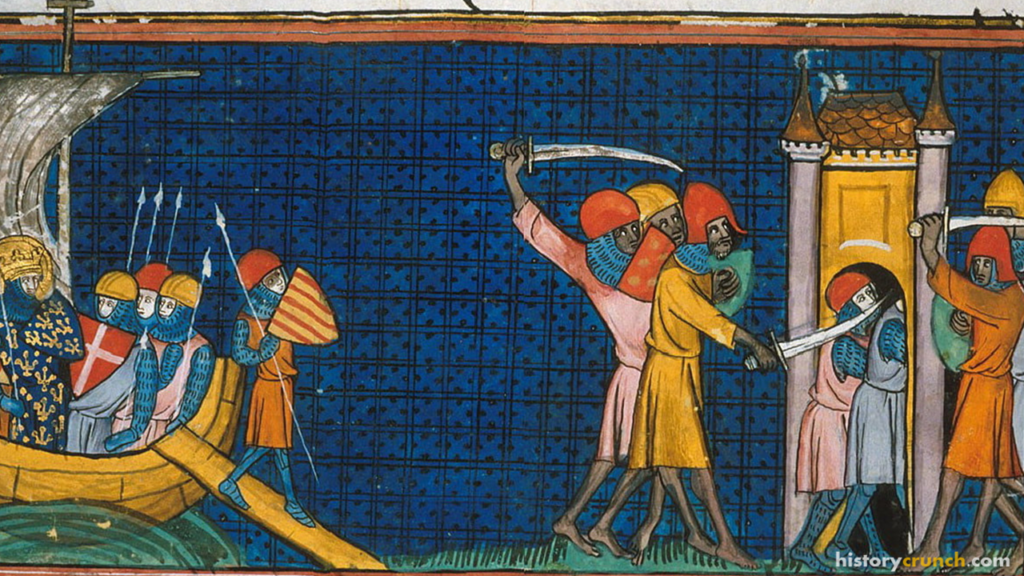
As stated above, the Ninth Crusade occurred immediately following the end of the Eighth Crusade. In fact, the Ninth Crusade was carried out by Lord Edward of England who later became King Edward I of England. Lord Edward was inspired to fight in the Eighth Crusade and ‘took the cross’ on June 24th in 1268. Lord Edward left Dover, England by ship on August 20th in 1270, with the intent of meeting the French King, Louis IX at Tunis. However, when Lord Edward arrived in Tunis on November 10th, he realized that the Eighth Crusade was over. As stated above, this was caused by the death of Louis IX in August of 1270 due to the spread of disease throughout the ranks of the French crusaders. Following the death of Louis IX, most of the crusaders from the Eighth Crusade returned home to Europe, but Lord Edward instead opted to continue his travels and made his way to the Holy Land. His continued journey to the Holy Land ultimately resulted in the Ninth Crusade.
Lord Edward and the crusader forces loyal to him arrived at Acre on May 9th in 1271. Acre had long been a Christian stronghold during the two centuries of the Crusades. In fact it was first established as a ‘Crusader State’ in the First Crusade, which took place from 1096 to 1099 CE. At the time, the Muslim forces were threatening these Christian held lands and Lord Edward wanted to assist. When Lord Edward arrived in Acre, he brought with him a relatively modest fighting force of 1,000 crusaders including 225 knights.
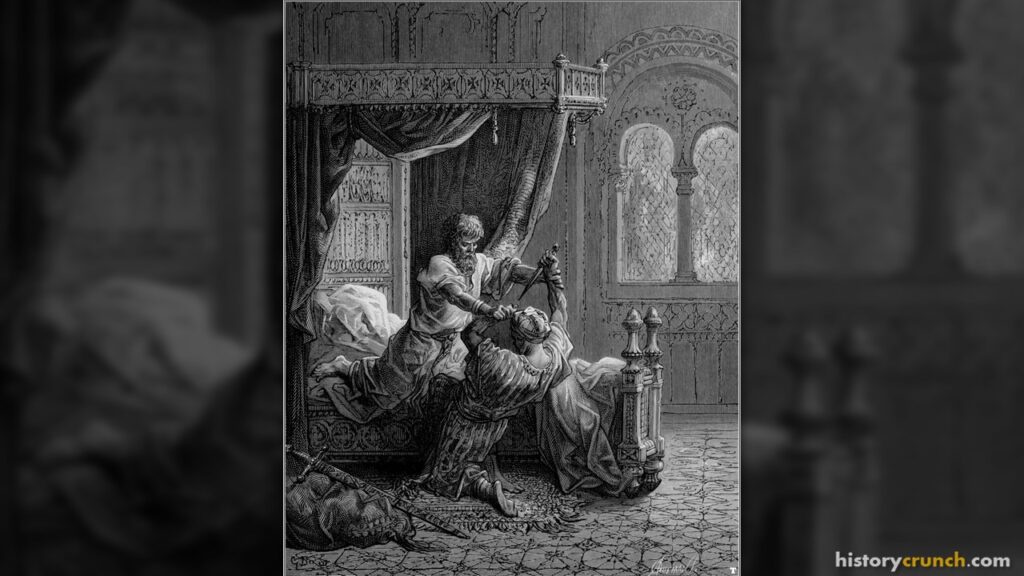
Lord Edward’s arrival in Acre was significant, as it helped force some of the Muslim forces to temporarily retreat from the region. In the months that followed, Lord Edward and his forces carried out a series of raids against the local Muslims and achieved some considerable victories. They even helped to stop an attack against the city of Acre in December of 1271. Furthermore, during this time period, Lord Edward had forced an alliance with a Mongol Army that aided in attacking and raiding the Muslim forces. Following a naval victory against the Muslims, Lord Edward began negotiating a truce with the Muslim Army as a means of protecting Christian-held territory in the Holy Land. The truce was finally reached in May of 1272, and just a month later, Lord Edward narrowly survived an assassination attempt against his life. This, along with the news of the death of his father and son caused him to return home to England. Edward arrived home and was crowned the new King of England on August 19th in 1274.
Since Lord Edward was the central figure of the Ninth Crusade, it is also sometimes referred to as ‘Lord Edward’s Crusade’. The Ninth Crusade was the last major crusade in the two-century history of the Crusades, and saw the last time a European force travelled to fight in the Holy Land. While there were calls for more crusades after the events of the Ninth Crusade, these were never realized, and European Christians slowly lost control over the Holy Land. Finally, in 1291, the Muslim forces carried out a siege against Acre, the last remaining Crusader State. The Muslim forces quickly captured the city and effectively ended the era of Christian-held territory in the Holy Land. Some remaining Christians and supporters of the Christian cause carried out fighting until approximately 1303, when they finally defeated.
NINTH CRUSADE – SIGNIFICANCE
With the end of the Ninth Crusade, the Crusades were finally over as a historical event. As a result, the Ninth Crusade is considered to be significant today due to it being the end of a major historical event in relation to the overall Crusades and Middle Ages.